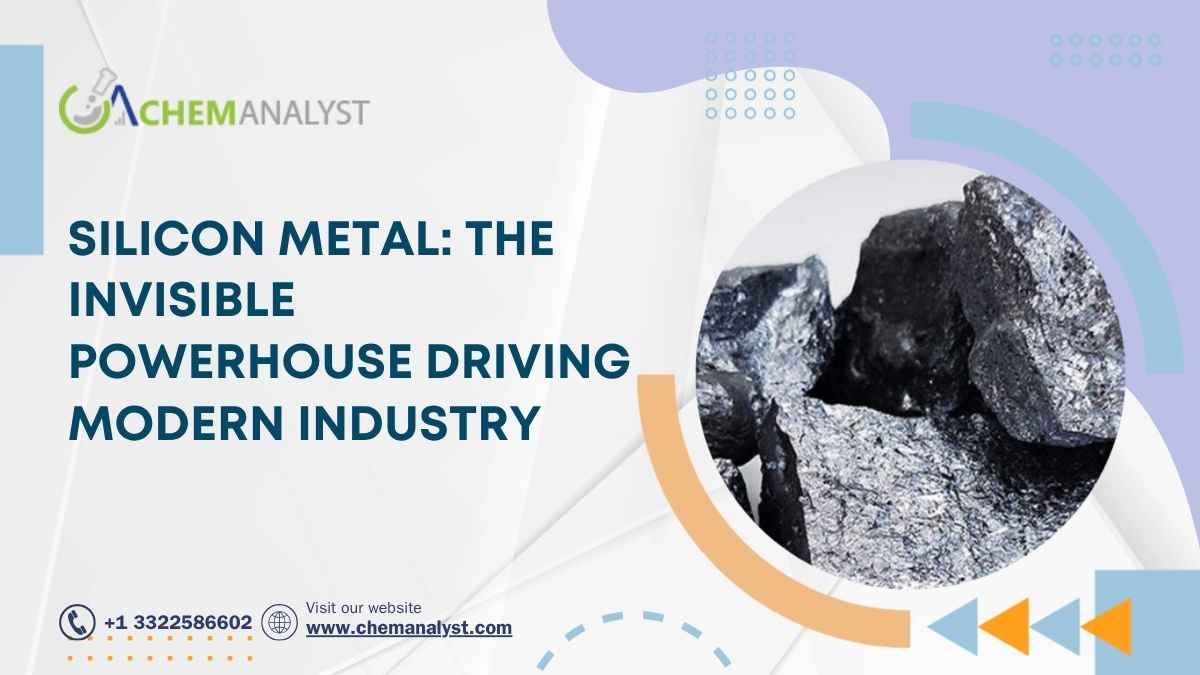
Silicon metal, with over 98.5% purity, is produced from quartz and carbon in electric arc furnaces. Its thermal stability, conductivity, and corrosion resistance drive innovation across industries like automotive, construction, electronics, and renewable energy, offering strong market potential.
Introduction
Silicon metal is a raw material with high purity usually over 98.5% elemental silicon. It is manufactured by heating quartz and carbon in electric arc furnaces. Silicon, as an element that occurs naturally in Earth's crust, is one of the most abundant materials and is used in many advancing applications from high-strength alloys to advanced electronics and renewable energy applications. Silicon's unique physical and chemical characteristics and performance properties (high thermal stability, electrical conductivity, and corrosion resistance) are driving force for innovation across diverse industries. In this article, different functions of silicon metal will look closer and demonstrate how silicon metal is becoming a critical part of industries that meet the needs of automotive manufacturing, construction, agriculture, healthcare, and how it continues to offer market potential and possibilities.
Industrial Applications by Sector

Automotive & Transportation
Silicon metal is commonly found as an alloying element for aluminum-silicon alloys (Al-Si 11%–12%) in automotive and transportation applications such as engine blocks, pistons, and transmissions. These alloys are favored because they are easily cast, wear resistant, and thermally stable. The use of these alloys helps create lighter vehicles that can be driven at temperatures that lead to fuel efficiency gains without sacrificing durability. Silicon metal is also used in terms of high-performance brake pads and composites to withstand high temperatures making silicon metal an important part of the automotive and transport industry.
Construction & Infrastructure
In construction, silicon metal is incorporated into sealants, adhesives, and coatings as silicon-based polymers (silicones) that provide exceptional weathering resistance, flexibility, and waterproofing. Silicone sealants are ubiquitous in window glazing, exterior façades, and roofing applications. Additionally, silicon metal is used in high-strength refractory bricks and castables for furnaces and kilns, thanks to its excellent thermal stability and resistance to chemical attack, ensuring longevity in harsh operational environments.
Electronics & Electricals
The semiconductor industry relies on ultra-high-purity silicon metal (≥99.9999%) as the starting material for silicon wafers. These wafers are the substrate for integrated circuits, solar cells, and MEMS devices. Beyond semiconductors, lower-grade silicon metal is used in aluminum-silicon electrical conductors, heat sinks, and busbars, where its thermal conductivity and oxidation resistance improve the performance and lifespan of power electronics, transformers, and heat exchangers.

Market Demand and End-User Industries
The silicon metal market has been expanding globally and is currently estimated at over USD 5 billion, with forecasts projecting a CAGR of 4%-5% by 2030. The semiconductor and solar photovoltaic (PV) markets are leading to this growth, accounting for over 40% of demand growth, followed by the electric vehicle (EV) revolution and lightweight aluminum-silicon alloys used in automobile manufacturing. The construction adhesives and sealants segment is also experiencing growth, propelled by infrastructure development in the Asia-Pacific and North America. Agriculture's use of silicon supplements to improve fertilizers is also a fast-growing, though niche, application in Southeast Asia and Latin America. Demand for medical-grade and food-grade silicones from the healthcare and consumer goods industries remains relatively consistent. Silicon location consumption trends indicate the greatest volume of producer capacity in China, followed by Europe and the United States, while developing markets in India and Southeast Asia are scaling rapidly. Therefore, it is clear that the silicon metal market requires a sustainable path along high-tech, performance-driven material roads that will allow continued growth through globalization and emerging industries.
Product Grades and Specifications
Silicon metal products are classified by silicon content, impurity levels (aluminum, iron, calcium), and particle size or lump dimensions. Typical grades include:
• Grade 1 (98.5–99.0% Si): General-purpose for aluminum alloying and sealants.
• Grade 2 (99.0–99.5% Si): Intermediate purity for silicone production and specialty alloys.
• Grade 3 (99.5–99.9%+ Si): Ultra-high-purity for semiconductor and solar-grade silicon precursor.
Specifications often reference standards such as ASTM B861, IEC 60744 (for electrical uses), and ISO 9001/14001 certifications for quality and environmental management. Particle sizing—ranging from 1–10 mm lumps to powders <75 µm—enables precise control over melting rates and reactivity in end-use processes. Tailoring impurity profiles (e.g., low iron for photovoltaics) and physical forms (lumps vs. powder) ensures silicon metal meets performance requirements, whether for high-temperature refractories, electronic-grade feedstock, or agronomic applications.
Substitutes and Limitations
While silicon metal offers a compelling balance of properties, alternatives exist in certain applications. In semiconductor wafer production, gallium arsenide (GaAs) and silicon carbide (SiC) compete in niche high-frequency and high-temperature electronics, though at higher cost. For adhesives and sealants, polyurethane and acrylic polymers may provide lower-cost options but lack the thermal stability and weather resistance of silicones. Magnesium or magnesium–aluminum alloys can substitute aluminum-silicon alloys in lightweight automotive parts, offering even lower density but with trade-offs in corrosion resistance and castability. In agriculture, phosphatic and potassium fertilizers are primary crop nutrients, with silicon acting as a supplement rather than a replacement. Ultimately, silicon metal’s unique combination of high thermal stability, electrical performance, and environmental resilience often makes it irreplaceable in demanding applications despite its higher unit cost.
Innovations in Applications
Advanced Alloys & Additive Manufacturing
Researchers are working with aluminum-silicon-lithium alloys with silicon metal as a part of their effort to create aerospace quality parts with high serviceability and excellent strength-to-weight ratios. Additive manufacturing processes that can sustainably use silicon metal (Selective Laser Melting, Electron Beam Melting) to efficiently print 3D behaviours that use powdered metals, also reduce costs and lead times for parts with complex geometries for automotive and defense industries.
Sustainable & Low-Carbon Production
Green silicon metal produced with renewable energy and less carbon-emitting furnaces, is shortening CO2 footprints. Scandinavian producers, for example, are producing silicon metal with embedded emissions lower than 3t CO2/tonne, significantly lower than traditional methods causing approximately 10t CO2 emissions. These lower emissions help companies produce net-zero product offering for electronics manufacturers and PV manufacturers.
Bio-Based & Hybrid Materials
Silicon metal is a key feedstock ingredient in highly interesting hybrid materials, for example silicon reinforced biopolymer materials for temporary medical implants that dissolve in the human body. Companies like BioSilica Tech are testing silica together with protein to make silica-protein composites for controlled delivery of drug payloads and scaffoldings for tissue engineering, as these two industries develop shared use cross-disciplinary synergies.
Case Study: Solar Glass Coatings
Solar Glass Coatings Inc. uses silicon metal as a feedstock when they produce nano-structured silica layers on photovoltaic modules to optimize light transmission and help control anti-soiling properties for glass substrates. Their pilot data from desert climate pilot installations show energy yield improvements of 5% and cleaning cycles reduced on the order of 30%.
Conclusion
Silicon metal's incredible versatility from foundational aluminum-silicon alloys to semiconductor-grade feedstocks and agricultural supplements cements its position as an industrial cornerstone. The combination of high thermal stability, electrical conductivity, chemical inertness, and the ability to be re-used makes it capable of transformative applications across automotive, construction, electronics, agriculture and healthcare. As the global markets shift towards sustainability and high-performance materials, innovations in low-carbon production, additive manufacturing, and bio-hybrid composites will increase silicon metal’s utility. Silicon metal is in an enviable position for demand growth as it is driven by the transition to electric vehicles, continued expansion of renewable energy, and next generation electronics. For decades to come, silicon metal will remain essential as an invisible heavy-lifter for the future of modern industry.