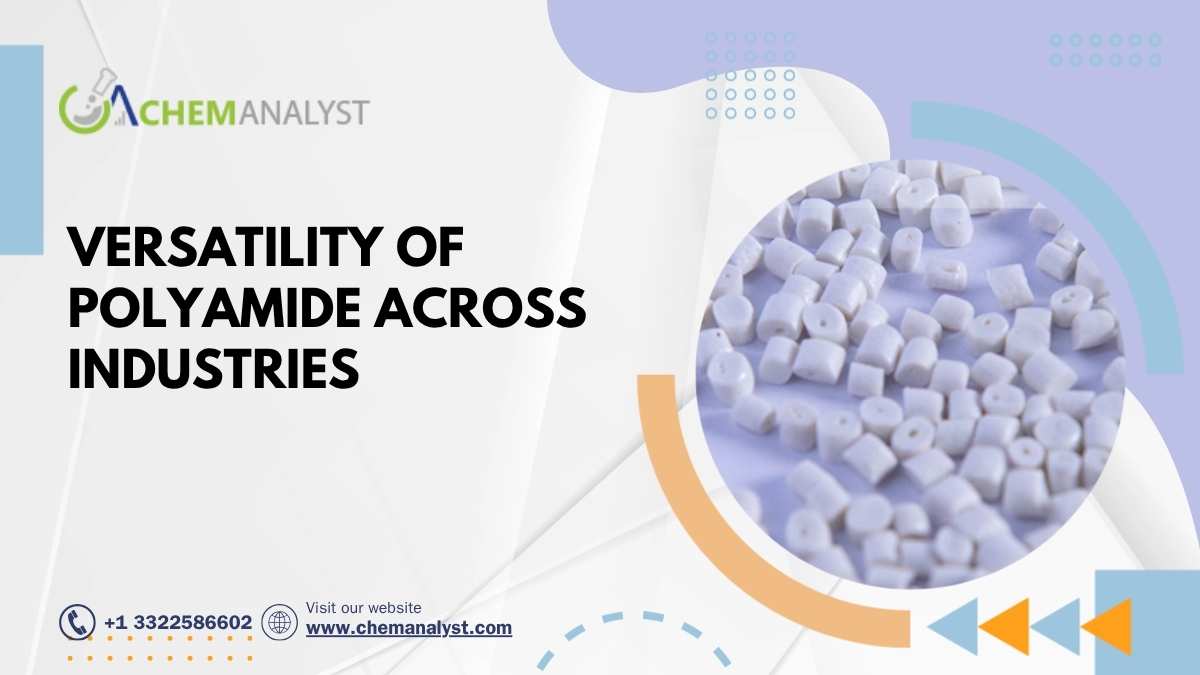
Polyamide, known for strength, heat resistance, and durability, is essential in industries like automotive, electronics, and healthcare. Its versatile properties and wide applications make it a key material in advanced manufacturing, driven by innovation and evolving market demands.
I. Introduction
Polyamide is a group of synthetic polymers that have repeating amide linkages (-CONH-) in the polymer chain. Best known for its use as nylon in textiles and engineering plastics, polyamide offers superior tensile strength, thermal stability, and resistance to abrasion and chemicals. This makes it an ideal material for demanding applications where durability and precision are essential. From automotive parts and construction equipment to electronic connectors and medical devices, polyamides remain central to product development across industries. In this blog, we delve into the multifaceted applications, market drivers, and technologies that cement polyamide's position in future-proof manufacturing.
II. Industrial Applications by Sector
Polyamide’s intrinsic properties—lightweight strength, wear resistance, and dimensional stability—enable it to serve as a critical material in structural, electrical, and performance-driven applications. The following sectors illustrate how polyamide supports durability, functionality, and sustainability objectives.

• Automotive & Transportation
Polyamide-based engineering plastics replace metals in components like air intake manifolds, radiator end tanks, and under-the-hood brackets, supporting vehicle lightweighting efforts. High-temperature polyamide grades are also utilized in battery modules, sensors, and high-voltage connectors, essential for electric vehicle architectures.
• Construction & Infrastructure
In construction, polyamide finds applications in structural fasteners, cable management systems, and window profiles, where its weather resistance and mechanical integrity ensure longevity. Flame-retardant polyamides are used in junction boxes, electrical enclosures, and conduits, meeting fire safety regulations in modern building designs.
• Electronics & Electricals
Polyamide’s dielectric properties and thermal stability make it indispensable in electrical connectors, circuit breakers, coil bobbins, and surface-mount technology (SMT) sockets. The material’s low warpage and tight tolerance capabilities support high-density circuit designs in data centres, telecoms, and consumer electronics.
• Agriculture & Fertilizers
Precision farm equipment uses polyamide parts in irrigation nozzles, fertilizer dispensers, and chemical-resistant coupling. Polyamide's UV resistance and durability to agrochemicals provide long product life in outdoor agricultural usage, and its light weight helps in energy-conserving equipment design.
• Healthcare & Pharmaceuticals
Medical grade polyamides find application in surgical tools, catheter components, and drug delivery systems because they are biocompatible, resistant to sterilization, and possess mechanical strength. Polyamide grades bearing the ISO 10993 certification ensure safe and long-term usage in disposable as well as reusable medical applications.
• Food & Beverage
Polyamide films are utilized in vacuum packaging for meats, cheeses, and perishable goods, providing superior oxygen barriers. In appliances, polyamide parts such as water pump housings and filter assemblies comply with food-contact regulations, offering durability and hygiene in kitchen equipment.
III. Market Demand and End-User Industries
Polyamide demand keeps growing, fuelled by its use in automotive lightweighting, miniaturized electronics, and construction safety networks. The auto industry continues to be the biggest consumer, with greater use in electric vehicle parts and under-the-hood applications. Electronics companies are using polyamide's precision moulding capability for high-speed data connectors and 5G infrastructure.
Asia-Pacific commands most of the global polyamide consumption, fuelled by manufacturing growth in China, India, and ASEAN countries. Europe and North America maintain robust demand in automotive, electrical, and healthcare segments. Emerging industries such as 3D printing, high-barrier flexible packaging, and bio-engineered textiles are expanding polyamide’s market scope. Sustainable and recycled-content polyamides are also gaining traction among OEMs aiming for carbon footprint reduction.
IV. Product Grades and Specifications

Polyamides are available in several commercial grades, each tailored to specific mechanical, thermal, and regulatory requirements. The most widely used grades are PA 6 (Polyamide 6) and PA 66 (Polyamide 66). PA 6 offers excellent surface finish, high impact resistance, and ease of processing, making it suitable for automotive and consumer goods. PA 66 delivers superior tensile strength, stiffness, and heat resistance, preferred for under-the-hood and structural applications.
PA 46 (Polyamide 46) is a high-performance grade with elevated crystallinity, providing exceptional heat deflection temperatures (>290°C) and chemical resistance, ideal for demanding electronic and automotive powertrain components. PA 12 (Polyamide 12) features low moisture absorption and excellent dimensional stability, making it ideal for precision tubing, cable jackets, and flexible connectors in automotive and industrial applications.
Grades are further enhanced with glass-fibre reinforcement (15–50%), flame retardants (halogenated and halogen-free), and food/medical certifications (FDA, EU 10/2011, ISO 10993) to meet specific industry needs. Key specifications include tensile strength up to 200 MPa, heat deflection temperatures exceeding 250°C, and moisture absorption profiles tailored for dimensional stability.
V. Substitutes and Limitations
Polyamide also competes with such materials as Polybutylene Terephthalate (PBT), Polycarbonate (PC), and Polyphenylene Sulphide (PPS) in engineering applications. Although PBT has lower moisture absorption, it is not as tough as polyamide. PPS has better heat resistance than polyamide at a higher material price. The main limitation of polyamide is its tendency for moisture absorption that affects dimensional accuracy in high humidity. Despite this, the cost-performance ratio of polyamide, mechanical properties, and ease of processing make it a favourite in situations where alternatives are over-specified or less economical.
VI. Innovations in Applications
Innovation in polyamide applications is increasingly focused on sustainability and high-performance enhancements. Bio-based polyamides, derived from renewable sources like castor oil, are gaining popularity for reducing environmental footprints without sacrificing mechanical properties. Recycled polyamide compounds are being integrated into automotive and consumer goods to support circular economy initiatives.
In advanced manufacturing, polyamide powders are being optimized for 3D printing (SLS technology), enabling rapid production of lightweight, durable components. Carbon-fibre reinforced polyamides are expanding into drone bodies, sports equipment, and e-bike frames. Additionally, barrier-enhanced polyamide films are improving food shelf life while reducing packaging weight. These advancements are positioning polyamide as a sustainable, high-performance material platform across emerging industries.
VII. Conclusion
Polyamide's superior combination of strength, flexibility, thermal stability, and chemical resistance secures its position as a material of strategic importance in automotive, electronics, construction, healthcare, and packaging industries. As industries demand high-performance materials with a reduced environmental footprint, polyamides are evolving through bio-based, recycled, and specialty formulations. With new applications in 3D printing, high-barrier packaging, and eco-friendly engineering plastics, polyamide continues to drive innovation in advanced manufacturing. Its adaptability and sustainability potential ensure it remains a material of choice in a future increasingly focused on performance and environmental responsibility.
FAQs
1. What are the main industrial applications of Polyamide?
Polyamide (Nylon) has broad applications in automotive parts like intake manifolds, radiator end tanks, and structural brackets. It is also widely used in electrical connectors, circuit breaker housings, construction fasteners, and high-barrier packaging films owing to its strength, thermal stability, and chemical resistance.
2. Are bio-based or recycled Polyamide equivalents existent?
Indeed, bio-based polyamides produced from renewable materials such as castor oil are already commercially available, delivering lower carbon footprints without compromises on performance. The recycled-content polyamides also find growing applications in the automobile and consumer durables in circular economy strategies to assist brands in achieving sustainability goals.
3. How does Polyamide stand against other engineering plastics?
Polyamide provides a better combination of toughness, thermal stability, and cost-effectiveness than plastics such as PBT, PC, and PPS. Although PBT absorbs less moisture and PPS can withstand higher temperatures, polyamide is used where impact strength, mechanical strength, and process flexibility at competitive cost are needed.