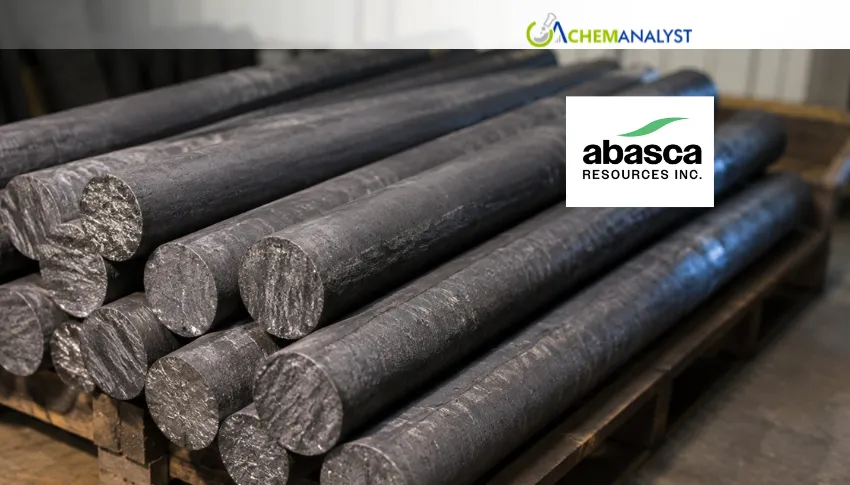
Canadian graphite developer Abasca Resources has reported encouraging early-stage economics for its Loki flake graphite project in Saskatchewan, following the release of an independent preliminary economic assessment (PEA). The assessment outlines the potential development of a large-scale, open-pit mining operation with a projected mine life of 19 years.
Under the PEA, the Loki project is designed around a processing capacity of approximately 2,750 tonnes per day. The operation is expected to produce an average of 66,500 tonnes of graphite concentrate annually, resulting in approximately 1.2 million tonnes of payable graphite over the project's operating life. According to Abasca, the long duration and scale of the proposed mine could allow the company to remain exposed to different graphite price cycles.
The project currently carries an estimated net present value (NPV) of $130 million and an internal rate of return (IRR) of 16.7%. At the base-case graphite price assumption of $1,450 per tonne, the project could generate around $662 million in after-tax free cash flow throughout its life. The estimated payback period stands at 4.7 years, while initial capital expenditure is projected at approximately $216 million.
The PEA represents an important development milestone for Abasca as it moves toward the next stage of project advancement. The company plans to collect additional technical information required for a feasibility study and continue work toward obtaining the permits necessary for future construction and mining activities.
Abasca President and CEO Dawn Zhou said the Loki project has continued to outperform the company's expectations. She highlighted the PEA as a significant milestone in the company's accelerated development strategy and said the assessment provides technical information that can support future financing and offtake discussions.
The company also sees Loki as a potential contributor to North America's critical-minerals supply chain. Developing a domestic source of flake graphite could help strengthen regional supply security for an important battery-material input, particularly as demand for graphite continues to rise alongside electric-vehicle and energy-storage deployment.
The project's economic results could improve Abasca's ability to attract strategic investors, lenders and potential offtake partners. However, the PEA remains an early-stage assessment, and the project's economics could change as feasibility work, permitting, engineering and financing progress.
Impact on the Product and Chemical Commodity Prices
The Loki project could strengthen Abasca’s position as a future graphite supplier, supporting long-term North American battery-material security. If developed, additional graphite concentrate supply could reduce dependence on imports and provide greater regional supply diversification. In the near term, however, the project is unlikely to materially affect global graphite prices because commercial production remains years away. Successful feasibility studies, financing and permitting could create expectations of future supply growth, limiting upward price pressure on graphite. For Chemanalyst-tracked commodities, graphite prices could face mild long-term downward pressure, while demand for battery chemicals such as lithium, nickel and cobalt may remain supported by continued energy-storage and EV growth.







 About ChemAnalyst
Leave a Comment
Comments (0)