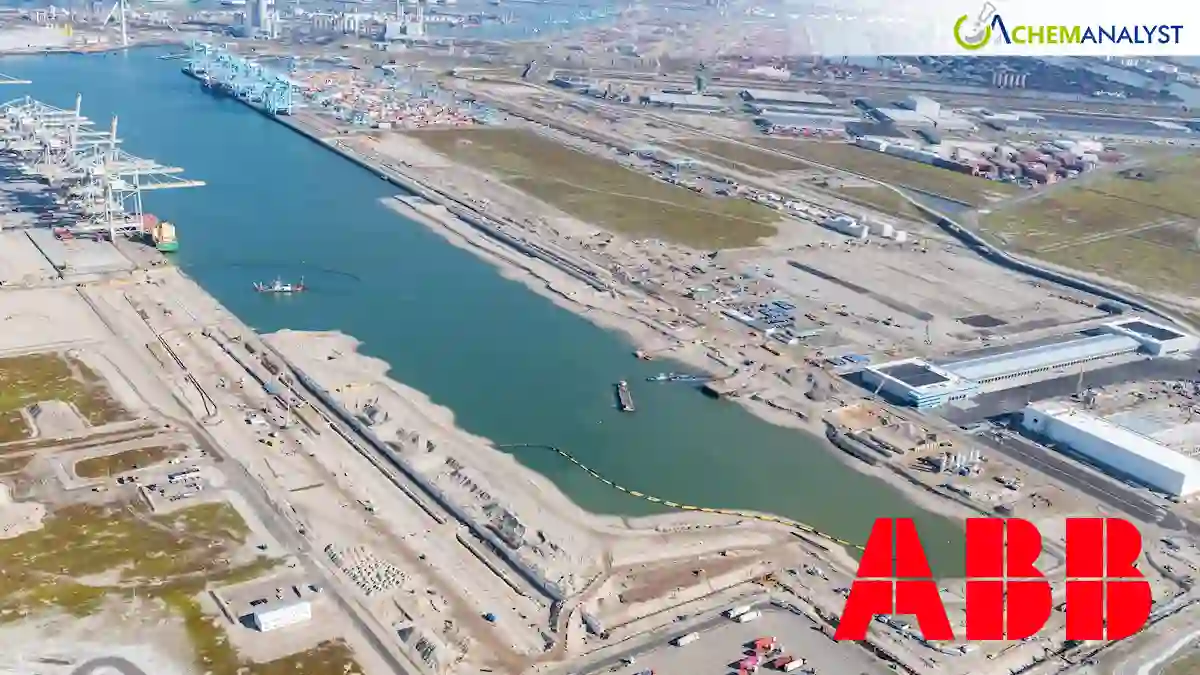
ABB has entered into a landmark agreement with Rotterdam Shore Power (RSP) to design and deliver what is set to become the world’s largest shore power project by total installed capacity. Rotterdam Shore Power is a joint venture established by the Port of Rotterdam and Eneco, aimed at accelerating the electrification and decarbonization of port operations in Europe’s largest maritime hub.
Under the agreement, ABB will engineer, construct, install, commission, and test a series of shore power systems across multiple deep-sea container terminals within the Port of Rotterdam. When fully operational, the combined systems are expected to exceed 100 megavolt-amperes (MVA) in total capacity, making this the largest shore power installation of its kind globally. The project represents a major step forward in reducing emissions from vessels while they are berthed and supports compliance with the EU’s FuelEU Maritime Regulation, which mandates the use of onshore power or equivalent zero-emission technologies for container and passenger vessels above 5,000 gross tonnage starting from 1 January 2030.
The custom-engineered shore power infrastructure is scheduled to begin operations in the second half of 2028. ABB’s systems will deliver electricity across three major deep-sea container terminals, supplying power to 35 individual connection points located at APM Terminals Maasvlakte II, Hutchison Ports ECT Delta, and Hutchison Ports ECT Euromax. Once fully deployed, the installations will be capable of supplying power to as many as 32 container ships simultaneously during cargo loading and unloading operations.
Beyond engineering and construction, ABB’s scope of work also includes long-term service agreements for each terminal, ensuring system reliability and performance over multiple years. While the contracts were officially booked in December 2025, the financial terms of the agreement were not disclosed.
ABB will utilize prefabricated and modular solutions to reduce installation timelines and minimize disruption to ongoing port operations. The infrastructure is designed to be scalable, allowing for future expansion and seamless integration with renewable energy sources as the port continues to transition toward cleaner power. Additionally, ABB will provide its advanced supervisory control and data acquisition (SCADA) system, enabling real-time monitoring, operational control, and precise energy-use tracking to support transparent and accurate customer billing.
The shore power connections will allow vessels to switch off their auxiliary engines while docked, significantly cutting emissions and noise. According to estimates by Rotterdam Shore Power, if vessels use shore power for at least 90 percent of their time at berth, annual carbon dioxide emissions at the three terminals could be reduced by approximately 96,000 metric tons from 2030 onward. This reduction will also lead to improved air quality and quieter surroundings, creating healthier working conditions for port employees and a better living environment for nearby communities.
Commenting on the collaboration, Rotterdam Shore Power Co-Chief Executive Officers Ina Barge and Tiemo Arkesteijn highlighted the importance of partnering with ABB, citing its technical expertise and proven experience in large-scale electrification projects. They emphasized that the initiative positions Rotterdam as a global leader in port electrification and climate-focused infrastructure development.
Rune Braastad, President of ABB’s Marine & Ports division, stated that the project underscores ABB’s ability to deliver end-to-end shore power solutions, from concept and design through installation, commissioning, and long-term maintenance. He noted that ABB is proud to support the Port of Rotterdam’s decarbonization efforts, describing the project as a critical milestone in advancing the European Union’s vision of emission-free ports.







Leave a Comment
Comments (0)