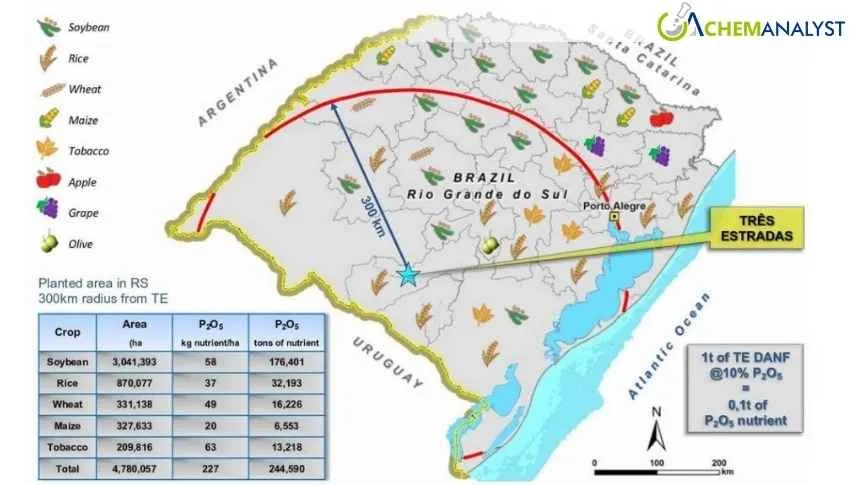
ASX-listed Aguia Resources has achieved a significant milestone by securing an operating license for its Tres Estradas phosphate project in Rio Grande do Sul, Brazil, officially commencing mining and processing operations on May 18, 2026. This critical regulatory approval, granted by Brazil's environmental agency FEPAM on May 15, positions Aguia as one of the few domestic suppliers of phosphate in a Brazilian market heavily dependent on imported fertilizers.
The Tres Estradas project is poised to disrupt the existing market dynamics by providing a locally sourced, cost-effective alternative to expensive and often supply-disrupted imports. Brazil, a global agricultural powerhouse, currently imports approximately 70% of its phosphate needs, with the state of Rio Grande do Sul importing 100% of its requirements. Global demand for fertilizers is projected to grow by 60% over the next three decades, underscoring the strategic importance of this domestic supply. The timing is particularly crucial as farmers in southern Brazil prepare for the summer planting season, facing limited availability of imported phosphate due to factors like disruptions in the Strait of Hormuz.
Aguia's immediate operational plans involve the removal of topsoil and the extraction of high-grade phosphate blocks from the north-eastern area of the open pit. The extracted raw material will be transported to the company's extensively refurbished processing plant in Caçapava do Sul, where the first batch of its proprietary 'PAMPAFOS' phosphate product is expected for processing and bagging in the first week of June. This follows a consistent two-year strategy focused on a low capital expenditure (capex) and operational expenditure (opex) model to maximize shareholder value. The company had previously secured a 10-year lease for the Dagoberto Barcelos processing facility, bypassing the need for new construction and accelerating its production timeline.
The economic impact of this development is substantial. It offers Brazilian farmers a more reliable and competitively priced source of phosphate, potentially reducing their input costs and enhancing food security for the nation. Aguia has already seen strong market interest, with non-binding memorandums of understanding in place covering over 70% of its projected 2026 annual output of 60,000 tonnes of Pampafos. Geopolitically, establishing domestic phosphate production lessens Brazil's vulnerability to international supply chain shocks and price volatility. Industry-specific impacts include a shift towards local sourcing within Brazil's agricultural sector, supporting national self-sufficiency in fertilizer production. Aguia's project also has the potential for expansion, with an installed capacity to process 150,000 tons annually and space to increase to 300,000 tons.







 About ChemAnalyst
Leave a Comment
Comments (0)