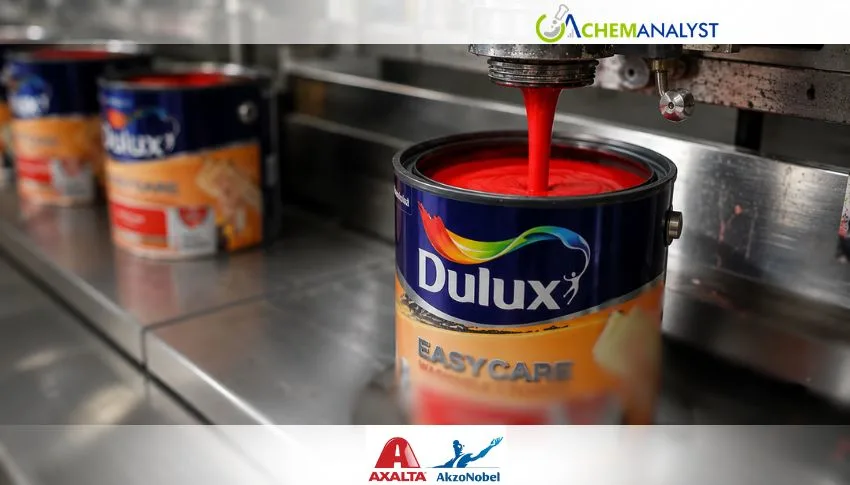
Akzo Nobel has officially rejected a €7.5 billion (approximately $8.5 billion) acquisition proposal from Japan-based Nippon Paint Holdings for its decorative paints business, reaffirming its commitment to the previously announced merger with Axalta Coating Systems. The Dutch coatings giant stated that the unsolicited proposal significantly undervalues one of its most important business segments and does not offer sufficient strategic or financial benefits compared with its existing merger plan.
In a statement released on Monday, Amsterdam-headquartered Akzo Nobel, renowned globally for its Dulux paint brand, confirmed that both its management board and supervisory board unanimously support the planned merger of equals with Axalta. According to the company, the transaction presents stronger long-term strategic value, greater growth opportunities, and enhanced benefits for shareholders, employees, and customers than Nippon Paint’s proposal.
The rejected offer marks the latest chapter in Nippon Paint’s efforts to acquire Akzo Nobel’s decorative paints division. Earlier this year, Nippon Paint, together with Sherwin-Williams, had jointly pursued an acquisition of the entire Dutch coatings company through two separate all-cash offers. However, both proposals were turned down after Akzo Nobel concluded that they undervalued the business and could encounter significant regulatory hurdles. Following those failed attempts, Nippon Paint shifted its focus to acquiring only the decorative paints business.
Despite the renewed interest, Akzo Nobel’s leadership chose not to engage in negotiations with Nippon Paint. Industry sources indicated that the proposal valued the decorative paints business at approximately 12 times its projected 2026 EBITDA, a valuation the company considered insufficient given the business’s strong market position, premium brands, and future growth potential. Reports also suggest that Akzo Nobel did not formally present the offer to shareholders because management believed it lacked adequate value.
The global paints and coatings industry has been witnessing increasing consolidation as manufacturers seek greater operational efficiencies and stronger market positions amid slowing demand, inflationary pressures, and rising raw material costs. Against this backdrop, the proposed merger between Akzo Nobel and Axalta is expected to create one of the world's largest coatings companies, with an estimated enterprise value of nearly $25 billion.
Under the agreed transaction, Akzo Nobel shareholders would own approximately 55% of the combined company, while the merged entity would relocate its primary stock market listing from Amsterdam to New York. The merger remains subject to regulatory approvals, including a review by the U.S. Federal Trade Commission, which has requested additional information from both companies as part of its assessment.
Nippon Paint’s proposal also carried strategic significance because it would reunify the globally recognized Dulux brand under one corporate umbrella. The acquisition would further strengthen Nippon Paint’s presence in Europe, where Akzo Nobel’s decorative paints business generates nearly two-thirds of its total revenue. Industry observers had also noted that Akzo Nobel had previously explored the possibility of divesting certain decorative paints operations in Southeast Asia, although Nippon Paint reportedly remained interested only in acquiring the entire business rather than selected regional assets.
Financial markets reacted cautiously to the developments. Shares of Nippon Paint fell by as much as 3.4% during trading before recovering some of the losses later in the session, reflecting investor concerns about the uncertainty surrounding another unsuccessful acquisition attempt.
Market analysts believe Nippon Paint’s latest proposal could revive discussions regarding the intrinsic value of Akzo Nobel’s standalone businesses. Analysts at Jefferies observed that the decorative paints business has relatively limited operational overlap with Axalta, suggesting that the merger may generate fewer cost synergies than some investors initially expected. Nevertheless, they acknowledged that the transaction could still deliver meaningful strategic advantages through expanded geographic reach, product diversification, and enhanced competitive positioning.
The latest development also echoes earlier industry events. In 2017, Nippon Paint played a role in disrupting merger discussions between Akzo Nobel and Axalta before ultimately failing to acquire Axalta itself. During the same year, Akzo Nobel also successfully resisted a $29 billion unsolicited takeover bid from U.S.-based rival PPG Industries, reinforcing the company's long-standing preference for pursuing strategic combinations that align with its long-term vision rather than accepting opportunistic acquisition offers.
Impact on Products and Chemical Commodity Prices
Akzo Nobel’s decision to reject Nippon Paint’s bid and proceed with its planned merger with Axalta is not expected to affect coatings production in the short term. Decorative paints, industrial coatings, and automotive coatings will continue to be supplied without disruption. For chemical commodities tracked by ChemAnalyst, including Titanium Dioxide (TiO2), Epoxy Resins, Acrylic Acid, Butyl Acrylate, Ethyl Acetate, pigments, and solvents, the immediate price impact is expected to remain neutral. Over the long term, the combined company's larger procurement scale and operational efficiencies could improve raw material sourcing, helping stabilize input costs and limiting significant price volatility.








 About ChemAnalyst
Leave a Comment
Comments (0)