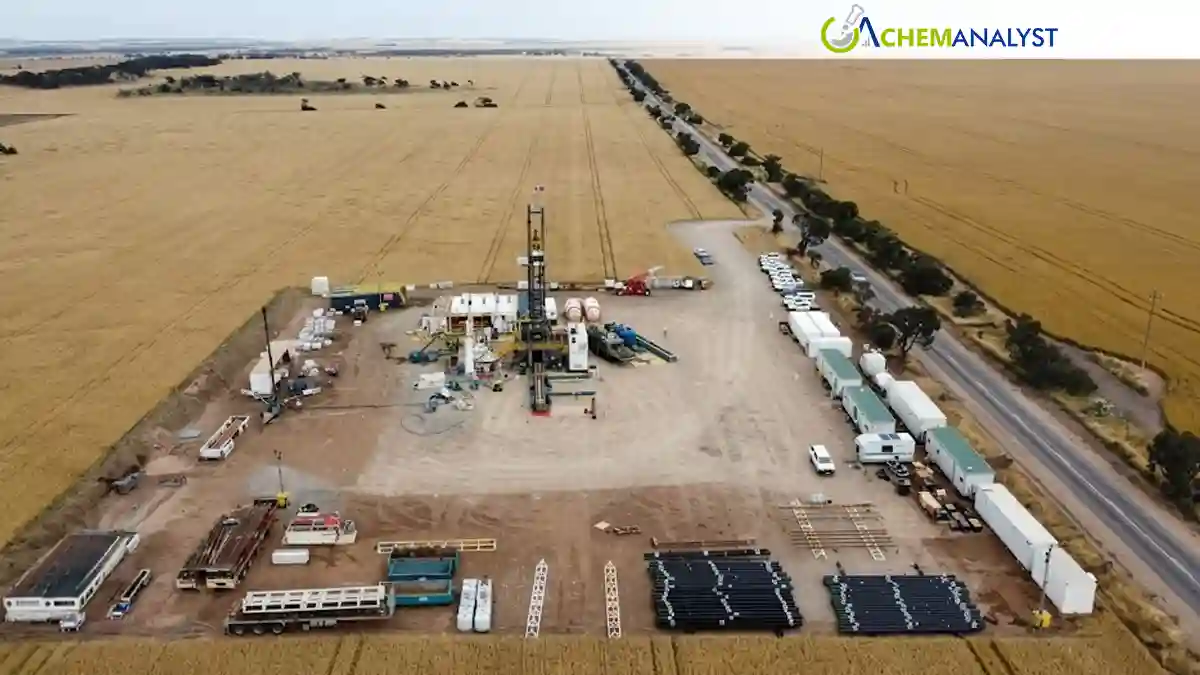
Liberty Petroleum Corporation has identified potentially significant helium resources within its large exploration position in Western Australia, raising hopes that a new source of the critical gas could emerge as global supplies remain under severe pressure.
Through its affiliate Petro Quest Australia, Liberty holds rights to five contiguous exploration permits covering more than 20 million acres across the Officer Basin. The company’s Chief Consulting Geologist, Dr. Stuart Lake, estimates that the acreage could contain risked resource potential of up to 11 billion barrels of oil equivalent and approximately 7.4 trillion cubic feet of natural gas.
A review of 22 mapped prospects targeting sub-salt formations has also indicated potential helium volumes of as much as 959 billion cubic feet. Liberty believes the potential value of helium and hydrogen could eventually rival that of the area’s conventional oil and gas resources.
The company’s announcement comes amid a worsening global helium supply situation. In March 2026, Iranian missile strikes damaged Qatar’s Ras Laffan Industrial City, affecting the Pearl GTL facility and disrupting part of Qatar’s helium production. QatarEnergy has estimated that the attacks reduced the country’s LNG export capacity by around 17%, with repairs potentially requiring three to five years.
Qatar remains one of the world’s most important helium suppliers, accounting for close to one-third of global supply. The disruption has increased concerns among industries that rely heavily on the gas, including healthcare, semiconductor manufacturing, aerospace and defense.
Helium is particularly difficult to replace because it cannot be commercially manufactured or easily substituted. It is essential for MRI cooling systems, semiconductor production, rocket launches and several defense technologies. The previous sale of the U.S. Federal Helium Reserve to private industry in 2024 has further increased attention on the security of global helium supplies.
Liberty Petroleum and its partner, Mangat Group, are now considering expanding their planned petroleum drilling program to evaluate helium and hydrogen at greater depths and across a broader area. Successful exploration could potentially add a strategically important helium resource to Western Australia.
The company plans to focus on conventional, shallow-well targets and does not currently expect to require hydraulic fracturing or directional drilling. Liberty is also nearing completion of Native Title agreements with Aboriginal groups, which would support regulatory progress toward exploration and drilling approvals.
Impact of the Product and Chemical Commodity Prices
If Liberty confirms commercially viable helium reserves, the discovery could strengthen Australia’s position as a future global helium supplier and reduce dependence on concentrated sources such as Qatar. Increased supply would improve availability for semiconductor manufacturing, healthcare, aerospace and defense applications. In the near term, however, the project is exploratory, so it is unlikely to materially change global helium prices immediately. Confirmation of large reserves could create a bearish long-term effect on helium prices by easing supply concerns. For chemical commodities tracked by ChemAnalyst, the direct impact would remain limited, although lower helium costs could gradually reduce operating expenses for semiconductor and high-tech manufacturing industries.







 About ChemAnalyst
Leave a Comment
Comments (0)