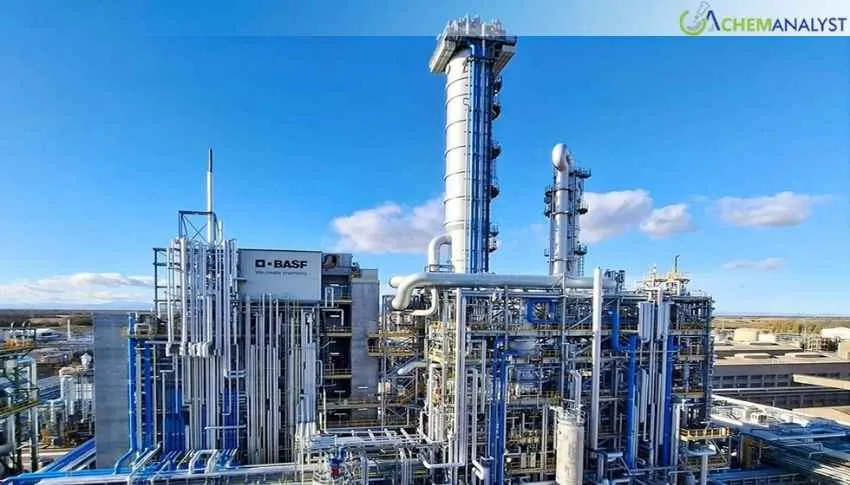
BASF has announced the launch of new product variants of key intermediates—butanediol (BDO), tetrahydrofuran (THF), polytetrahydrofuran (PolyTHF®), and N-methylpyrrolidone (NMP)—that feature a reduced product carbon footprint (rPCF). These products are manufactured at the company’s integrated production hub located in Ludwigshafen and are designed to support industries seeking lower-carbon raw material alternatives. BASF plans to supply these rPCF variants to customers across global markets, further strengthening its developing portfolio of sustainable intermediates.
The reduced carbon footprint of these newly introduced products is primarily achieved by utilizing low-emission feedstocks and utilities at the Ludwigshafen Verbund production site. Through these operational improvements, BASF has managed to lower the carbon footprint of these materials by at least 10 percent compared with their conventional equivalents produced at the same facility. This initiative aligns with the company’s broader sustainability strategy aimed at helping downstream industries reduce emissions associated with their supply chains.
With the introduction of these rPCF variants, BASF is expanding its lineup of sustainable intermediate chemicals while enabling customers to move closer to their Scope 3 emissions reduction goals. These emissions typically originate from value-chain activities outside a company’s direct control, including raw material sourcing and product manufacturing. By offering intermediates with a reduced carbon footprint, BASF provides manufacturers with an accessible way to lower their environmental impact without requiring major operational changes.
The newly introduced products can be used across several sectors, including automotive, pharmaceuticals, electronics, textiles, and consumer goods manufacturing. A key advantage of these materials is that customers can incorporate them into existing production systems without modifying their formulations, equipment, or manufacturing processes. This ensures a smooth transition toward more sustainable raw materials while maintaining production efficiency and product quality.
According to Verena Siegel, Vice President of Global Business Management for Butanediol and Derivatives in BASF’s Intermediates division, industries around the world are increasingly seeking cost-competitive solutions that reduce carbon footprints while meeting sustainability commitments. She noted that BASF’s rPCF variants provide a straightforward option for companies to achieve measurable reductions in product carbon footprints—at least ten percent—without introducing additional operational complexity.
BDO plays a central role as a key chemical building block in numerous value chains. It is used in the production of PolyTHF and is also an essential precursor for manufacturing THF and gamma-butyrolactone (GBL), which are widely used in pharmaceutical applications. In addition, BDO serves as a starting material for producing NMP and polybutylene terephthalate (PBT). BASF remains one of the world’s leading producers of BDO and its derivatives, operating two production plants with a combined annual capacity of approximately 350,000 metric tons.
PolyTHF is primarily utilized in the production of elastic fibers such as spandex and elastane, which are widely used in garments including sportswear, swimwear, underwear, shirts, and stretch denim. The material also acts as an important component in thermoplastic polyurethanes (TPU), which are used to manufacture abrasion-resistant hoses, films, and cable sheathing, particularly for automotive applications. Additionally, PolyTHF is used in producing polyetheresters, polyetheramides, and cast elastomers, including wheels for skateboards and inline skates. BASF currently operates three PolyTHF production facilities in Europe, North America, and the Asia-Pacific region, with a total annual capacity of about 250,000 metric tons, making it one of the leading global suppliers of this material.
Meanwhile, N-methylpyrrolidone (NMP) is a highly polar aprotic solvent widely used in multiple industries. Its applications include pharmaceutical manufacturing, production of specialized filtration membranes, and processing of lithium-ion batteries. NMP is also used in the formulation of coatings, inks, and resins, as well as in certain agricultural products and oil and gas extraction processes. By offering these chemicals in reduced-carbon versions, BASF aims to support sustainable innovation throughout global industrial supply chains.






Leave a Comment
Comments (0)