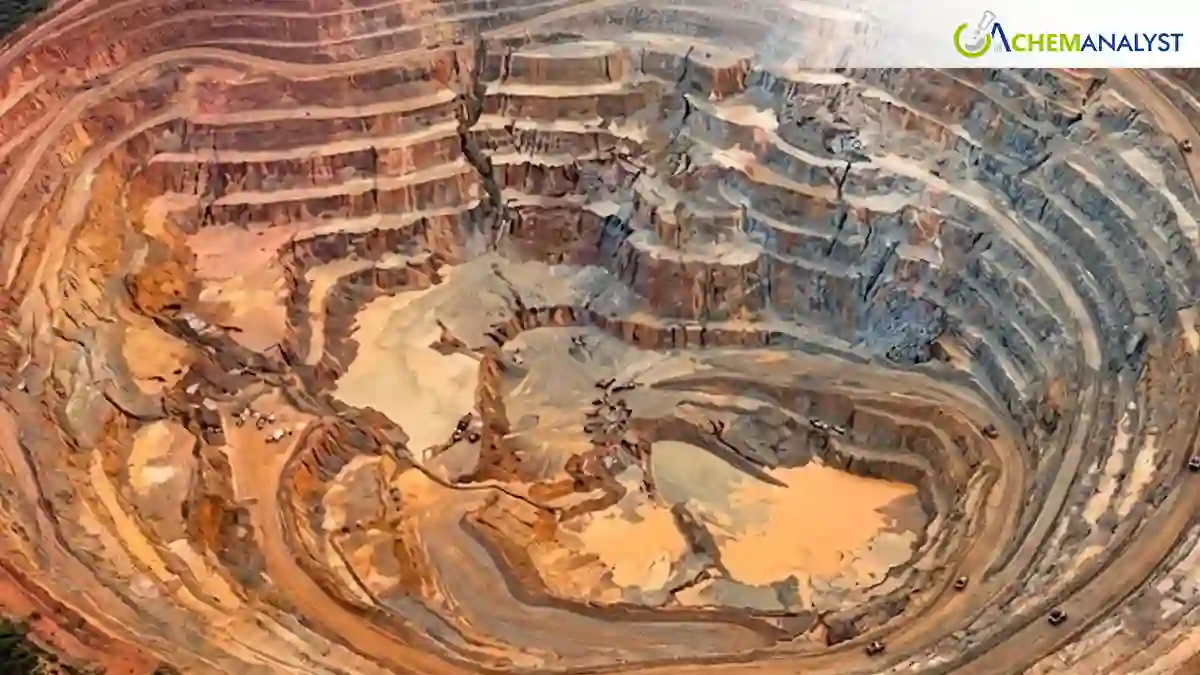
Brazil is actively expanding its exploration for new rare earth element (REE) reserves, a strategic move driven by surging global demand and the critical role these minerals play in modern technology and the clean energy transition. The Geological Survey of Brazil (SGB), under the Ministry of Mines and Energy, has advanced its assessment of new mineralization zones, with promising initial results from fieldwork in states such as São Paulo, Paraná, and Santa Catarina. Researchers have identified very high concentrations of REE in some samples, exceeding 8,000 parts per million (ppm) of total rare earth elements (TREE), indicating significant enrichment.
This intensified search is a direct response to the escalating global interest in rare earths, which are indispensable for manufacturing electric vehicle motors, wind turbines, smartphones, semiconductors, advanced medical equipment, and aerospace and defense systems. Brazil, already holding the world's second-largest rare earth reserves after China, is seen as a strategic and safe region for mining investment by global investors. The country's existing rare earth projects are primarily concentrated in Minas Gerais and Goiás, but the SGB's efforts are now extending to new frontiers to diversify and expand its known reserves.
The push for new reserves carries significant economic, geopolitical, and industry-specific impacts. Economically, the expansion of rare earth exploration and production is expected to attract substantial foreign investment, foster industrial development, and create jobs, particularly in the clean energy sector. Brazil is moving beyond merely exporting raw materials, aiming to develop a robust downstream industry capable of processing, separating, and manufacturing rare earth magnets domestically. This ambition is supported by the Brazilian development bank BNDES, which has allocated a $920 million funding program to ten critical mineral projects. Notably, USA Rare Earth recently acquired control of Mineração Serra Verde for US 2.8 billion, highlighting the influx of capital into the sector. Furthermore, the establishment of the Centre for Rare Earths Innovation, Technology and Recycling (CRITR) in Poços de Caldas, expected to launch in late 2026, underscores Brazil's commitment to a full-cycle rare earth industry, including recycling.
Geopolitically, Brazil is positioning itself as a vital alternative to China, which currently dominates the global rare earth supply chain. By increasing its production and processing capabilities, Brazil aims to offer Western nations a diversified and secure source of these critical minerals, thereby enhancing global supply chain resilience. This strategic shift could elevate Brazil to a leadership position in the sector, leveraging its estimated reserve of 21 million metric tons of rare earth metals. Industry-wise, the focus extends to developing innovative technologies, research and development in AI, metallurgy, and material science, all contributing to a more integrated and sustainable rare earths ecosystem in the country.







 About ChemAnalyst
Leave a Comment
Comments (0)