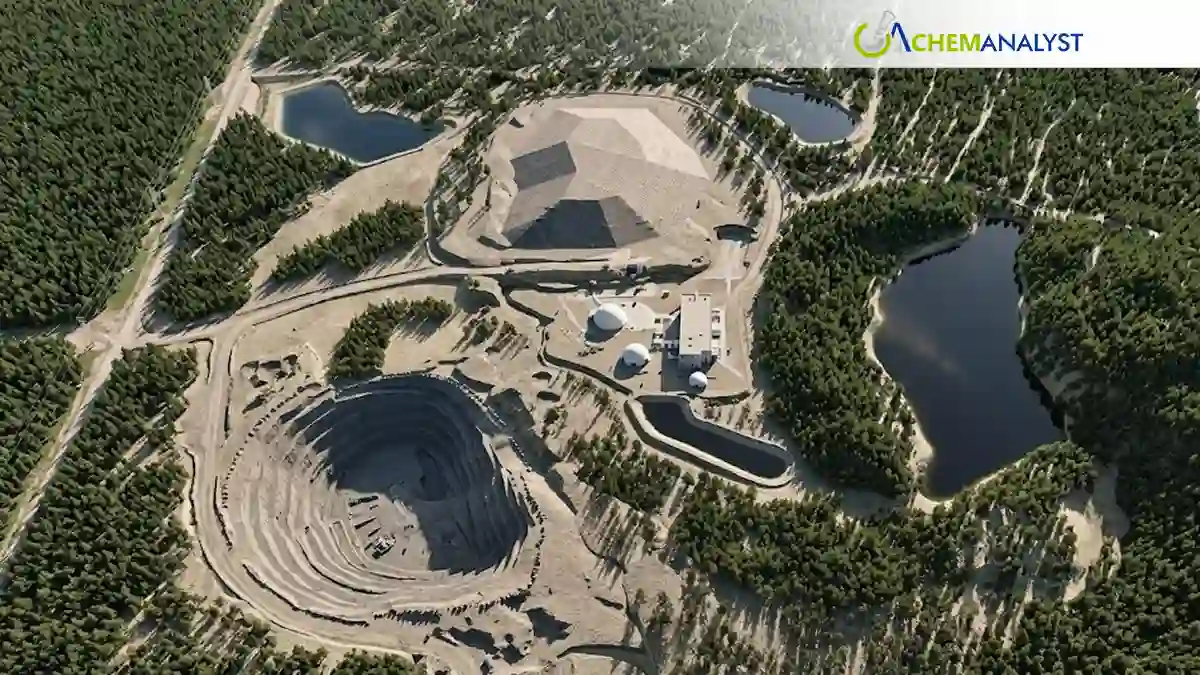
Canada has officially broken ground on the Matawinie Mine in Quebec, heralded as the largest graphite mine in the G7, marking a significant step in the nation's critical minerals strategy. Prime Minister Mark Carney attended the ceremony, emphasizing the project's role in bolstering Canada's economy and securing global supply chains for essential materials.
The Matawinie Mine, operated by Nouveau Monde Graphite (NMG) near Saint-Michel-des-Saints, north of Montreal, is expected to produce over 106,000 tonnes of natural graphite annually for 25 years. This output is eight times Canada's current total graphite production, which stood at 12,000 tonnes in 2024, placing Canada eighth globally with a mere 0.7% market share, far behind China's dominant 79.4%. Graphite is a vital component for electric vehicle (EV) batteries, energy storage systems, advanced manufacturing, and defense technologies.
The project addresses the rapidly growing global demand for graphite, which is currently outpacing supply, and aims to reduce international reliance on concentrated foreign sources, particularly China. By developing this mine, Canada seeks to position itself as a reliable and responsible supplier of critical minerals to international partners in Asia and Europe, including Japan and Italy. This initiative aligns with Canada's Critical Minerals Strategy and the G7 Critical Minerals Production Alliance, launched at the 2025 G7 Leaders' Summit.
Economically, the Matawinie Mine is projected to inject nearly $2 billion into the Canadian economy and generate over 1,000 jobs across engineering and skilled trades. NMG recently secured an approximately $426 million (US$309.5 million) financing package to advance the project. Furthermore, the Canadian government has committed a $459 million financing package and a seven-year offtake agreement for 30,000 tonnes of graphite concentrate annually, primarily for strategic, civil, and military sectors. The Italian energy company Eni holds nearly a 12% stake in NMG, with Canadian and Quebec government funds also being major shareholders.
A key industry-specific impact is the integration of the Matawinie Mine with NMG's planned Bécancour Battery Material Plant. This integration will enable the production of spherical graphite, establishing Canada's first fully integrated graphite supply chain, from extraction to refinery. This integrated approach, powered by Quebec's low-cost, renewable hydroelectricity, is designed to create an all-electric, low-carbon production model, significantly reducing greenhouse gas emissions compared to conventional graphite supply chains.
The project's accelerated timeline saw construction begin just six months after its referral to Canada's Major Projects Office (MPO). The MPO played a crucial role in coordinating financing, permitting, approval processes, and securing offtake agreements, showcasing the government's commitment to fast-tracking nationally important resource projects. Construction and commissioning are expected to take about 31 months, with full commercial production anticipated by the end of 2028.







 About ChemAnalyst
Leave a Comment
Comments (0)