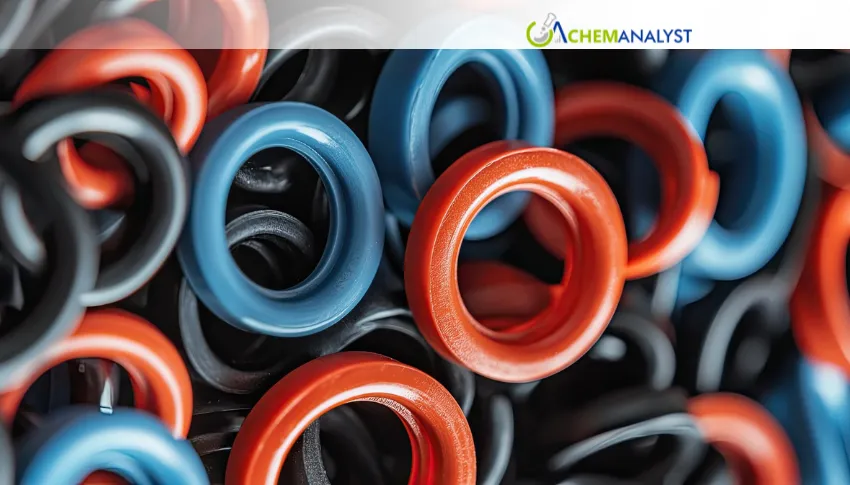
China Fluorosilicone Rubber prices declined 4.60% in June 2026 as higher domestic production, softer export demand, and cautious downstream procurement weighed on the market. Increased merchant availability following higher operating rates, coupled with seasonal demand weakness, pressured FOB prices, while sellers accepted lower margins to sustain shipment volumes amid subdued buying activity.
Supply-side conditions for became increasingly favorable during June, placing downward pressure on Fluorosilicone Rubber prices. Integrated producers across the Yangtze River Delta increased operating rates after completing May environmental compliance audits, significantly improving domestic availability. At the same time, improved supplies of 3,3,3-trifluoropropylchlorosilane eliminated earlier raw material bottlenecks, while stable hydrofluoric acid availability and unchanged electricity costs maintained consistent production economics. These factors enabled Fluorosilicone Rubber manufacturers to raise output and expand spot availability at Shanghai ports. With inventories increasing and no significant production disruptions reported, suppliers lowered FOB quotations to secure export orders and maintain sales volumes, reinforcing the downward movement in the Fluorosilicone Rubber market.
Demand for Fluorosilicone Rubber remained mixed but generally weaker across major end-use sectors. Domestic automotive consumption softened considerably during June, with China's passenger vehicle retail sales falling to 1.602 million units from 1.93 million units in May. The decline was particularly pronounced in plug-in hybrid and extended-range electric vehicle segments, reducing demand for high-performance elastomer components that utilize Fluorosilicone Rubber. Export demand for Fluorosilicone Rubber also weakened as European elastomer manufacturers continued working through elevated inventories, while several US buyers delayed purchases amid foreign exchange uncertainties and cautious inventory management. In addition, seasonal summer procurement slowdowns further reduced spot buying activity, leaving transaction volumes below expectations despite competitive supplier pricing.
Looking ahead, Fluorosilicone Rubber prices are expected to remain under moderate downward pressure during the near term as expanded domestic supply and weak export demand continue to outweigh consumption growth. Seasonal summer slowdowns are likely to keep Fluorosilicone Rubber procurement restrained across both domestic and overseas markets, while elevated inventories among international buyers may continue limiting export enquiries. Producers are expected to maintain relatively high operating rates to preserve market share, ensuring sufficient product availability despite softer demand conditions.
Further into the second half of 2026, market conditions are expected to improve gradually as seasonal restocking activity resumes and downstream manufacturing strengthens. Demand from automotive, electronics, and industrial sealing applications could recover as production schedules normalize after the summer slowdown. However, Fluorosilicone Rubber market participants will continue monitoring overseas inventory levels, export demand trends, logistics disruptions linked to the monsoon season, and potential winter energy-management measures that could influence production costs and supply availability. Until stronger downstream demand emerges, China's Fluorosilicone Rubber market is expected to remain relatively soft, with only a gradual recovery anticipated later in the year.








 About ChemAnalyst
Leave a Comment
Comments (0)