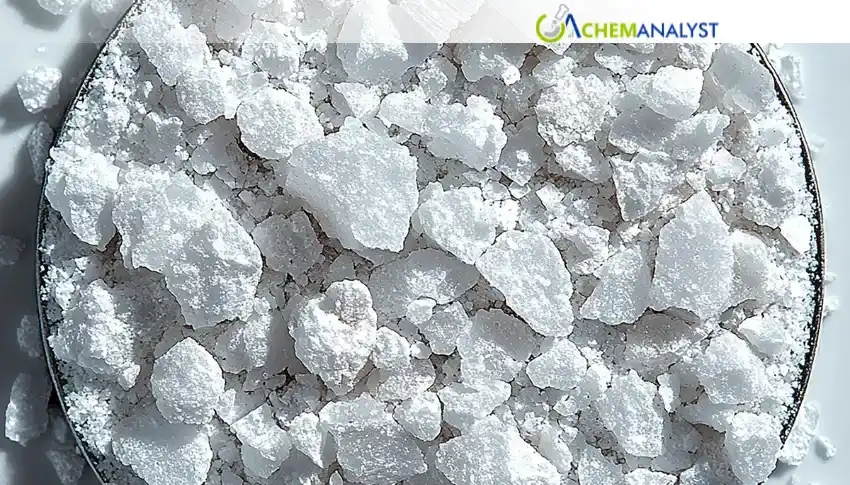
China Potassium Aluminium Sulphate prices increased 1.77% in July 2026 as stronger export enquiries and resilient domestic consumption provided demand-side support. Higher sulphuric acid costs also raised production expenses, while stable potassium chloride prices limited additional feedstock pressure and helped sustain the upward price movement.
On the supply side, potassium aluminium sulphate production economics in July were shaped by a divergent feedstock cost picture. Sulphuric acid — used in stoichiometric quantity alongside potassium sulphate and aluminium sulphate in the product's synthesis — rose 4.16%, reflecting the structural tightness in the global sulphuric acid market costs and strengthening the cost floor for Potassium Aluminium Sulphate producers. Potassium chloride, the alternative potassium source route, remained stable through the month, contributing no cost-push pressure. National primary aluminium output expanded 1.6% year-on-year, ensuring plentiful bauxite-derived alumina residues available for potassium aluminium sulphate synthesis — preventing supply-side tightness from the aluminium input chain and confining cost pressure exclusively to the sulphuric acid dimension. Demand conditions provided stronger pricing support. Export enquiries increased from municipal water-treatment utilities in Indonesia, Vietnam, and Pakistan, where buyers front-loaded procurement ahead of anticipated monsoon-related port congestion. Domestic demand also benefited from stimulus-driven infrastructure spending, while higher environmental-protection investment during the first half of 2026 supported wastewater-treatment applications. Leather tanning and dyestuff production provided additional consumption support for Potassium Aluminium Sulphate.
Looking ahead, Potassium Aluminium Sulphate prices are expected to increase further in August 2026 as industrial activity recovers following the seasonal summer slowdown. Water-treatment and wastewater-related consumption is anticipated to strengthen as infrastructure projects progress, while industrial users are expected to gradually resume more regular procurement schedules. Buyers are also likely to increase purchases ahead of Q4 production cycles, encouraging suppliers to maintain firmer offers. At the same time, sulphuric acid prices will remain an important cost-side indicator; continued strength in the feedstock market could further support Potassium Aluminium Sulphate producer pricing and limit downward flexibility.
In September, Potassium Aluminium Sulphate prices are forecast to remain on an upward trajectory as buyers prepare for Q4 requirements and build inventories ahead of China's Golden Week holiday disruption. Pre-holiday procurement could accelerate export and domestic shipments, particularly among water-treatment and industrial users seeking to secure material before potential logistical interruptions. Stronger post-summer operating rates are also expected to improve overall consumption, while sustained infrastructure-related activity should provide a stable demand base for Potassium Aluminium Sulphate. However, plentiful alumina residue availability and stable potassium chloride costs could moderate the magnitude of the increase. Overall, firmer industrial demand, pre-holiday stocking, and elevated sulphuric acid costs are expected to maintain a positive pricing bias for Potassium Aluminium Sulphate through September.







 About ChemAnalyst
Leave a Comment
Comments (0)