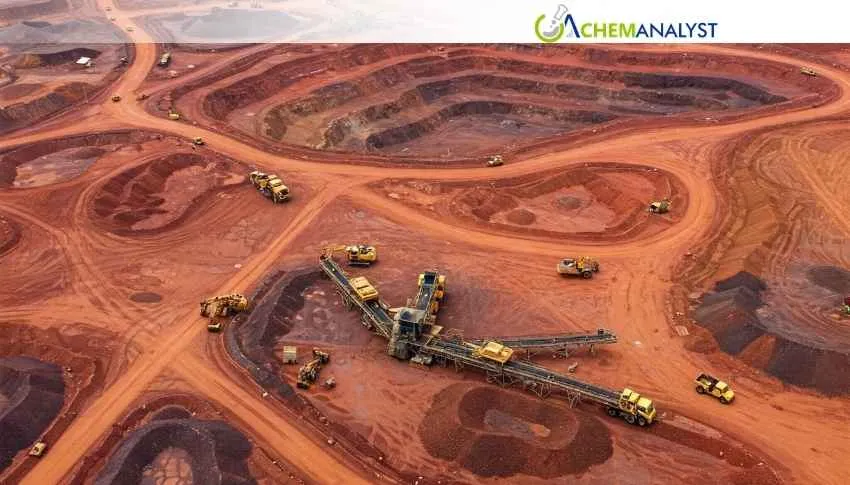
Chinese firms are significantly expanding their presence in Guinea's alumina sector, with major investments poised to transform the West African nation from a primary bauxite exporter into a prominent global alumina production hub. This strategic shift is largely driven by Aluminum Corporation of China (Chalco), which has agreed to invest $1 billion in building a new 1.2-million-ton-a-year alumina refinery in Guinea, marking its first overseas refining venture.
A key cause for this development is Guinea's concerted effort to move beyond raw mineral exports and foster in-country processing capacity, aiming to generate greater economic returns from its vast mineral wealth. The Guinean government has been actively pressing mining companies to develop local processing, a stance that reflects a broader trend among commodity-rich nations to influence prices and encourage domestic value addition. Under the agreement, Guinea will receive an initial 5% stake in Chalco's project at little or no cost, with the option to increase its holding to 35% at market value, providing the nation with a substantial economic role.
From China's perspective, these investments are crucial for securing long-term raw material supplies for its aluminum industry. Chinese companies, including Chalco and rivals like China Hongqiao Group, are actively expanding into bauxite-rich countries to lock in upstream supply. This overseas expansion is further motivated by China's domestic environmental regulations, which have imposed caps on aluminum production, prompting Chinese smelters to seek refining capacity abroad to maintain or expand their market share. Shipping alumina instead of raw bauxite is also more efficient due to lower weight and higher value, benefiting both producers and consumers. Moreover, Guinean bauxite, predominantly gibbsite-type, is less energy-intensive to refine, and many Chinese refineries are specifically engineered to process it, creating a "geological lock-in" effect.
The consequences of these developments are far-reaching. Economically, Guinea stands to gain significantly through job creation, industrial development, and increased value capture from its bauxite reserves. The potential transformation into an alumina hub could profoundly impact global alumina trade flows and enhance China's long-term raw material supply security. Geopolitically, this deepens China's footprint in Africa's resource-rich economies and signifies an evolving China-Africa economic relationship, moving beyond mere raw material extraction to include processing and manufacturing.
Industry-specific impacts include a potential disruption to China's aluminum industry if Guinea implements proposed bauxite export controls, which are being finalized to address a sharp decline in bauxite prices caused by a surge in Guinean exports in 2025. This has already led to a surge in alumina prices on China's Shanghai Futures Exchange. Chalco's position across the bauxite-to-alumina value chain in Guinea will be significantly strengthened, and other Chinese firms like State Power Investment Corporation and Winning International Group are also involved in developing alumina refineries in the country. This also serves as a critical reminder for other bauxite-producing nations, such as Ghana, to accelerate their own in-country processing initiatives to remain competitive.








 About ChemAnalyst
Leave a Comment
Comments (0)