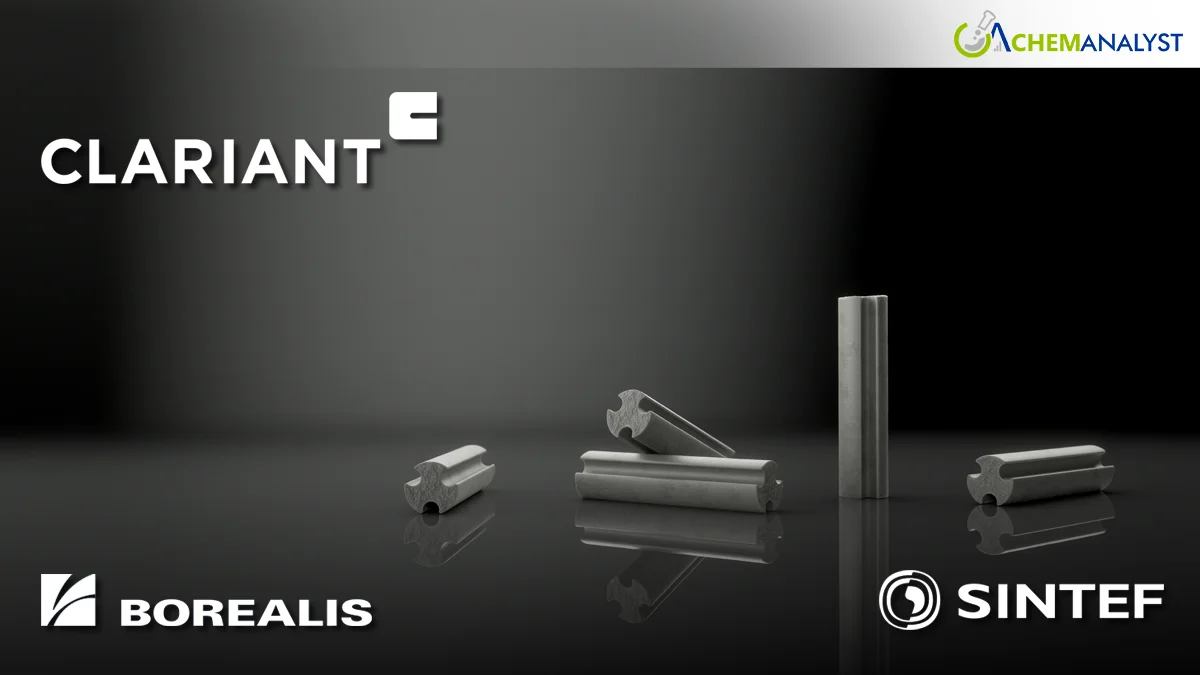
Clariant, a sustainability-focused specialty chemicals company, has successfully completed a collaborative pilot-scale project with Borealis, a major provider of advanced and circular polyolefin solutions, and SINTEF, one of Europe’s leading independent research institutions. The joint initiative focused on demonstrating Clariant’s advanced pyrolysis oil upgrading technology and represents an important step forward in enabling circular solutions for plastic waste. The project’s successful outcome highlights the growing potential of chemical recycling technologies to transform plastic waste into valuable feedstock that can be reintegrated into existing petrochemical production systems.
The project primarily aimed to upgrade pyrolysis oil derived from mixed plastic waste into a high-quality feedstock compatible with steam crackers. Achieving this compatibility is critical because steam crackers require very strict feedstock quality specifications to ensure safe and efficient operation. Through the pilot program conducted at SINTEF’s research facilities in Norway, Clariant’s proprietary HDMax catalyst technology demonstrated its ability to efficiently upgrade pyrolysis oil into material that meets the demanding quality standards required for producing virgin polyolefins.
The testing phase delivered highly encouraging results. The HDMax catalyst achieved complete conversion across key technical parameters essential for downstream petrochemical processing. This included full saturation of reactive dienes without causing gum formation, which is a crucial factor for maintaining the stability and operability of steam cracking units. In addition, the technology successfully converted various contaminants typically present in plastic waste-derived oils, such as oxygenates, nitrogen compounds, and halogenated substances. The upgraded output met all required product quality specifications, confirming that the technology is well suited for industrial-scale deployment.
According to Gene Mueller, Vice President and Head of Ethylene at Clariant Catalysts, the collaboration provides strong evidence that closed-loop plastic recycling can be implemented effectively within existing petrochemical value chains. He emphasized that the HDMax catalyst enables plastic waste to be converted into high-quality feedstock that satisfies the strict requirements of steam crackers. By doing so, the technology supports a true circular pathway for plastics, where waste materials can be transformed back into the raw materials needed to produce new plastics without compromising product quality.
One of the most notable advantages of Clariant’s HDMax technology is its simplified process design. Unlike many alternative upgrading technologies that require multiple reactor stages—often three to four separate reactors—the HDMax system can achieve the required upgrading performance within a single multi-layer hydrotreating reactor. This integrated approach reduces capital expenditure, lowers operational complexity, and improves overall energy efficiency. By minimizing equipment requirements and simplifying process flows, the technology offers a more cost-effective route to scaling chemical recycling operations.
In addition to hydrotreating, the process also allows for downstream hydrocracking, enabling the production of naphtha-like hydrocarbon fractions. These fractions can serve as valuable feedstocks for further petrochemical processing, increasing the flexibility and economic value of the overall recycling pathway.
The success of the project was made possible through the combined expertise of all three partners. Clariant contributed its advanced catalyst design capabilities and provided commercial samples of its HDMax catalyst for pyrolysis oil upgrading, as well as its HYDEX™ catalyst for hydrocracking applications. Borealis played a critical role in defining the target quality requirements for pyrolysis oil feedstocks and contributed extensive industry experience as a major European polyolefin producer offering chemically recycled products through its Borcycle™ C portfolio. Meanwhile, SINTEF conducted comprehensive pilot-scale testing and validation at its state-of-the-art research facility in Norway, ensuring the reliability and scientific rigor of the results.
Together, the collaboration demonstrates how industry and research institutions can work together to accelerate the commercialization of technologies that support the circular economy for plastics.








 About ChemAnalyst
Leave a Comment
Comments (0)