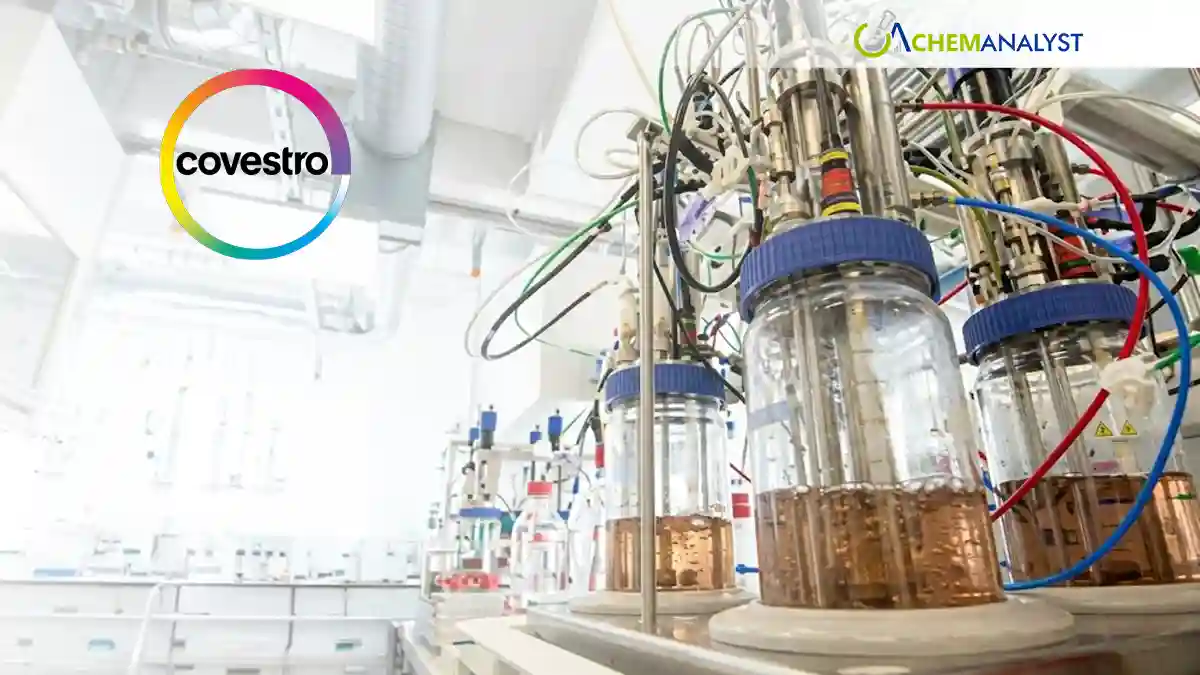
Covestro has initiated the Bio4PURConti (Bio-Based Continuous Production for Sustainable Polyurethane Industry) project, a pioneering European initiative designed to transform the production of bio-based aniline through continuous manufacturing technology. As the project coordinator, Covestro is leading a collaborative effort supported by the European Union to develop the world’s first continuous fermentation process for producing aniline from renewable plant-based resources. This advancement represents a major milestone in the transition toward lower-carbon and more sustainable chemical production.
Aniline is one of the most important raw materials used in the chemical and plastics industries, especially in the production of methylene diphenyl diisocyanate (MDI), which is a crucial component for manufacturing polyurethanes. Polyurethane materials are widely used in various applications, including insulation, automotive components, furniture, coatings, adhesives, and numerous consumer products. However, conventional aniline production relies heavily on fossil-based feedstocks and contributes significantly to global greenhouse gas emissions, generating approximately 20 million tonnes of carbon dioxide annually worldwide.
To address this environmental challenge, Covestro has developed an innovative bio-based pathway that replaces fossil resources with renewable plant-derived materials. The process utilizes specially engineered microorganisms that convert industrial sugars obtained from biomass into a chemical intermediate through fermentation. This intermediate is subsequently transformed into high-purity aniline using catalytic chemical processes. The resulting product contains 100% plant-based carbon while maintaining the same performance characteristics as conventional fossil-derived aniline.
The Bio4PURConti project aims to enhance this technology by transitioning from traditional fed-batch fermentation to a continuous fermentation approach. In conventional batch processing, raw materials are periodically added and products are collected in separate stages, which can limit efficiency and productivity. Continuous fermentation, on the other hand, enables a constant supply of feedstock and continuous extraction of products, potentially improving production efficiency, increasing space-time yields, and reducing overall environmental impact.
A significant advantage of the new process is the use of renewable feedstocks, such as sugars derived from hardwood biomass. The bio-based aniline produced through this route is fully compatible with existing polyurethane production systems and meets the quality requirements of MDI manufacturing. Since it can be directly integrated into current industrial infrastructure without requiring modifications to downstream processes, it provides a practical pathway for reducing dependence on fossil resources across the polyurethane value chain.
The project will scale the technology from laboratory development to a semi-industrial demonstration with a 1.5 cubic meter production system at facilities including Bio Base Europe Pilot Plant in Ghent and Covestro’s site in Leverkusen. The demonstration will incorporate advanced technologies such as cell recycling, real-time process monitoring, improved downstream processing, and optimized production strategies to maximize efficiency and reduce the product’s carbon footprint.
According to Dr. Markus Dugal, Head of Process Technology at Covestro, the Bio4PURConti project represents a major advancement not only for the aniline industry but also for the broader industrial biotechnology sector. The successful demonstration of continuous fermentation at a semi-industrial scale for a high-volume chemical could establish a new benchmark for future bio-based chemical manufacturing. The integration of biological innovation with advanced engineering has the potential to fundamentally transform how essential industrial materials are produced.
The initiative brings together a consortium of ten industrial and academic partners from seven European countries, combining expertise in biotechnology, chemical engineering, process optimization, sustainable materials, and innovation management. The consortium includes organizations from Germany, Estonia, Belgium, Norway, France, Finland, and Spain, highlighting Europe’s commitment to strengthening its leadership in sustainable biotechnology and circular industrial solutions.
With a total project investment of €8.4 million, including €7 million provided through European Union funding under the Horizon Europe programme and the Circular Bio-based Europe Joint Undertaking (CBE JU), the project will run for 42 months. As one of the world’s largest aniline producers with an annual production capacity exceeding one million tonnes, Covestro is well-positioned to commercialize sustainable aniline technologies and accelerate the chemical industry’s transition toward reduced carbon emissions and greater reliance on renewable resources.






Leave a Comment
Comments (0)