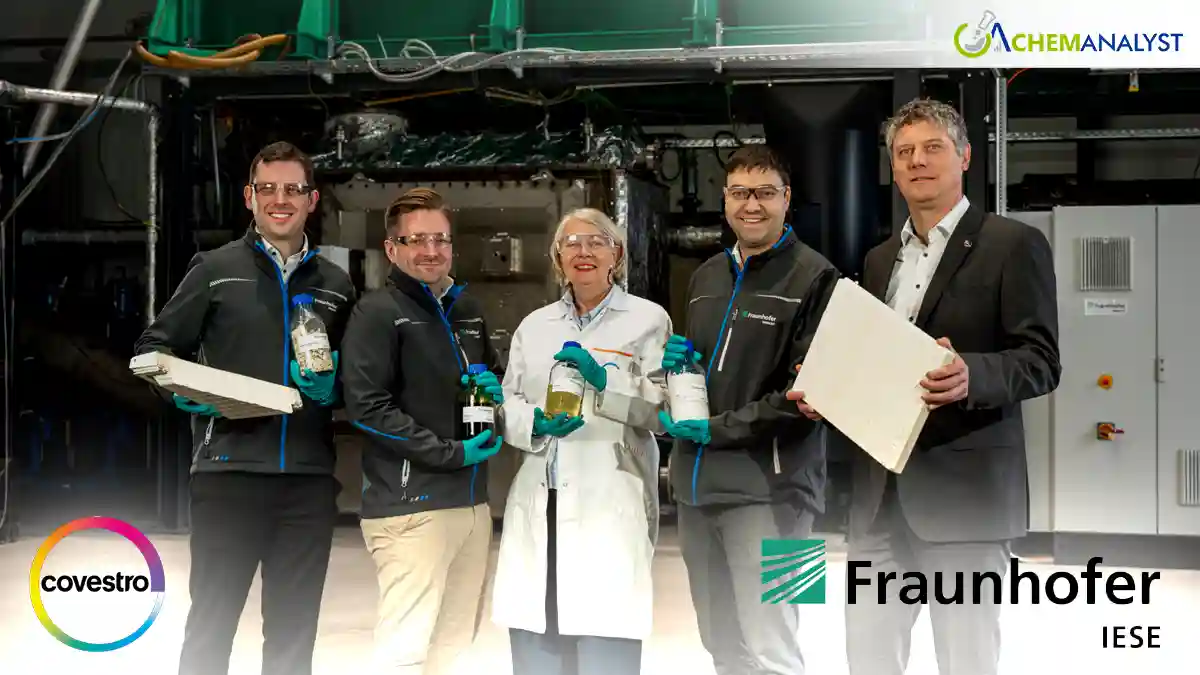
Materials producer Covestro has entered into a formal agreement with the Fraunhofer Institute for Environmental, Safety and Energy Technology UMSICHT to develop and operate an advanced pilot facility dedicated to the smart pyrolysis recycling of rigid polyurethane foam waste. The pilot plant will have the capacity to process approximately 2 kilotons of waste material annually and is expected to begin operations in 2028. This collaboration represents a key milestone in advancing chemical recycling technologies capable of converting insulation waste from appliances and building materials into high-purity aniline, which can then be used to manufacture MDI (methylene diphenyl diisocyanate).
The recycled MDI generated from this process will match the purity levels of conventionally produced MDI while offering a significantly reduced environmental impact. According to the partners, the carbon footprint of the recycled product could be up to 40 percent lower than that associated with traditional fossil-based production pathways.
Dr. Markus Dugal, Head of Process Technology at Covestro, emphasized that the contract represents a crucial step toward scaling the company’s proprietary smart pyrolysis technology. He noted that combining Covestro’s expertise in chemical processes and technology development with the process engineering capabilities of Fraunhofer UMSICHT provides a strong foundation for industrializing the technology. The collaboration aims to demonstrate that end-of-life polyurethane materials can be chemically recycled and transformed into valuable feedstocks for new production cycles. By recovering high-value chemical components from waste streams, the initiative supports the broader transition toward a circular economy while also helping to reduce the environmental footprint of polyurethane-based products.
As part of the partnership, Fraunhofer UMSICHT will utilize its established expertise in pyrolysis research and its existing chemical recycling infrastructure to scale up Covestro’s smart pyrolysis process. The planned pilot facility will be capable of recycling about 2 kilotons of rigid foam waste each year. The amount of recovered aniline generated from this operation could be sufficient to produce insulation materials used in roughly 200,000 refrigerators. The facility is scheduled to begin operations in mid-2028 and will primarily process rigid polyurethane (PUR) and polyisocyanurate (PIR) foam waste derived from end-of-life insulation products.
Rigid foam waste has historically been difficult to recycle due to its crosslinked molecular structure, which prevents conventional recycling methods from breaking it down efficiently. The smart pyrolysis approach specifically addresses this challenge by thermochemically breaking the molecular bonds within the foam, allowing the recovery of valuable chemical intermediates such as aniline.
According to Prof. Dr.-Ing. Manfred Renner, Head of Fraunhofer UMSICHT, the initiative reflects the culmination of several years of intensive joint research between the two organizations. He explained that the project aligns closely with the institute’s mission of translating scientific research into practical industrial applications. Rather than merely demonstrating laboratory feasibility, the pilot plant will move the technology closer to real-world industrial deployment.
Dr. Alexander Hofmann, Head of Thermochemical Conversion Technologies at Fraunhofer UMSICHT, added that the project builds on the institute’s extensive work in chemical recycling and downstream processing technologies. The pilot plant will provide an opportunity to optimize operational parameters on a larger scale while also generating sufficient recycled material for further product development and market testing.
The smart pyrolysis process is capable of producing aniline with a purity level of around 99 percent, making it suitable for manufacturing recycled MDI that meets the same quality standards as its conventional counterpart.
The timing of this technological advancement is particularly important given the expected growth in the rigid foam market. In Europe alone, demand for MDI used in rigid foam insulation is projected to increase from about 1,400 kilotons in 2025 to nearly 1,900 kilotons by 2035. This growth is largely driven by rising demand for energy-efficient insulation solutions in construction and refrigeration applications. At the same time, regulatory frameworks within the European Union increasingly require scalable end-of-life solutions for polyurethane insulation materials.
The chemical recycling technology developed by Covestro and Fraunhofer UMSICHT offers a promising pathway to address this challenge by recovering valuable raw materials that would otherwise be lost as waste.
The project also builds upon earlier research conducted within the EU-funded CIRCULAR FOAM initiative, a flagship program coordinated by Covestro in collaboration with Fraunhofer UMSICHT and 23 additional partners across Europe. Following successful demonstrations at laboratory and mini-plant scales, the new pilot facility represents the next critical stage in advancing smart pyrolysis technology toward commercial deployment.








 About ChemAnalyst
Leave a Comment
Comments (0)