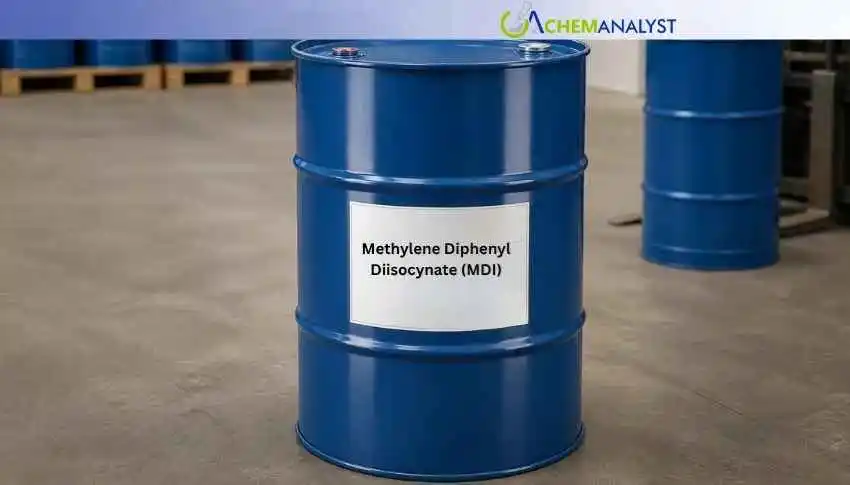
North America’s MDI market has entered a critical phase in the second half of May 2026, with the probability of extended production disruptions rising sharply as multiple producers face systemic feedstock shortages. MDI Polymeric Grade DEL Texas climbed from USD 2,665/MT to USD 2,715/MT by 22 May 2026, reflecting tightening supply, restricted spot availability, and escalating raw material constraints.
MDI Market participants now widely expect that full operational normalization before late June is unlikely, with only partial improvements possible during the month. The core issue is upstream: carbon monoxide (CO) and chlorine shortages across the U.S. Gulf Coast continue to limit isocyanate operating rates, affecting every major MDI producer simultaneously.
LyondellBasell’s investor commentary confirmed that CO related operations would not normalize until end Q2, aligning with broader industrial gas tightness.
Covestro’s 19 May force majeure on all North American MDI grades, combined with parallel operational stress at Dow, underscores that the disruption is systemic rather than isolated.
Industrial gas suppliers such as Air Products are still struggling to restore CO supply, prolonging constraints across the polyurethane chain. As a result, suppliers are restricting offers, prioritizing contract customers, and limiting spot market participation. Polyurethane manufacturers are facing rising input costs, prompting defensive inventory building and shorter procurement cycles.
With Dow’s FQ1 2026 earnings highlighting persistent feedstock and logistics disruptions expected to extend through the year, the MDI market is preparing for a firm to bullish June unless CO supply unexpectedly improves. Key indicators, including CO feedstock availability and polyurethane demand trends, suggest that the MDI outage risk clearly extends beyond May 2026, with June pricing likely to remain elevated.
Therefore, the most likely scenario currently appears to be partial operational improvement may occur during June. However, full normalization before late June remains unlikely. The outage risk clearly extends beyond May, especially for MDI spot-market availability.
MDI Buyers shifted to transactional purchasing, focusing on short term needs while monitoring feedstock developments. Rising crude linked costs and logistics disruptions added further pressure, with producers prioritizing downstream contractual allocations over spot sales. The combination of restricted supply, elevated raw material costs, and defensive procurement behavior created a firm MDI pricing environment that carried into late May.







 About ChemAnalyst
Leave a Comment
Comments (0)