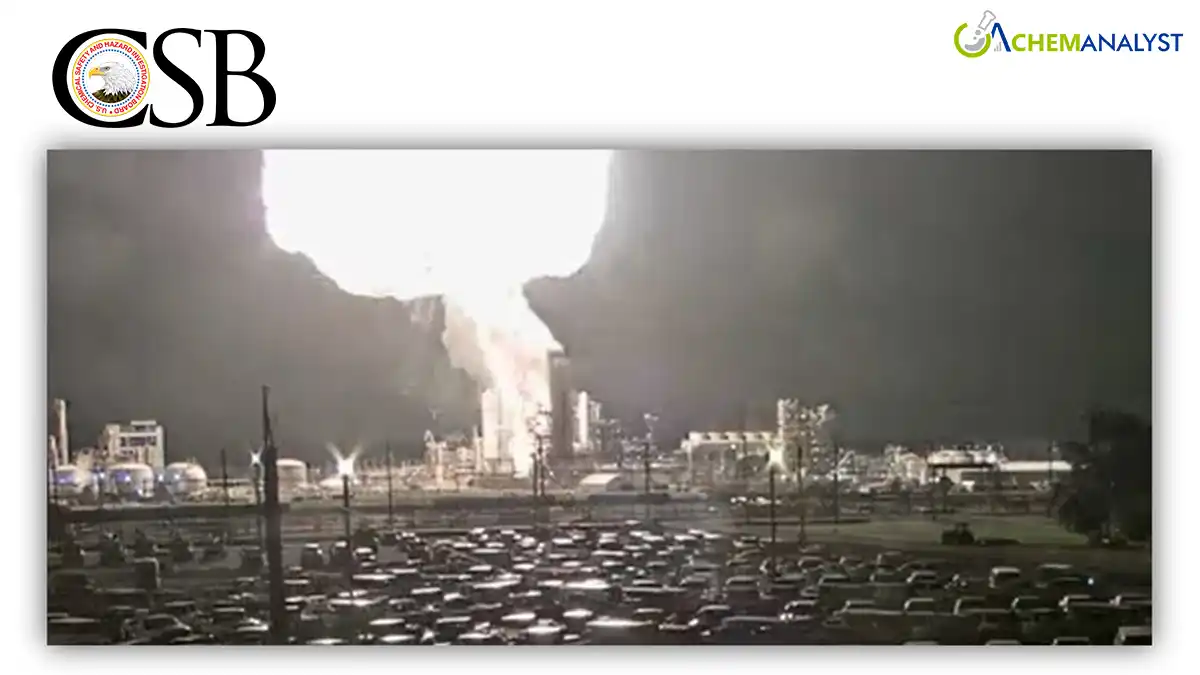
The U.S. Chemical Safety and Hazard Investigation Board (CSB) has published its final report on the devastating explosions, fires, and toxic ethylene oxide (EtO) release that occurred in July 2023 at the Glycol II unit of Dow Chemical Company’s Louisiana Operations facility in Plaquemine.
The incident unfolded on the evening of July 14, 2023, at approximately 9:15 p.m., when a sequence of explosions and fires severely damaged processing equipment. The event led to the release of over 31,000 pounds of ethylene oxide, a highly flammable and reactive substance classified as a known human carcinogen. Due to the hazardous nature of the release, local authorities issued a shelter-in-place directive impacting hundreds of nearby residents.
According to the CSB’s findings, the accident originated when ethylene oxide unintentionally entered pressure relief piping that contained air instead of an inert atmosphere. This created a flammable mixture, which subsequently ignited. The flame traveled through roughly 50 feet of piping before reaching a pressure relief valve. As pressure built up, the valve opened, allowing the flame to propagate into the vapor space of a reflux drum containing both liquid and gaseous ethylene oxide. The chemical rapidly decomposed under heat, causing a sharp pressure increase that ultimately led to the catastrophic rupture and explosion of the drum.
A critical factor identified in the investigation was the presence of metal debris that punctured a rupture disc, enabling ethylene oxide to enter the air-filled piping. This debris originated from portable work lights that had been mistakenly left inside the reflux drum during maintenance work conducted in May 2023. Following the unit’s restart, these lights degraded over time, generating fragments that migrated through the system and eventually caused the rupture disc failure.
CSB Chairperson Steve Owens emphasized that the incident was entirely preventable, noting that both human error and procedural shortcomings contributed to the disaster. Specifically, workers failed to remove all equipment from the vessel, and the company lacked a robust verification process to ensure the vessel was free of foreign materials prior to startup. The report underscores how even minor oversights can have severe consequences when dealing with hazardous chemicals like ethylene oxide.
The investigation highlighted multiple safety deficiencies, including inadequate vessel closure practices that allowed the drum to be sealed without confirming cleanliness. Additionally, failures in the inerting system meant that nitrogen, intended to maintain a non-reactive environment, had gradually leaked out and been replaced by air, creating conditions conducive to ignition.
Design flaws also exacerbated the incident. The emergency pressure relief system discharged back into the reflux drum, enabling flame propagation into the vessel and intensifying the explosion. The CSB noted that an opportunity to redesign this system and eliminate the hazard existed during a 2010 equipment upgrade but was not pursued.
The CSB concluded that the primary cause of the incident was the rupture disc puncture caused by metal debris, which allowed ethylene oxide to mix with air and ignite. Contributing factors included ineffective vessel closure protocols, inadequate monitoring of inerting systems, and suboptimal pressure relief system design.
In response, the CSB has issued several safety recommendations. These include urging Dow to identify and properly monitor all ethylene oxide process lines requiring inerting and to eliminate unnecessary systems where feasible. While the company has already introduced improved vessel closure procedures and a global foreign materials exclusion standard, the CSB stressed the importance of strict compliance.
Further recommendations were directed at National Fire Protection Association and American Society of Safety Professionals to enhance guidelines related to confined space entry and ensure vessels are thoroughly cleaned and verified before being returned to service.
As an independent federal agency, the CSB does not impose penalties but plays a crucial role in investigating industrial accidents and issuing safety recommendations aimed at preventing future incidents across the chemical industry.








 About ChemAnalyst
Leave a Comment
Comments (0)