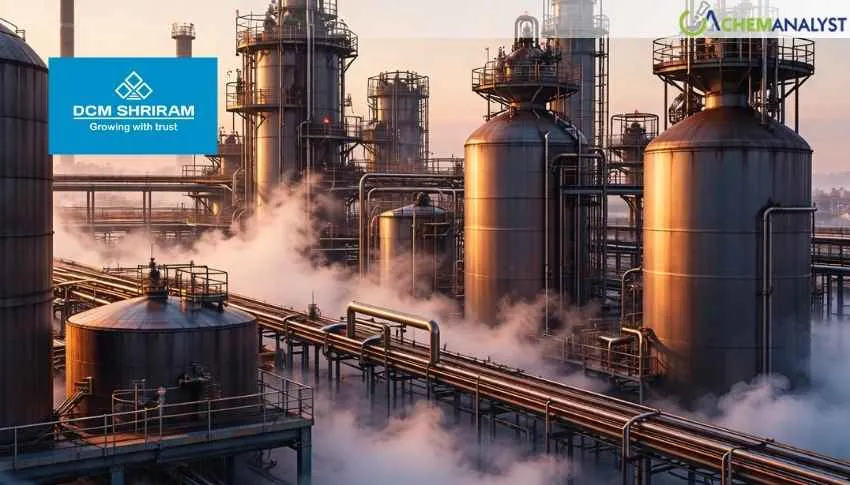
DCM Shriram Ltd. has completed the second phase of its Epichlorohydrin (ECH) production facility at Jhagadia in Bharuch, Gujarat, by commissioning an additional capacity of 17,000 tonnes per annum (TPA). With this milestone, the plant has reached its full installed capacity of 52,000 TPA. The first phase, with a capacity of 35,000 TPA, became operational on October 14, 2025, and the swift rollout of the second phase within five and a half months highlights the company’s strong execution capabilities and commitment to timelines.
ECH plays a strategic role in bridging the company’s chlor-alkali operations and its advanced materials segment. It is both a downstream chlorine product and a key input for producing liquid epoxy resins. Notably, this facility adopts an environmentally friendly process by using glycerine—a biodiesel by-product—instead of conventional propylene, making it a greener alternative supported by advanced European technology.
As an industrial chemical, ECH has diverse applications. It is widely used in manufacturing epoxy resins for coatings, adhesives, and electronics, as well as in producing synthetic glycerol and elastomers. Additionally, it is an essential intermediate in water treatment chemicals, pharmaceuticals, paper-strengthening agents, and specialized agricultural products. It also contributes to the production of bisphenol diglycidyl ether, a crucial ingredient for durable epoxy resins used in paints, laminates, and plastics.
Beyond these applications, ECH is used to produce high-purity synthetic glycerin for pharmaceuticals, food, and personal care industries. It also serves as a monomer in cationic polymers for water purification and in resins that enhance the wet strength of paper products like filters and packaging. Furthermore, it is utilized in manufacturing heat- and fuel-resistant synthetic rubbers for automotive components, as a solvent for resins and paints, and as a stabilizer in chlorine-based compounds such as pesticides. However, ECH is hazardous, being flammable, toxic, and potentially carcinogenic, requiring careful handling.
The company operates across three major segments: agri-business (including sugar, ethanol, farm solutions, and seeds), chemicals (chlor-alkali, vinyl, specialty chemicals, and advanced materials), and building materials. Its integrated operations and access to captive power enhance efficiency and competitiveness.
Recently, International Finance Corporation committed US$90 million to the company through sustainability-linked non-convertible debentures. This financing aligns with global sustainability frameworks and is supported by an independently reviewed Sustainability-Linked Loan framework. The investment aims to strengthen downstream chemical operations, boost rural employment, and support long-term growth.
Company leadership emphasized that this partnership reinforces sustainable growth, operational efficiency, and environmental responsibility, while IFC highlighted its role in supporting India’s manufacturing ecosystem and rural value chains.







 About ChemAnalyst
Leave a Comment
Comments (0)