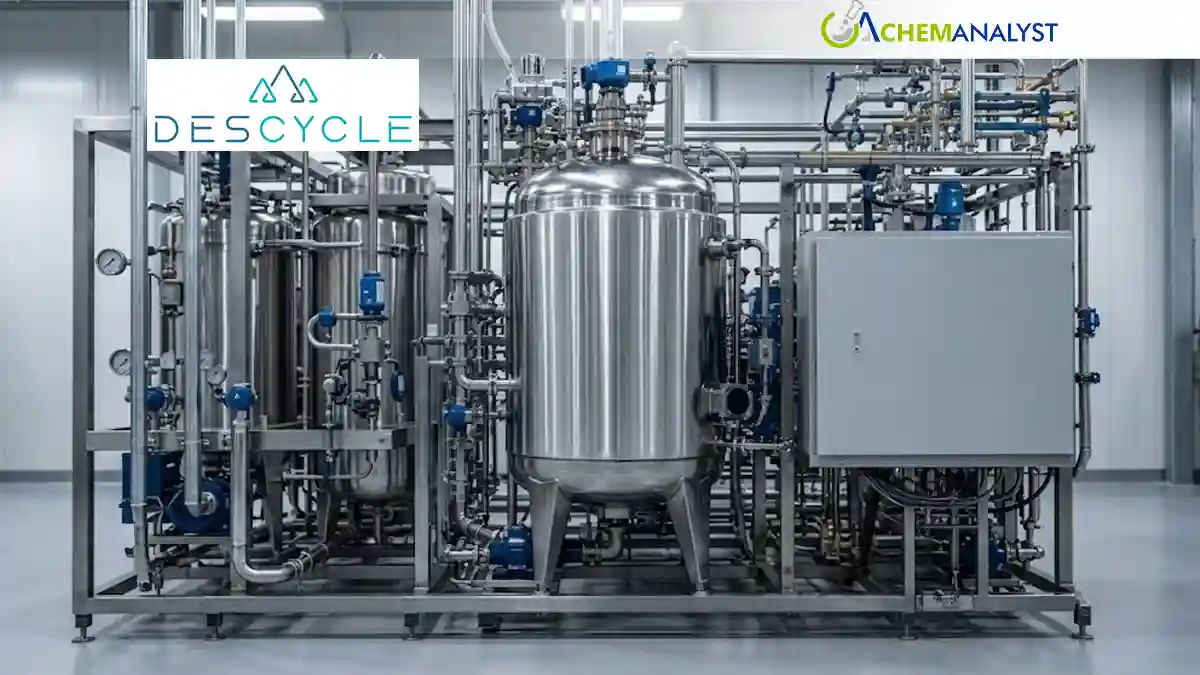
DEScycle has officially inaugurated its demonstration-scale critical materials recovery facility at the Wilton Centre in Teesside, United Kingdom, marking a major milestone in the company’s efforts to establish a distributed metals processing platform. The facility represents the first operational deployment of DEScycle’s innovative infrastructure and is expected to play a significant role in reinforcing the UK's domestic supply chain for critical minerals, which are increasingly important for advanced manufacturing, renewable energy technologies, digital infrastructure, and national security.
The launch aligns closely with the UK Government’s Critical Minerals Strategy, which targets recycling as a source of 20% of the nation’s annual critical mineral demand by 2035. As global competition for critical raw materials intensifies and geopolitical risks continue to affect international supply chains, the UK is prioritizing domestic recovery and processing capabilities to reduce dependence on imported resources. The opening of DEScycle’s facility comes shortly after Industry Minister Chris McDonald MP announced a £50 million government investment to support domestic critical mineral production during a visit to DEScycle and the Wilton Centre.
The Teesside demonstration plant has been designed to recover valuable and critical metals from complex electronic waste streams within the UK instead of exporting such materials overseas for processing. By keeping the recycling and recovery process domestic, the facility aims to retain economic value, strengthen industrial resilience, and improve control over strategically important mineral resources.
Currently operating at a batch-processing capacity of approximately 250 kilograms, the demonstration facility is capable of handling between 50 and 100 tonnes of electronic waste annually during its initial phase. The project serves as a bridge between DEScycle’s pilot-scale research and future commercial deployment, enabling the company to validate its technology, optimize operational performance, and establish a repeatable model for wider industrial implementation.
The official opening ceremony was attended by several prominent figures, including The Rt Hon Anna Turley MP for Redcar and Lord Ben Houchen, Mayor of the Tees Valley. They were joined by representatives from government, industry, investment organizations, and international stakeholders who gathered to celebrate the commissioning of the new facility.
During the event, Anna Turley highlighted the strategic importance of recovering critical metals within the UK. She noted that the country currently exports a significant amount of metal-rich electronic waste for processing abroad, resulting in the loss of valuable materials, economic opportunities, and greater control over critical supply chains. According to her, the Redcar facility represents an important step toward reversing this trend and strengthening domestic resource security.
Leo Howden, Chief Executive Officer of DEScycle, emphasized that the new plant serves as the company's first operational blueprint for its distributed metals processing model. He explained that the facility will generate valuable operational data under real industrial conditions while demonstrating how modular processing units can be replicated across industrial hubs in the UK, Europe, the United States, and Japan. He also stressed that growing demand for critical minerals, driven by artificial intelligence, electrification, and advanced manufacturing, presents a significant opportunity for the UK to become a global leader in sustainable metals processing technologies.
Waste Minister Mary Creagh CBE MP also welcomed the project, pointing out that millions of tonnes of electronic waste are generated annually across the UK, with much of it currently exported for recycling. She stated that recovering critical materials domestically is essential for improving supply chain resilience, achieving climate objectives, and supporting the circular economy. She praised DEScycle as an example of how British innovation can reduce dependence on vulnerable international supply chains while creating environmental and economic benefits.
Professor Louise Heathwaite, Executive Chair of the Natural Environment Research Council within UK Research and Innovation (UKRI), highlighted the research foundations behind the technology. She explained that DEScycle’s processing platform originated from curiosity-driven research conducted at the University of Leicester with UKRI support, demonstrating how scientific innovation can address challenges related to waste management, resource efficiency, and sustainable critical mineral recovery.
The commissioning of the Teesside plant also signifies that DEScycle has successfully achieved Technology Readiness Level 7 (TRL7), confirming that its technology has been demonstrated successfully in an operational industrial environment. Initial operations will focus on processing printed circuit boards and other complex electronic waste supplied through DEScycle’s UK joint venture partner, GAP Group. The first recovered products will include gold, copper, silver, and palladium, while the company continues developing recovery processes for additional metals such as tin, iron, and aluminium.
To strengthen its commercial ecosystem, DEScycle has entered into a collaboration with Cisco, which will supply electronic materials for processing at the facility. Additionally, Mitsubishi Corporation will undertake an offtake study to evaluate commercial opportunities for domestically recovered metals. Together, these partnerships help establish the commercial foundation for DEScycle’s distributed processing model by securing feedstock availability, validating modular operations, and developing downstream market pathways for recovered critical materials.
Impact on Products and Chemical Commodity Prices
The commissioning of DEScycle's demonstration plant is expected to improve the domestic availability of recovered metals such as copper, gold, silver, palladium, aluminium, iron, and tin, which are widely used in electronics, electrical equipment, automotive components, renewable energy systems, and industrial manufacturing. Although the facility's initial processing capacity is relatively modest, it establishes a scalable recycling model that can gradually reduce the UK's dependence on imported critical raw materials and enhance supply chain resilience. For chemical and industrial commodity markets tracked by ChemAnalyst, the immediate price impact is expected to remain limited, as the demonstration plant processes only 50–100 tonnes of e-waste annually. However, if DEScycle successfully expands its distributed processing network, increased secondary metal supply could moderately ease demand for primary mined materials, supporting price stability for copper, aluminium, tin, and precious metals over the long term. Enhanced domestic recycling could also reduce procurement risks and improve raw material availability for downstream manufacturers, particularly in clean energy and electronics sectors.








 About ChemAnalyst
Leave a Comment
Comments (0)