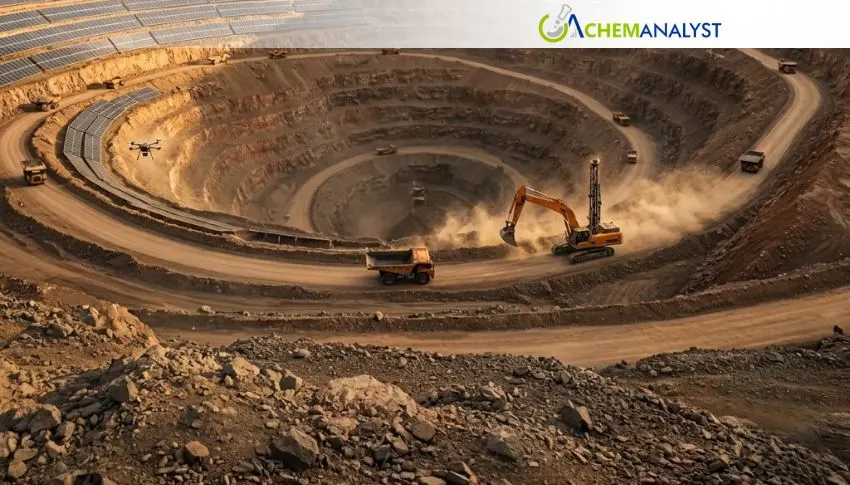
Ecuador plans to renegotiate the exploitation contract for the Cascabel copper mine, a significant move that introduces considerable uncertainty for the project, which is now controlled by China's Jiangxi Copper Corporation. The contract, initially signed in June 2024, is being re-evaluated by the Ecuadorian government, which cites concerns over "unbalanced" terms and aims to harmonize existing agreements with new mining parameters.
The Cascabel project, located in the Imbabura province, is considered one of Ecuador's largest and most important undeveloped mining assets, with an estimated investment of approximately $4.2 billion and a planned mine life of 33 years across a 4,979-hectare concession. Its significance in the global copper market is underscored by its world-class potential as a copper-gold deposit.
A key event preceding the renegotiation announcement was Jiangxi Copper Corporation's (JCC) acquisition of SolGold in March 2026, a deal valued at around €867 million (approximately $1.16 billion USD), giving the Chinese state-owned enterprise control over Cascabel and strengthening China's foothold in Ecuador's strategic mineral resources. JCC already operates the Mirador mine, Ecuador's only large-scale copper mine currently in production, and holds interests in other major projects like Panantza-San Carlos and Cangrejos.
The Ecuadorian government's decision stems from Energy Minister Juan Carlos Blum's assertion that some mining contracts were signed under "unbalanced" conditions and no contract can supersede the law. This stance is supported by a new ministerial agreement (Acuerdo Ministerial MAE-MAE-2026-0056-AM), published on May 20, 2026, which establishes minimum parameters for mining exploitation contracts and allows for the review, renegotiation, or modification of existing agreements to align terms. While the government aims to promote investment and sustainable development, the move suggests a desire for greater economic benefits for the state.
Exploraciones Novomining S.A., part of the SolGold group, maintains that the Cascabel contract was signed following legal and transparent procedures and has expressed willingness to cooperate constructively with the ministry.
The consequences of this renegotiation are far-reaching. Economically, it introduces significant uncertainty, potentially delaying the project's development, which had targeted early works for 2026 and first production by 2028. Such delays could impact the substantial foreign investment associated with the project and affect investor confidence in Ecuador's mining sector stability. Geopolitically, the renegotiation directly impacts China's expanding influence in Latin American resource acquisition, particularly concerning critical minerals like copper.
Environmentally, the project has faced scrutiny. Reports highlight concerns over the vast quantities of tailings that would be generated due to the low-grade nature of the deposits, the potential for tailings dam failure, and underestimated power requirements, suggesting a need for multiple hydroelectric projects to support the mine's operations. These environmental considerations could be a factor in the government's push for renegotiation, aiming for more stringent environmental and social safeguards.
The situation sets a precedent for other mining contracts in Ecuador, as the government seeks to review and potentially modify existing agreements. The outcome of the Cascabel renegotiation will be closely watched by international investors and the mining industry, influencing future investment decisions and the trajectory of Ecuador's burgeoning mining sector.








 About ChemAnalyst
Leave a Comment
Comments (0)