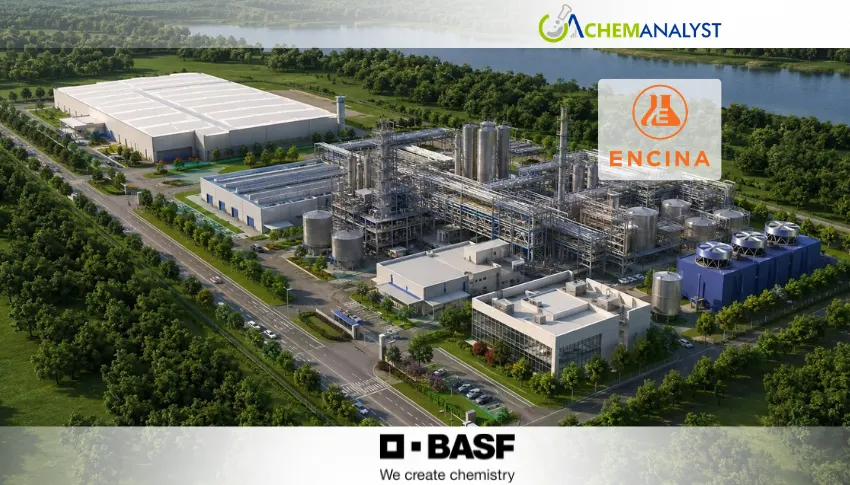
Encina Development Group, LLC, a producer of circular chemicals certified under the ISCC PLUS standard, has announced a significant step forward in its relationship with BASF through the signing of a new strategic Collaboration Agreement. The agreement is designed to support the advancement of Encina’s planned circular chemicals production facility on the United States Gulf Coast and marks an important milestone in the companies’ shared commitment to promoting sustainability and circular economy solutions within the global chemical industry.
Under the terms of the agreement, BASF will provide strategic advisory services during critical stages of the project’s development. These services will extend through the period leading up to the project’s Final Investment Decision (FID), helping Encina optimize project planning and execution. BASF’s role will include guidance on procurement strategies, project development activities, and implementation planning aimed at enhancing efficiency and reducing project risks. By leveraging BASF’s extensive industry expertise and global experience, Encina seeks to strengthen the foundation of its first commercial-scale manufacturing facility.
The collaboration expands upon an existing long-term supply agreement previously established between the two companies. Through that agreement, BASF secured access to chemically recycled circular benzene produced by Encina using waste-derived feedstocks. BASF plans to incorporate these sustainable raw materials into its Ccycled® portfolio, which offers products manufactured using recycled and renewable feedstocks. These materials support customers across a broad range of sectors, including packaging, textiles, automotive manufacturing, and consumer goods, all of which are increasingly seeking environmentally responsible alternatives to traditional fossil-based materials.
According to Thomas Ohlinger, Senior Vice President of Traded Products at BASF, successful advancement of circular economy initiatives requires close cooperation among participants throughout the value chain. He noted that the expanded agreement demonstrates BASF’s commitment to fostering innovative technologies and business models that increase the availability of circular feedstocks for the chemical sector. Beyond serving as a purchaser of sustainable products, BASF aims to contribute expertise that can help shape and accelerate promising projects from their earliest stages of development.
Encina Founder David Schwedel emphasized that BASF’s decision to deepen its involvement reflects the growing demand for scalable and commercially viable circular feedstock solutions. He stated that the partnership supports the emergence of a new generation of circular chemical manufacturing facilities capable of transforming waste materials into valuable industrial inputs while reducing environmental impacts. Schwedel further highlighted that the agreement validates Encina’s proprietary technology, commercial strategy, and long-term vision for global expansion.
Encina’s technology utilizes a proprietary catalytic conversion process that transforms waste streams that would otherwise be disposed of through landfilling or incineration into high-value circular chemical products. These products are designed to function as drop-in feedstocks, allowing manufacturers to integrate them into existing production systems without requiring major infrastructure modifications. As a result, industries can advance decarbonization objectives while improving resource efficiency and reducing reliance on virgin fossil resources.
In addition to supporting the development of Encina’s Gulf Coast facility, the collaboration agreement establishes a framework for exploring future joint opportunities in international markets. The arrangement provides BASF with the option to participate alongside Encina in upcoming project developments, including potential equity investments. This broader strategic framework positions both companies to evaluate and pursue additional circular chemicals projects globally, helping expand access to sustainable feedstocks and supporting the transition toward a more circular and resource-efficient chemical industry.
The strengthened partnership underscores the increasing importance of collaboration, innovation, and investment in building scalable circular economy infrastructure. By combining Encina’s waste-to-chemicals technology with BASF’s industry expertise and market reach, the companies aim to accelerate the adoption of circular materials and contribute to a more sustainable future for global manufacturing.








 About ChemAnalyst
Leave a Comment
Comments (0)