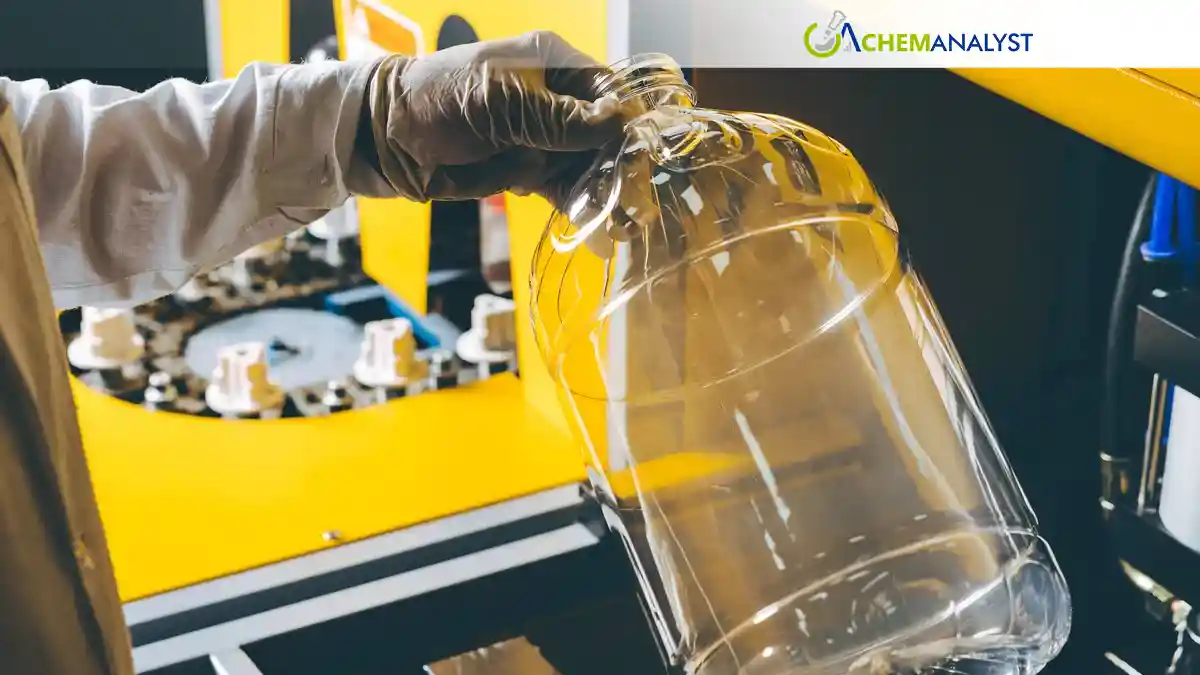
The European Commission (EC) has officially adopted a new Implementing Decision that establishes detailed rules for calculating, verifying, and reporting chemically recycled content in single-use plastic beverage bottles. The new framework is designed to support compliance with the European Union’s Single-Use Plastics Directive (SUPD) while providing a transparent and standardized methodology for measuring recycled PET (polyethylene terephthalate) content obtained through chemical recycling technologies.
According to the European Commission, the newly adopted rules are intended to improve transparency in the calculation of chemically recycled PET, create a fair competitive environment for all market participants, and strengthen confidence across Europe’s plastic recycling industry. By introducing a common accounting system, the EC aims to provide regulatory clarity that encourages investment in advanced recycling technologies while reinforcing the transition toward a circular plastics economy.
Jessika Roswall, the European Commissioner responsible for Environment, Water Resilience, and a Competitive Circular Economy, highlighted that Europe’s plastic recycling industry is facing increasing economic and operational challenges. She emphasized that the introduction of well-defined rules for chemical recycling represents an important step toward addressing these pressures. According to Roswall, greater regulatory certainty will enable businesses to invest confidently in innovation, complement existing mechanical recycling systems, and accelerate the commercialization of advanced recycling technologies. She also noted that these measures are expected to improve Europe’s competitiveness while supporting its long-term sustainability and circular economy objectives.
A central feature of the Implementing Decision is the introduction of comprehensive mass balance accounting rules. These provisions establish how recycled feedstock should be tracked throughout the chemical recycling process and determine how eligible recycled material can be allocated across multiple outputs generated during production. Since chemical recycling often produces several end products from the same input stream, the mass balance approach is intended to ensure that recycled content claims accurately reflect the amount of eligible waste entering the process.
The Commission has adopted what it describes as a "fuel-use excluded" methodology. Under this approach, any eligible plastic waste that is converted into fuels or used for energy recovery cannot be counted as recycled content. Likewise, material losses occurring during processing must be excluded from recycled content calculations. This principle aligns with the recycling definition established under the EU Waste Framework Directive, ensuring that only material genuinely transformed into new plastic products contributes toward recycled content targets.
To further strengthen the credibility of recycled content claims, the new framework requires the application of chemical traceability systems. These mechanisms are intended to verify that the quantity of recycled material assigned to final products does not exceed the amount of eligible recycled feedstock that could realistically be incorporated during production. The Commission believes these additional safeguards will increase confidence in chemical recycling claims while minimizing opportunities for inaccurate reporting.
The new rules also introduce verification requirements throughout the supply chain. Annual third-party verification will be mandatory for the most technically complex stages of chemical recycling operations. This independent oversight is designed to maintain data accuracy while keeping administrative requirements manageable for businesses and national authorities responsible for monitoring compliance.
Implementation of the new system will occur in phases. Initially, only chemically recycled plastics produced within European Union member states and countries belonging to the European Economic Area (EEA) will qualify toward recycled content targets, provided that compliance with EU environmental standards can be fully verified.
Beginning on 21 November 2027, chemically recycled plastics originating from Organisation for Economic Co-operation and Development (OECD) countries will also become eligible unless restricted under the Waste Shipment Regulation. In addition, recycled materials sourced from non-OECD countries may also qualify if those countries establish agreements demonstrating environmental protection and human health standards equivalent to those required under EU legislation, including the Waste Framework Directive and the Packaging and Packaging Waste Regulation (PPWR).
The European Commission reiterated that recycled content will only count toward EU regulatory targets when supported by credible, traceable, and environmentally sound verification standards. The Implementing Act is scheduled to enter into force 20 days after its publication in the Official Journal of the European Union.
The Commission noted that the rules were developed following consultations with a broad range of industry stakeholders. Earlier this year, EU member states voted in favor of amendments to the SUPD, a decision that was welcomed by much of the recycling industry for providing greater regulatory clarity.
However, not all stakeholders support the approach. Environmental organization Zero Waste Europe criticized the adoption of the accounting methodology, arguing that it legitimizes chemical recycling before broader regulatory discussions under the Packaging and Packaging Waste Regulation are completed. The organization expressed concerns that introducing a separate accounting framework at this stage could undermine regulatory consistency and create uncertainty regarding future policy developments.
Overall, the Commission views the new rules as part of a broader strategy to strengthen Europe's recycling sector, reduce dependence on virgin plastic imports, and promote greater adoption of advanced recycling technologies capable of supporting the EU's ambitious circular economy goals.
Impact on Products and Chemical Commodity Prices
The European Commission's new rules for calculating and verifying chemically recycled PET content are expected to strengthen demand for recycled PET (rPET) and chemically recycled feedstocks by providing greater regulatory certainty and standardized accounting methods. PET bottle manufacturers, beverage companies, and packaging converters are likely to increase investments in chemical recycling technologies to meet recycled content obligations under the Single-Use Plastics Directive. Over the medium term, this could improve the commercial viability of chemically recycled PET and encourage capacity expansions across Europe.
For chemical commodities tracked by ChemAnalyst, the immediate price impact is expected to be limited, as the rules primarily establish accounting and verification standards rather than mandate new consumption volumes. However, over time, stronger demand for PET waste, recycled PET flakes, recycled PET resin, and chemical recycling feedstocks could support firmer prices for recycled materials. Conversely, demand growth for virgin PET resin may moderate gradually, potentially limiting upward price momentum in the virgin polyester value chain as recycled content gains a larger market share.







 About ChemAnalyst
Leave a Comment
Comments (0)