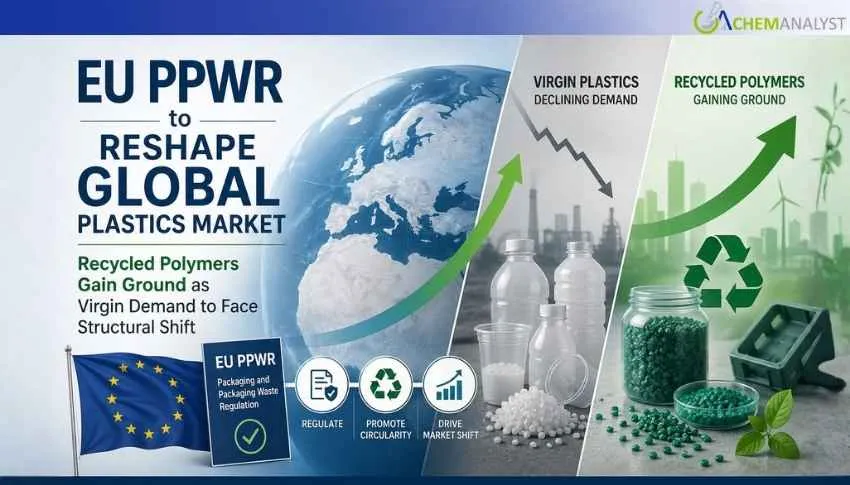
The European Union’s Packaging and Packaging Waste Regulation (PPWR), set to apply from August 12, 2026, is emerging as a market-defining policy for the global chemical and packaging industries, with direct implications for demand forecasting, pricing, and client targeting. The regulation replaces earlier directives with a harmonized framework and introduces strict chemical safety and recyclability requirements across all member states. A major shift is the ban on PFAS in food-contact packaging, including substances such as Perfluorooctanoic acid and Perfluorooctanesulfonic acid, with thresholds as low as 25 ppb per substance, effectively eliminating their use in grease-resistant packaging and forcing a transition toward PFAS-free coatings and specialty barrier chemicals. Simultaneously, the PPWR mandates that all packaging must be recyclable by design, with minimum recyclability thresholds of 70% by 2030 and graded performance systems determining market eligibility.
The Packaging and Packaging Waste Regulation is not just a regional compliance shift, it is a structural demand rebalancing mechanism that will influence global polymer markets, over the long term. The mandate for recyclability (70% by 2030) and minimum recycled content (up to 30% and rising) will structurally increase demand for recycled polymers such as Polyethylene terephthalate (rPET) and High-density polyethylene (rHDPE). This creates a sustained demand floor for recyclates, making their pricing relatively stable compared to virgin polymers, which remain exposed to upstream crude oil volatility and geopolitical disruptions.

In contrast, virgin polymers, especially those linked to non-recyclable or hard-to-recycle formats like Polystyrene and multi-layer laminates, will face gradual demand erosion. While virgin resins will not disappear, their growth will increasingly depend on compliance (e.g., food-grade applications, blending with recyclates), rather than pure volume expansion. This shift will likely amplify price volatility in virgin polymers, as demand becomes more cyclical and sensitive to regulatory shocks, substitution trends, and crude-linked cost swings.

From a logistics and shipping perspective, PPWR introduces reuse targets of up to 40% for transport packaging by 2030, driving demand for durable, reusable materials and reducing single-use packaging volumes. Chemical packaging and usage patterns will shift toward bio-based materials like Cellulose, recycling-enabling additives, and digital labelling systems (QR-based traceability), as the regulation mandates full lifecycle transparency and compliance. Key affected industries include food & beverage, FMCG, e-commerce, logistics, and petrochemicals, while high-growth categories will emerge in green chemistry, recycling technologies, and sustainable packaging materials. Overall, PPWR signals a structural transition from commodity plastics to compliance-driven, circular chemical markets, where pricing power shifts toward recycled and specialty materials, creating clear opportunities for companies aligned with sustainable innovation while disadvantaging those dependent on restricted chemicals.
Even though PPWR is an EU regulation, its ripple effects are significant for global market. Export-oriented sectors (FMCG, packaging converters, textiles) in Asia will be forced to align with EU standards, thereby increasing domestic demand for recycled polymers and food-grade recyclates. Over time, this could formalize global recycling ecosystem, improve collection rates, and support more stable pricing for recycled plastics, mirroring your observed trend of lower volatility.






Leave a Comment
Comments (0)