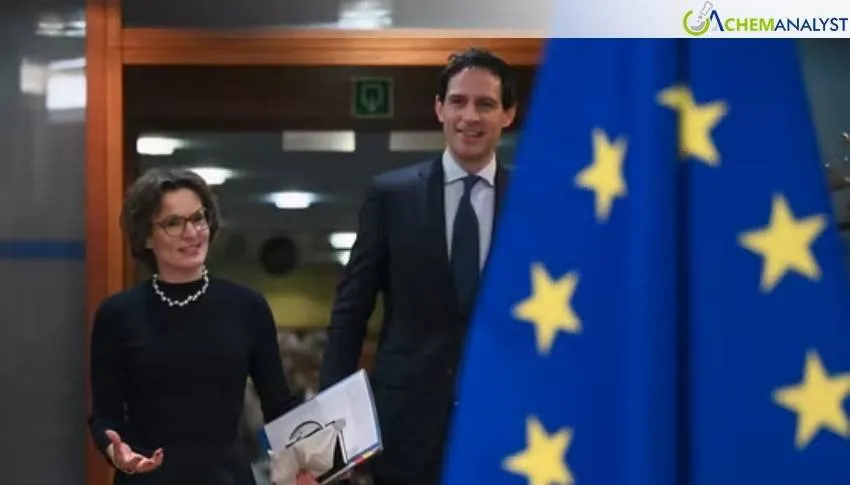
The European Commission has officially abandoned its long-anticipated plan to tighten the regulation of chemical products, specifically the revision of the Registration, Evaluation, Authorization and Restriction of Chemicals (REACH) regulation. According to Le Monde, this represents a major shift from Ursula von der Leyen’s pledge under the European Green Deal nearly six years ago.
The primary event is the shelving of the REACH regulation overhaul, a move officially declared by European Environment Commissioner Jessika Roswall on April 27. This reform, which had been repeatedly postponed, aimed to strengthen regulatory tools, notably by enabling the regulation of entire families of hazardous substances rather than a molecule-by-molecule approach, a method deemed essential for tackling issues like bisphenol substitutes and "forever chemicals" (PFAS).
The decision is largely attributed to intense lobbying by the chemical industry. A report by Corporate Europe Observatory highlighted a stark imbalance in access to European officials, with industry representatives holding 160 meetings in 2025 compared to barely 20 for health and environmental organizations. The Commission's "Strategic Dialogue" with the chemical industry was heavily criticized for its limited NGO participation. Economic concerns also played a role, with Executive Vice-President Stéphane Séjourné citing the chemical sector's struggles due to soaring energy costs, unfair competition, and regulatory complexities. The Commission stated its aim was to "strike a balance between simplifying, modernizing and strengthening the enforcement of legislation".
The consequences of this decision are far-reaching. Environment and health organizations warn that the abandonment of the reform and the introduction of "omnibus packages" designed to "simplify" regulations risk undermining public health and environmental protection. These simplification efforts include rolling back recently adopted labeling requirements, eliminating periodic reviews for pesticide active ingredients, and potentially relaxing bans on carcinogenic, mutagenic, or reprotoxic (CMR) substances in cosmetics. Critics argue that these changes could allow carcinogenic ingredients in beauty products and make hazard labels harder to read, endangering public health.
Industry-specific impacts are evident, as the European Chemical Industry Council (CEFIC) supports these changes, anticipating greater flexibility and reinforced industrial resilience. However, environmental groups assert that delays in implementing restrictions have already led to nearly 100,000 tons of additional pollution from hazardous substances, including lead and chemicals in childcare products.
Geopolitically and economically, the move has created a divide within the European Parliament. While some groups see it as a necessary lifeline for a sector contributing €500 billion annually to the EU economy, others view it as a betrayal of consumers and a weakening of the EU's Green Deal commitments. Environmental advocates also argue that strong laws are crucial for driving innovation towards safer chemicals, suggesting that the current approach might hinder the EU's ambition to lead in protective chemical regulation.







Leave a Comment
Comments (0)