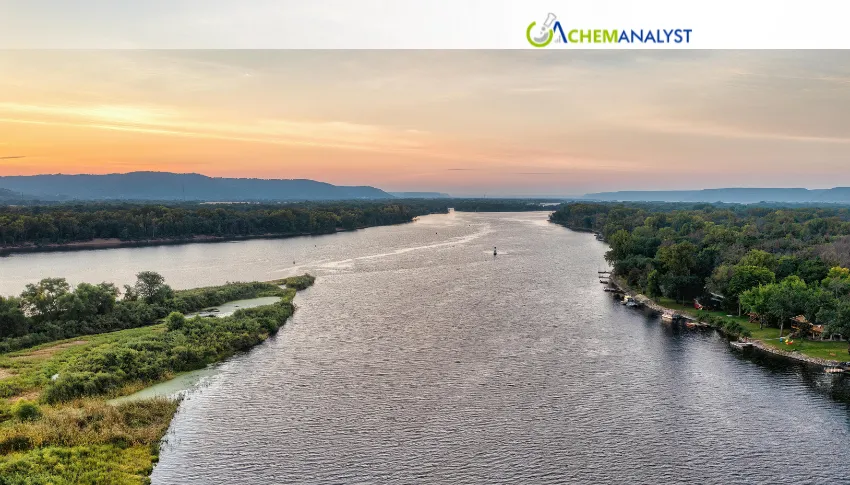
Europe is facing one of its most severe water shortages in recent years, as prolonged heat waves and exceptionally low rainfall levels have significantly reduced water levels in major rivers, including the Danube and the Rhine. The crisis, which initially appeared to be an environmental challenge, has rapidly evolved into an industrial and energy concern, disrupting manufacturing activity across several European countries and raising concerns about the long-term resilience of the region's industrial sector.
Energy infrastructure under increasing pressure
Hungary has emerged as one of the countries most severely affected by the crisis. The water level of the Danube River has fallen to historic lows, forcing authorities to reduce the operating capacity of the country's Paks nuclear power plant, which relies on river water for cooling purposes. In response, the Hungarian government has urged households and industrial consumers to reduce electricity consumption during peak evening hours in an effort to maintain grid stability.
According to official statements, electricity demand reductions of approximately 600–700 MW have already been achieved during peak periods. Decorative lighting has been restricted, railway freight services have been curtailed, and large industrial consumers have been encouraged to minimize electricity usage. In some cases, authorities have even considered the temporary disconnection of major power consumers if conditions deteriorate further.
Romania has encountered similar difficulties, with the Cernavoda nuclear power station reducing output because of insufficient cooling water availability. The broader region has also experienced disruptions in river transportation networks, creating additional logistical challenges for manufacturers.
Impact on automotive and chemical manufacturing
The automotive sector, one of Europe's largest industrial consumers of electricity and chemical products, has become increasingly vulnerable to the ongoing energy shortage. Reports indicate that some industrial facilities in Hungary have either reduced operations or prepared contingency plans for temporary shutdowns to alleviate pressure on the electricity grid.
The consequences for the chemical industry could be substantial. Chemical manufacturing is highly energy-intensive and depends heavily on stable electricity supplies, large volumes of process water, and efficient transportation networks. Reduced power generation capacity can immediately affect the production of petrochemicals, polymers, industrial gases, fertilizers, coatings, adhesives, and specialty chemicals.
Moreover, the Rhine and Danube rivers play a crucial role in transporting raw materials, intermediates, and finished products across Europe. Lower water levels reduce cargo capacity, increase freight costs, and prolong delivery times, thereby placing additional pressure on manufacturers' margins. Germany, one of Europe's largest chemical-producing nations, has already expressed concerns regarding the effect of declining river levels on industrial operations.
The automotive industry is closely interconnected with the chemical sector through its dependence on engineering plastics, polyurethane foams, synthetic rubber, coatings, lubricants, adhesives, battery materials, and electronic chemicals. Consequently, any slowdown in vehicle production is likely to weaken demand for numerous chemical products.
Potential consequences for the chemical industry
If low water levels persist throughout the remainder of the year, the consequences could extend well beyond temporary production disruptions.
Higher production costs: Rising electricity prices and transportation expenses could increase production costs across the chemical value chain.
Reduced operating rates: Manufacturers may lower plant utilization rates to conserve energy and maintain profitability.
Supply chain disruptions: Lower river water levels may continue to disrupt the movement of feedstocks and finished products, increasing lead times and inventory costs.
Weaker downstream demand: Declining production activity in the automotive, construction, electronics, and consumer goods sectors could reduce overall chemical consumption.
Reduced investment activity: Manufacturers may postpone expansion projects because of heightened uncertainty regarding energy availability and infrastructure reliability.
Acceleration of the energy transition: Governments and companies may accelerate investments in renewable energy systems, battery storage infrastructure, water recycling facilities, and alternative cooling technologies to reduce dependence on natural water resources.







Leave a Comment
Comments (0)