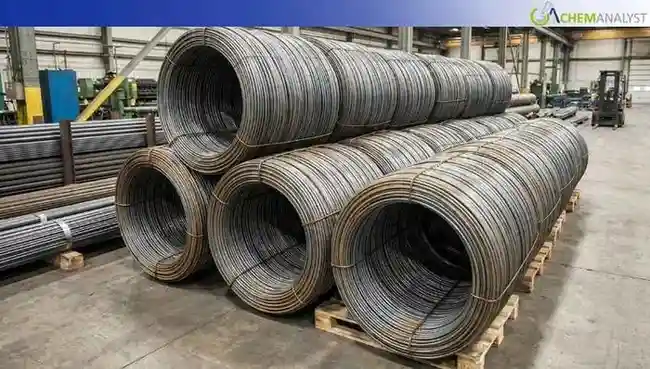
Downstream consumption for Steel Wire Rod, was still weak at the start of January 2026. German crude-steel output shrank 9.3% year-on-year through November 2025 amid bearish sentiment across wire-rod producers. Demand from the automotive sector was especially poor with the European Union vehicle production down and Germany with -1.69% over the year in December with no sign of a meaningful pick-up by early 2026, pressurising calls for fasteners and spring steel. Civil engineering was quietly seasonal in winter, offsetting the demand for rebar-in-coil. Implementation of the EU Carbon Border Adjustment Mechanism in near future deterred forward buy as there still are uncertainties over procedures and cost impacts. Buyers' purchases were restrained, and they bought only what they needed, maintaining the pressure on Steel Wire Rod prices. Given tight stocks and subdued downstream demand, Steel Wire Rod prices are anticipated to remain on the mild holding ground in the short term.
Supply close to equilibrium in early January 2026. Northern European long-product producers announced higher list prices at the start of the year, but only limited volumes were booked on contract, so transaction levels stayed close to December averages. Polish and South European regions remained almost entirely stagnant with all indications pointing towards a lack of regional supply/demand. Normal discharge rates for Steel Wire Rod were seen at German ports, and Rhine River barge traffic was not impacted by low-water restrictions, helping to keep inland shipments flowing. There was no large maintenance shutdown at major upstream billet casters thus import supplies from neighboring Netherlands, France & Belgium was fulfilling German Steel Wire Rod demand. The freight surcharge has remained stable, and no signs of port congestion, allowing the landed cost structure to remain stable.
Weak demand from the automotive and construction sectors together with further reductions in crude-steel production (Steel Wire Rod) and the onset of seasonal winter slowdowns restricted the Steel Wire Rod offtake. The higher nominal levels offered by Northern European mills were not backed by covered volume whilst consistent arrivals from Netherlands and Belgium continued to fill the market without shortage. It was precautionary buying ahead of the potential EU CBAM. Stability in the freight route with few disruptions at Hamburg port, this leverage going towards buyer’s side and allowing them to make small concessions.
As per ChemAnalyst, the German Steel Wire Rod market may probably still be facing mild downward pressure in Steel Wire Rod prices in January 2026 due to weak demand from the automotive and construction sectors, which more than offset any immediate supply limitations. Watching the implementation of CBAM, trends of Netherlands and Belgium output and seasonal restarts of construction may be important.







Leave a Comment
Comments (0)