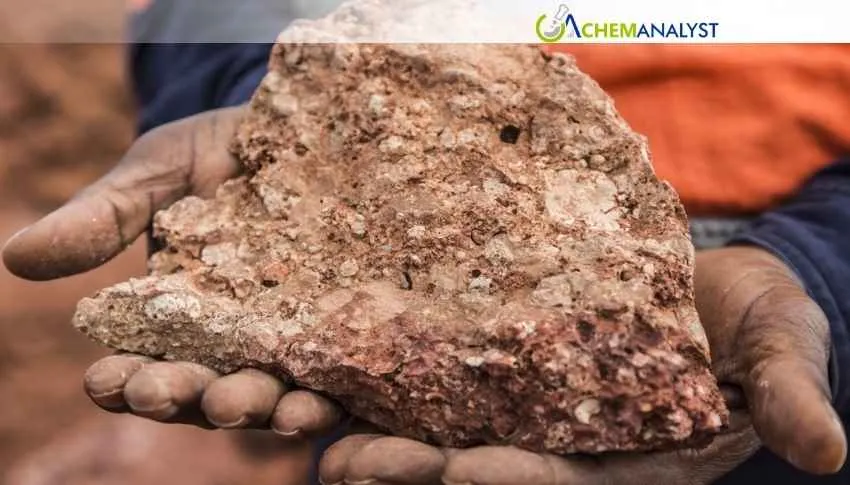
Guinea, the world's largest bauxite producer, is poised to implement new export control policies in June 2026, a move expected to significantly disrupt China's aluminium industry and global supply chains. The West African nation's primary objectives are to curb a dramatic slump in bauxite prices and foster the development of its domestic downstream processing capabilities, transitioning from a raw material exporter to a semi-processed commodity producer.
This intervention follows a period of unprecedented bauxite export surges from Guinea. In 2025, shipments increased by a quarter to 183 million tonnes, with a further 25.3% year-on-year rise in the first quarter of 2026, reaching 60.9 million tonnes. This accelerated output, largely driven by Chinese-linked operators, overwhelmed market absorption capacity, causing free-on-board bauxite prices to plummet by nearly 50% from early 2025 peaks to a four-year low of 32-38 per ton. Guinea's Mines and Geology Minister, Bouna Sylla, emphasized the government's aim to "regulate the quantity to raise prices back to reasonable levels," addressing the threat to smaller mining operators' viability and government revenues.
The economic ramifications of these curbs are substantial, particularly for China, which is heavily reliant on Guinean bauxite. In 2025, 75.3% of China's 158 million tonnes of bauxite imports originated from Guinea, feeding 50% to 60% of its domestic alumina production capacity. The proposed export cap of approximately 150 million metric tons annually, down from a projected 200 million tons, could result in a 25 million ton deficit for China in 2026, tightening supply and driving up input costs for Chinese alumina refiners. Already, alumina futures on the Shanghai Futures Exchange have surged by as much as 4.3% following the announcement, and aluminium stocks in Hong Kong have rallied. While short-term gains in aluminium prices might be limited by current inventory and demand, strong cost-side support in the medium to long term is anticipated to solidify an upward trend.
Geopolitically, Guinea's policy aligns with a broader trend of resource nationalism observed in countries like Indonesia, the Democratic Republic of Congo, and Zimbabwe, all seeking to capture more value from their raw materials through domestic processing. This highlights China's structural vulnerability due to its concentrated reliance on a single source for a critical industrial raw material.
From an industry-specific perspective, Chinese alumina refineries face significant challenges. Many were specifically engineered to process Guinean gibbsite-type bauxite, which requires less energy to refine than other varieties. Switching to alternative sources from Australia or Brazil would necessitate capital expenditure on equipment modifications and lead to higher operating costs and potential quality penalties. This could force marginal Chinese refineries to reduce output and compel operators to renegotiate long-term agreements, likely at higher prices. Ultimately, the ripple effects will extend to downstream industries such as automotive, aerospace, construction, and consumer packaging, which depend on aluminium as a primary material.








 About ChemAnalyst
Leave a Comment
Comments (0)