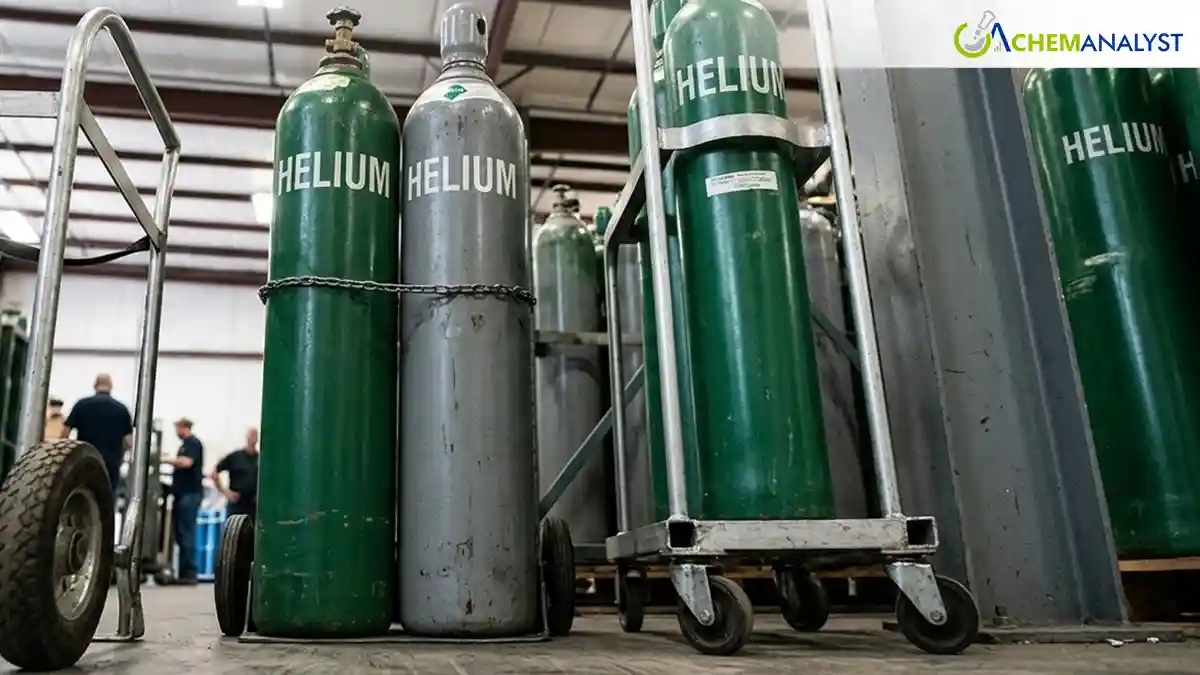
Global helium markets are undergoing a period of tightening supply, prompting producers to actively prioritise distribution toward essential industries while curtailing availability for less critical uses. With a significant portion of production capacity in Qatar currently offline, suppliers are redirecting limited volumes to sectors such as medical imaging, semiconductor manufacturing, aerospace, and nuclear energy. Meanwhile, industries considered lower priority—such as balloon production, certain laboratory uses, and other non-essential applications—are already experiencing immediate reductions in supply.
According to industry expert and independent consultant Phil Kornbluth, allocation strategies have already been implemented by several major helium producers, even though a full-scale physical shortage is only beginning to emerge. He noted during a recent webinar that at least half of the world’s leading helium suppliers have introduced some form of allocation system. These measures are aimed at conserving available resources and managing the impact of losing up to one-third of global helium supply following the shutdown of key production facilities in Qatar.
The disruption stems from the closure of three helium plants located at Ras Laffan, a major production hub. Collectively, these facilities contribute roughly one-third of the world’s helium output, with two plants alone accounting for approximately 27–30% of global supply. This sudden loss has created an immediate need for suppliers to ration existing inventories and prioritise critical applications.
Even in regions like the United States, where a physical shortage has not yet fully materialised, customers are already facing allocation limits. In some cases, deliveries have been reduced by as much as 50% to ensure that sufficient quantities remain available for high-priority sectors. This early-stage rationing reflects a proactive approach by suppliers to prevent a more severe disruption as the situation evolves.
Kornbluth emphasised the distinction between allocation and an actual shortage, explaining that while the physical deficit is still in its early stages, conservation efforts are already well underway. He expects the most acute phase of the supply crunch to last for several months, during which the market could experience a deficit of around 30%. Over time, this is likely to stabilise into a sustained shortfall of approximately 10–15%, indicating a transition from an immediate supply shock to a more controlled but constrained market environment.
However, even sectors deemed critical are not entirely insulated from risk. If the disruption persists, supply levels may fall short of meeting demand across all applications. Compounding the issue are logistical challenges associated with helium transportation. Since helium is shipped globally in specialised containers, it can take weeks—or even months—to reroute supply chains and rebalance distribution networks.
The tightening supply has already triggered sharp price increases. Spot market prices have reportedly surged by over 100% within a short period, signalling the emergence of a controlled scarcity environment. This could lead to a restructuring of the market, with analysts warning of a potential “Helium Shortage 5.0” scenario.
Further complicating the outlook, recovery timelines for Qatar’s infrastructure may extend far beyond initial estimates. While earlier projections suggested repairs could be completed within six months, newer assessments indicate it may take 18 to 24 months—or even longer—to fully restore production. Some estimates suggest the broader economic impact could reach up to $20 billion annually if disruptions persist.
In response, suppliers are actively adjusting their strategies. Companies are redistributing helium from alternative global sources, while some regions, such as Taiwan, are relying on imports from the United States to maintain supply stability. Despite these efforts, the market remains under pressure, with long-term constraints likely to shape pricing, availability, and industry dynamics for years to come.







Leave a Comment
Comments (0)