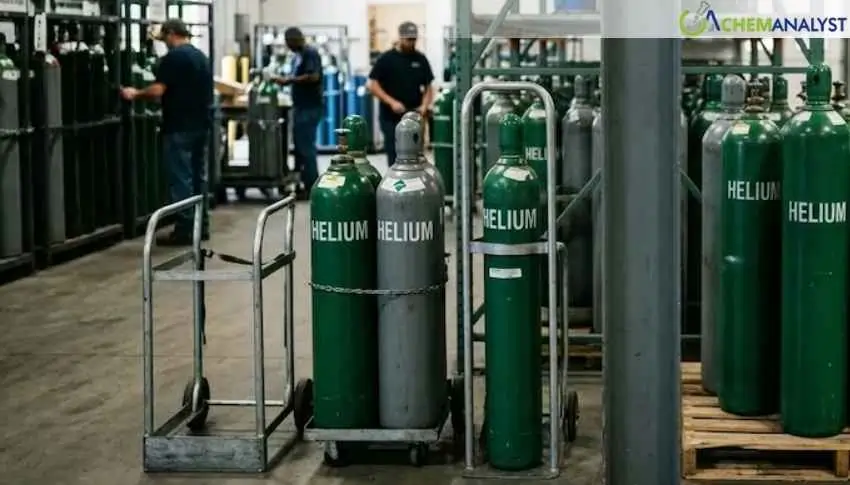
Rising geopolitical tensions involving United States and Israel on one side and Iran on the other are beginning to ripple far beyond traditional energy markets, creating new challenges for the global technology sector. While oil supply disruptions often dominate headlines, the current conflict is also severely affecting helium availability—a lesser-known but essential resource underpinning the modern digital economy. This development has sparked growing concern about the operational stability of data centers, particularly across the Gulf region.
Helium is a critical component in semiconductor manufacturing and plays a vital role in cooling advanced data center infrastructure. A significant portion—over one-third—of the world’s helium supply originates from Qatar. However, since the escalation of conflict on February 28, supply chains have been disrupted. The situation worsened following an attack on the Ras Laffan industrial complex, a key production hub, along with increasing instability in maritime routes through the Strait of Hormuz. These disruptions have constrained exports and reduced production output, placing strain on global helium availability.
Industry analysts are warning of potentially severe consequences if the crisis continues. Phil Kornbluth, founder of Kornbluth Helium Consulting LLC, indicated that a global helium production halt lasting two to three months is no longer unlikely. Similarly, Michael E. Webber from the University of Texas emphasized that any prolonged restrictions in the Strait of Hormuz would tighten supply further and push prices upward. Such a scenario could disrupt multiple high-tech industries that rely heavily on helium.
The effects are already becoming visible in key technology operations. Amazon has reported drone strikes impacting several of its data centers located in the United Arab Emirates and Bahrain, raising alarms about infrastructure vulnerability in the region. Analysts caution that if the conflict persists beyond four months, it could significantly delay or even halt major investments in artificial intelligence and cloud infrastructure projects throughout the Gulf.
In response, leading corporations are taking precautionary measures to limit the impact of supply disruptions. SK Hynix has stated that it maintains sufficient helium reserves to sustain near-term production without major setbacks. Meanwhile, Seagate Technology has indicated that it currently has flexibility in its supply chain, though it acknowledged that extended disruptions could intensify the already strained global semiconductor market.
As the situation continues to evolve, helium shortages are increasingly being viewed as a critical signal of broader vulnerabilities in global supply chains. The implications extend beyond immediate operational challenges, potentially reshaping long-term investment strategies and infrastructure planning in the Gulf region. If unresolved, the crisis could have lasting consequences for digital growth, data center resilience, and the future trajectory of advanced technologies worldwide.






Leave a Comment
Comments (0)