India has taken a decisive trade remedy measure by imposing an anti-dumping duty on specific steel imports originating from China, with the measure set to remain in force for a period of five years. The decision follows a detailed investigation that determined that unfairly priced imports had caused significant harm to domestic producers. The move underscores the government’s continued focus on safeguarding India’s steel manufacturing sector from injurious trade practices while ensuring fair competition in the domestic market.
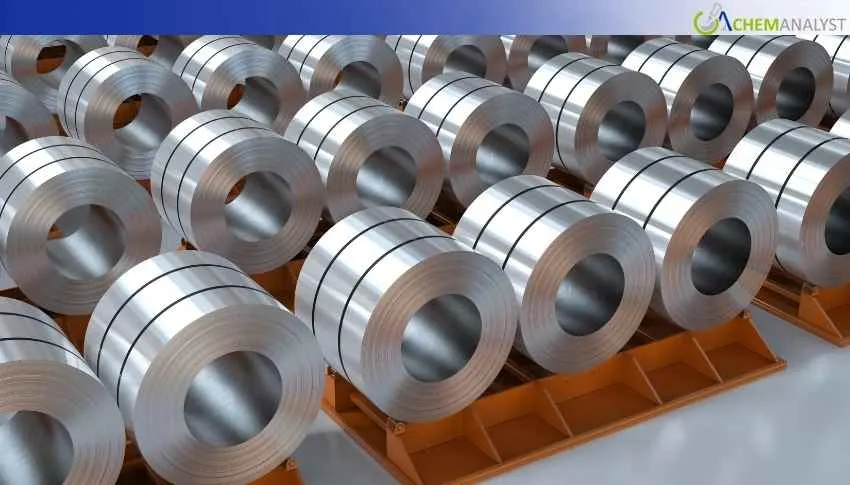
According to a formal notification issued by the Directorate General of Trade Remedies, imports of Cold Rolled Non-Oriented Electrical Steel (CRNO) from China will now attract an anti-dumping duty amounting to $223.82 per tonne. CRNO is a specialised steel product that includes cold-rolled flat silicon electrical steel, supplied either in coils or in cut lengths. This category of steel plays a critical role in the electrical and power equipment sector, as it is extensively used in the production of motors, generators, and smaller transformers that are integral to industrial machinery, household appliances, and energy infrastructure.
The DGTR clarified that not all related steel products fall under the ambit of the new duty. Cold Rolled Full Hard Silicon Electrical Steel (CRFH), which is primarily used as an input material in the manufacture of CRNO, has been explicitly excluded from the scope of the measure. This distinction is intended to avoid unintended disruption to downstream manufacturing activities that rely on CRFH as a raw material, while still addressing the issue of dumping in finished CRNO products.
The imposition of the duty follows an in-depth investigation conducted by the DGTR after receiving a formal complaint from the domestic steel industry. Indian producers had alleged that CRNO imports from China were being sold in the Indian market at prices below their normal value, a practice commonly referred to as dumping. According to the findings of the investigation, such imports had increased substantially over the period under review and were priced in a manner that undercut domestic products. As a result, Indian manufacturers experienced material injury, including pressure on prices, reduced profitability, and adverse impacts on capacity utilisation and overall financial performance.
After analysing evidence related to import volumes, pricing trends, cost structures, and the condition of the domestic industry, the DGTR concluded that the injury suffered by Indian producers was directly linked to dumped imports from China. Based on these conclusions, the authority recommended the imposition of a definitive anti-dumping duty to counteract the unfair pricing and restore a level playing field for domestic manufacturers. The central government has now accepted these recommendations and formally notified the duty.
This action forms part of a broader pattern of trade defence measures adopted by India in recent years to protect domestic industries from unfair international competition. Just last month, the government imposed an anti-dumping duty of $121.55 per tonne on imports of hot-rolled flat steel products from Vietnam, also for a five-year duration. That decision similarly followed an investigation that found evidence of dumping and resultant injury to Indian steelmakers.
Collectively, these measures reflect India’s intent to strike a balance between supporting domestic manufacturing under its industrial and infrastructure development goals, and complying with international trade rules that permit the use of anti-dumping duties when domestic industries are demonstrably harmed. By acting on DGTR recommendations, the government aims to ensure fair trade practices while maintaining stability in critical sectors such as steel and electrical equipment manufacturing.







Leave a Comment
Comments (0)