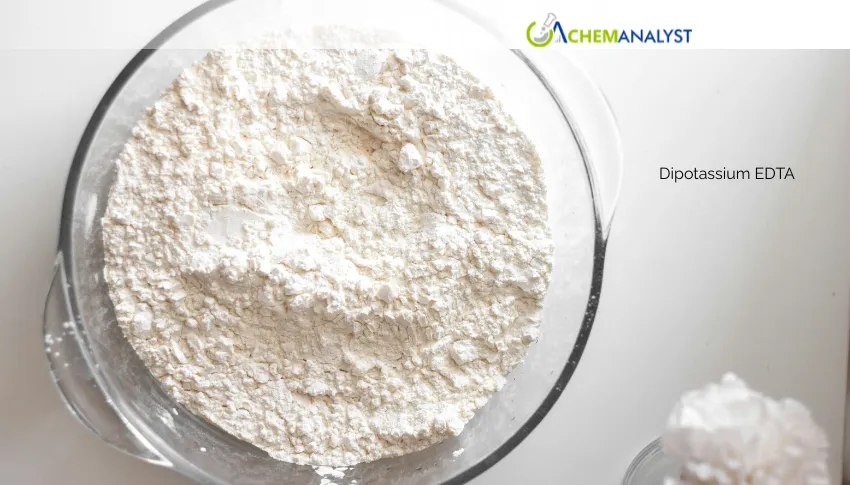
Indian Dipotassium EDTA prices rose 1.43% in June 2026 as higher feedstock ethylenediamine costs and robust pre-monsoon demand encouraged domestic producers to modestly increase Dipotassium EDTA offers. Early in the month, cosmetic formulators raised operating rates to meet seasonal skincare requirements, while municipal buyers maintained routine procurement ahead of the seasonal rise in water hardness. Throughout June, Dipotassium EDTA producers reported regular ex-plant availability with no major plant outages. However, merchants noted slightly longer container turnaround times at Nhava Sheva during mid-to-late June, extending lead times by three to four days and prompting some downstream buyers to prioritize domestically available Dipotassium EDTA material.
Demand for Dipotassium EDTA was primarily driven by the cosmetics and personal-care sector. Skincare formulations and finished personal-care products remained the key applications supporting higher operating rates, while water-treatment procurement stayed steady as municipalities prepared for seasonal conditions. Pharmaceutical intermediate manufacturers also maintained stable, tender-based purchasing and continued to prefer domestically sourced Dipotassium EDTA to avoid import-related delays. Aggregate call-offs remained robust throughout June, and buyers largely accepted the pass-through increase in Dipotassium EDTA prices with minimal resistance, reinforcing healthy near-term demand fundamentals.
Supply-side dynamics for Dipotassium EDTA remained balanced. Indian nameplate capacity and operating rates were unchanged, resulting in no outage-driven shortages, while distributor inventories remained lean but sufficient to meet market requirements. Nevertheless, a significant increase in ethylenediamine CFR JNPT prices raised production costs, prompting manufacturers to pass part of the cost escalation on to customers, according to ChemAnalyst analysis. In addition, geopolitical tensions remained a potential upside risk for upstream raw material availability. Logistics disruptions were limited to slightly slower container turnaround times at the west coast gateway, while normal import arrivals from China and broadly stable freight rates prevented sharper increases in Dipotassium EDTA prices. The combination of firm feedstock costs and healthy downstream demand allowed producers to maintain stronger pricing despite comfortable product availability.
Looking ahead, the Dipotassium EDTA price outlook remains mixed, according to ChemAnalyst analysis, with expectations ranging from a modest decline to slight gains during the second half of 2026. Near-term downside pressure may emerge in July as buyers with adequate inventories reduce fresh purchases, while seasonal moderation in personal-care demand could weigh on Dipotassium EDTA prices through October and November. Conversely, festival-season restocking and year-end replenishment are expected to provide moderate support during August and December. Continued feedstock inflation and any material Middle East-related logistics disruptions remain key upside risks, whereas adequate domestic availability and steady import flows should continue to limit any sharp increase in Dipotassium EDTA prices.








 About ChemAnalyst
Leave a Comment
Comments (0)