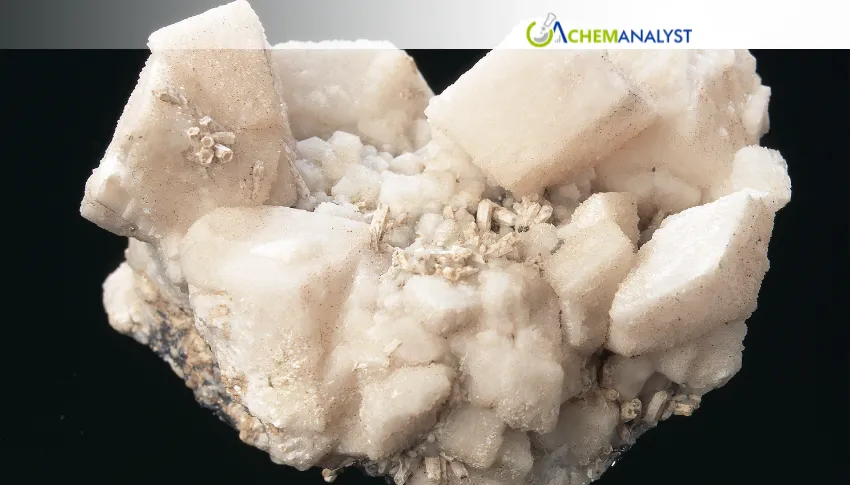
India's dolomite prices are expected to decline moderately in July 2026, extending the significant correction that produced a sharp 10.53% price fall in June as the structural demand weakness across the country's steel, cement, and construction sectors that drove the prior month's decline shows no meaningful signs of reversal in the near term.
The June 2026 price decline was the most pronounced monthly correction in the Indian dolomite market in recent memory, driven by the convergence of reduced steel mill procurement activity, a seasonal monsoon-related slowdown in construction and infrastructure work, and ample domestic supply availability from major producing regions. The July outlook reflects an expectation that a further moderate correction will occur rather than an immediate price recovery, given the persistence of the supply and demand conditions that generated June's outsized price movement.
On the supply side, India's domestic dolomite production — predominantly sourced from quarrying operations in Rajasthan, Madhya Pradesh, Odisha, and Andhra Pradesh — continues to operate at broadly adequate run rates. India's consumption of 18 million tonnes annually positions it as the second-largest global dolomite market, trailing only China, with the domestic production base, while significant globally, insufficiently sized for complete domestic self-sufficiency in higher-grade metallurgical and refractory dolomite grades. Maharashtra's government established the Gadchiroli District Mining Authority to fast-track mining approvals and expand extraction of key minerals including dolomite, a supply expansion initiative that further reinforces the adequate domestic production availability weighing on pricing through the June-July correction period.
On the demand side, the key consumption channels for Indian dolomite are under measurable pressure. The iron and steel segment — which accounts for over 60% of global dolomite end-use consumption through its applications as a steelmaking flux for slag conditioning, as a refractory lining protection material in blast furnaces and electric arc furnaces, and as a calcined dolomite input in basic oxygen furnace operations — has reduced procurement activity amid the broader softness in Indian steel output and mill capacity utilization rates. Crude steel production at major integrated steel mills in Jharkhand and Chhattisgarh has moderated from the aggressive rates of early 2026, reducing the volume of dolomite consumed per production campaign and leaving domestic quarry operators with inventory positions that continue to weigh on spot pricing.
The cement and construction sector — dolomite's second most significant Indian end-use channel through its application as an aggregate, filler, and agricultural soil conditioner — has entered the traditional monsoon season procurement lull that annually suppresses buying activity between July and September across the Hindi heartland and southern India's active construction markets. The interplay between robust domestic demand from core sectors like steel and cement and the constraints and costs of supply forms the central narrative of this market, and the current period sees both demand pillars simultaneously weakened, removing the demand-side pricing floor necessary to arrest the June correction.
Looking ahead to July 2026, the moderate further price decline anticipated by market participants for dolomite reflects the expectation that supply adequacy and demand weakness will persist but without the acute demand shock that characterized June's extraordinary 10.53% fall. Any recovery in Indian dolomite prices beyond July would likely require a visible acceleration in steel mill production schedules, a resumption of active infrastructure project procurement post-monsoon, or a tightening of domestic quarry supply through environmental compliance disruptions or monsoon-related logistics constraints at key producing sites in Odisha and Madhya Pradesh.







Leave a Comment
Comments (0)