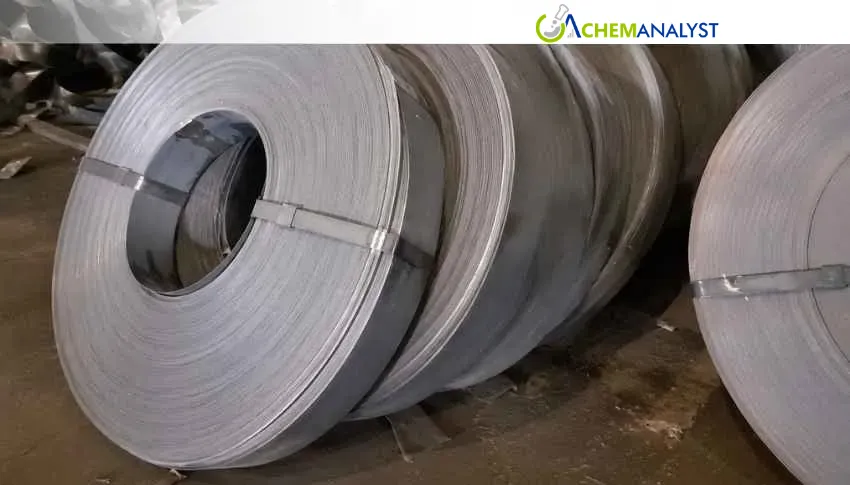
India’s HR strip prices strengthened through June, with a late-month rise reflecting a market balancing higher raw-material costs against subdued end-use demand. Early June saw firmer procurement that supported mill offers, while mid-month gains were driven by improved activity in the secondary steel segment. Toward late June, however, sentiment softened as automotive and construction demand failed to provide meaningful lift, limiting the durability of earlier momentum. Market conditions through the month were shaped by mixed trading patterns and the seasonal impact of the monsoon, which began to weigh on consumption expectations across several regions. Overall, HR strip movement reflected a blend of cost-driven support and demand-side caution, keeping HR strip trading on a measured upward path despite emerging headwinds.
India’s demand moved unevenly across sectors in June, creating a market with selective pockets of support but no broad momentum. The secondary steel segment and service centres showed a noticeable improvement in buying activity, helping sustain domestic value-chain consumption even though many centres remained well stocked. In contrast, automotive and construction demand stayed weak, failing to provide the lift needed for sustained price strength. Export activity also softened, with finished HRC markets under pressure and regional buyers adopting a wait-and-see stance, reducing external opportunities for domestic suppliers. These contrasting forces kept HR strip supported in some areas but ultimately left HR strip trading without the widespread uptake required for a stronger rally across the HR strip market.
India’s HR strip market in June was shaped heavily by upstream conditions, with feedstock trends playing a central role in determining price direction. Scrap availability tightened early in the month, pushing scrap offers higher and prompting mills to increase sponge-iron procurement as an alternative, effectively creating a cost floor for finished HR strip. Pig iron remained stable and acted more as a reference point than a disruptive factor. Toward the end of June, inventories eased as mills maintained steady production while well-stocked service centres limited any meaningful upside. With no major plant outages reported, overall output flows stayed consistent, moderating the pace of recovery and keeping HR strip movement measured across the broader HR strip supply chain.
India’s HR strip market showed a choppy but upward-leaning pattern through June, with weekly movements highlighting alternating gains and mild pullbacks. Prices firmed from early to mid-June before softening in the later weeks, then edged higher again in the late-June assessment. According to weekly data, this oscillation signaled a modest rebound rather than a strong directional surge, underscoring fragile demand conditions across key consuming sectors. Higher scrap offers provided intermittent cost support, helping mills maintain pricing discipline even as downstream sentiment remained cautious. Overall, the weekly pattern reflected a market in churn, where selective strength and periodic easing kept HR strip trading within a narrow band, reinforcing the measured and uneven tone shaping the broader landscape.
India’s HR strip market is expected to remain stable in the near term, supported by a mix of positive and limiting factors. Improved buying activity in the secondary steel segment and elevated scrap offers should lend short-term strength to mill pricing. However, weak export demand, high service-centre inventories and the seasonal impact of the monsoon are likely to restrict further upside. Analysts anticipate HR strip prices to hover around recent levels in the coming week, with overall direction closely tied to procurement rhythms and shifts in scrap availability. While supportive elements exist, broad-based momentum remains constrained, keeping HR strip trading in a balanced but cautious range across the market.







 About ChemAnalyst
Leave a Comment
Comments (0)