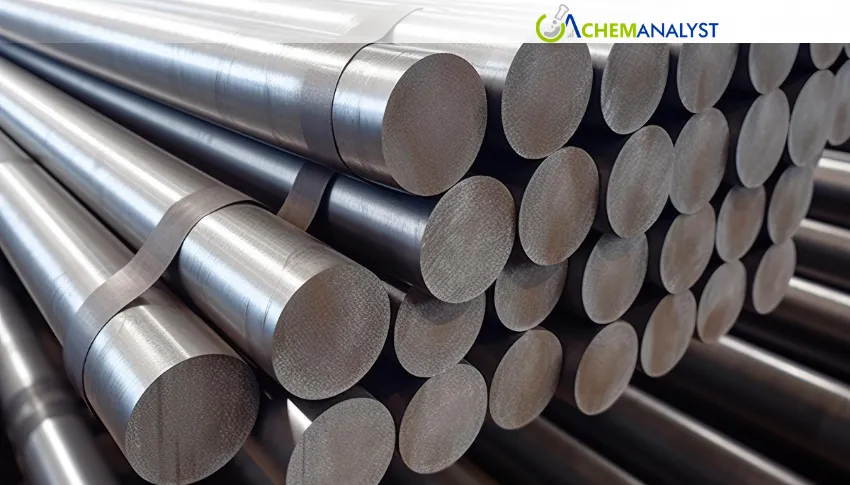
India's alloy steel round bar prices advanced 3.66% during the week of July 3, 2026, as the domestic specialty steel market demonstrated robust price momentum underpinned by a convergence of firm downstream demand from infrastructure, automotive, and precision engineering sectors, disciplined domestic mill output management, and constrained import availability — a set of conditions that provided sellers with sufficient market leverage to push through a meaningful weekly price increase for alloy steel at Mumbai and other key distribution hubs.
On the demand side, India's alloy steel consumption remained firmly anchored by the Government of India's sustained capital expenditure programme under the Union Budget FY26–27, which has maintained elevated public infrastructure spending across roads, railways, bridges, and defence manufacturing applications — all of which require alloy steel in round bar and structural forms. Steel prices across India remained firm in May 2026 on the back of steady infrastructure demand and the Government of India's sustained capex push under the Union Budget FY26–27, with India having emerged as the world's second-largest steel producer with output reaching 164 MT in FY25, with steel production also scaling up to meet demand across construction, manufacturing, automotive, railways, and other sectors. This underlying demand growth trajectory carried through into the July trading week, with automotive component manufacturers, capital goods producers, and general engineering fabricators maintaining active procurement schedules for alloy steel .
On the supply side, domestic alloy steel production from major Indian producers including Tata Steel, JSW Steel, and SAIL's specialty product divisions continued at broadly stable operating rates, but tighter availability of specific round bar dimensions in the 110–150mm diameter range — a grade in consistent demand from the automotive and heavy engineering sectors — contributed to localized supply tightness that enabled domestic producers and distributors to raise offer levels for alloy steel . Import competition from Chinese origins, which might otherwise have capped the upward price movement, was constrained during the week as Chinese producers managed export volumes amid the EU's new steel safeguard mechanism that took effect July 1. The European Commission rolled out a revised safeguard mechanism that sharply curbs duty-free steel imports effective July 1, reducing the annual tariff-free import quota by 47% to 18.3 million metric tons and imposing a 50% tariff on imports exceeding the quota across 26 steel product categories. With Chinese export volumes redirected or constrained by the tighter European trade environment, the availability of lower-priced Chinese-origin alloy steel for the Indian import market tightened incrementally during the week, reinforcing domestic producer pricing power.
Looking ahead, India's alloy steel market is expected to maintain its constructive price trajectory in the near term. Steel prices are forecast to remain elevated but volatile, with no major crash expected and a moderate increase likely, as India's steel demand is expected to grow strongly at around 8–9% annual growth. With the government's infrastructure capex pipeline remaining robust and automotive and engineering sector demand providing consistent offtake support for alloy steel , any price correction would likely require a significant easing of domestic supply constraints or a marked increase in import availability. Market participants will continue to monitor raw material input costs — particularly coking coal and iron ore — and the trajectory of Chinese export pricing as the key variables shaping India's alloy steel market in the coming weeks.







 About ChemAnalyst
Leave a Comment
Comments (0)