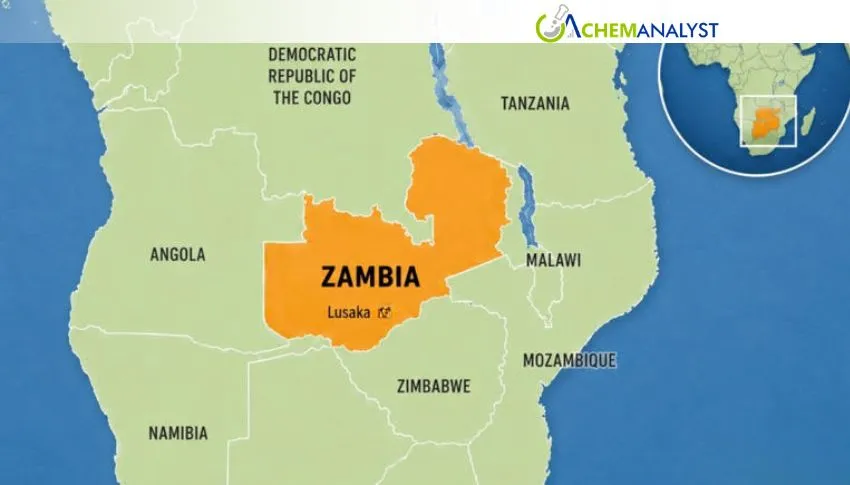
Indian mining contractor Laxyo Ltd. has made a significant foray into the African underground mining market, securing a substantial INR 200 crore (approximately $23 million) raise-boring contract at Zambia's Mopani Copper Mine. This pivotal agreement marks Laxyo's inaugural overseas raise-boring project and represents 12.6% of its total order book, positioning the company alongside established global specialists in the African mining landscape. The move comes as Laxyo prepares for its Initial Public Offering (IPO), with the Zambia contract bolstering its international expansion strategy.
The key event underscores Laxyo's expertise in advanced underground mining techniques, particularly raise boring, which is favored for its superior safety standards and operational efficiency as it creates shafts and tunnels without the use of explosives. This method is crucial for developing critical infrastructure like ventilation shafts and escape routes in deep mining operations. The contract's cause can be attributed to Mopani Copper Mine's ongoing efforts to modernize its operations and enhance productivity, following a period of significant financial and operational challenges. International Resources Holdings (IRH), Mopani's strategic equity partner, has a vision to transform the mine into a highly productive copper operation, aiming to increase output to 200,000 tonnes within three years, contributing to Zambia's national goal of 3 million tonnes of annual copper production by 2030.
The consequences of this partnership are multi-faceted, spanning economic, geopolitical, and industry-specific impacts. Economically, the $23 million contract represents a significant investment in Zambia's mining sector and a substantial revenue stream for Laxyo. For Zambia, such investments are crucial for economic growth, job creation, and the transfer of modern mining technologies and practices.
From a geopolitical perspective, Laxyo's entry reflects India's broader strategic interest in securing critical minerals like copper and cobalt from Africa. India aims to reduce its import dependency for these essential minerals, which are vital for its electric vehicle market, renewable energy infrastructure, and overall industrial development. This engagement is part of a larger trend where India is actively seeking partnerships across Africa to diversify its mineral supply chains and potentially challenge the historical dominance of other global powers, particularly China, in the continent's mining sector. Zambia, in turn, is leveraging these partnerships to attract capital, technology transfer, and skills training, aiming to move up the value chain from raw mineral extraction to local processing and manufacturing.
Industry-specific impacts include the adoption of advanced raise-boring technology, which enhances safety and efficiency in underground mining. Mopani Copper Mines, under IRH's "Mine of the Future" program, is also focusing on digital transformation, integrating technologies like real-time tracking, AI-powered predictive maintenance, and centralized control rooms to optimize production and ensure sustainability. This collaboration highlights the global demand for copper and other battery minerals, driving competition and technological advancements in the mining industry.
Market Impact: Laxyo Ltd.’s Rs. 200 crore raise-boring contract at Zambia’s Mopani Copper Mine is expected to have a limited immediate impact on the global chemical market; however, it may create moderate demand growth for certain mining and copper-processing chemicals over the medium to long term. As Mopani expands its production capacity and modernizes operations, consumption of sulfuric acid, a critical chemical used in copper leaching and hydrometallurgical processing, may increase, potentially offering slight upward support to regional sulfuric acid prices.
Additionally, increased mining activity could boost demand for flotation reagents, including collectors and frothers, along with flocculants used in ore separation and wastewater treatment, supporting a mildly bullish market outlook for these chemicals. Conversely, the adoption of raise-boring technology, which minimizes the use of explosives during shaft development, may slightly reduce the requirement for explosive-related chemicals such as ammonium nitrate and nitric acid; however, the overall price impact is expected to remain negligible due to the project’s relatively small scale.
Overall, ChemAnalyst anticipates a slightly positive outlook for copper-related mining chemicals, particularly sulfuric acid and flotation reagents, while the broader chemical commodity market is unlikely to experience any significant price fluctuations from this development alone.







Leave a Comment
Comments (0)