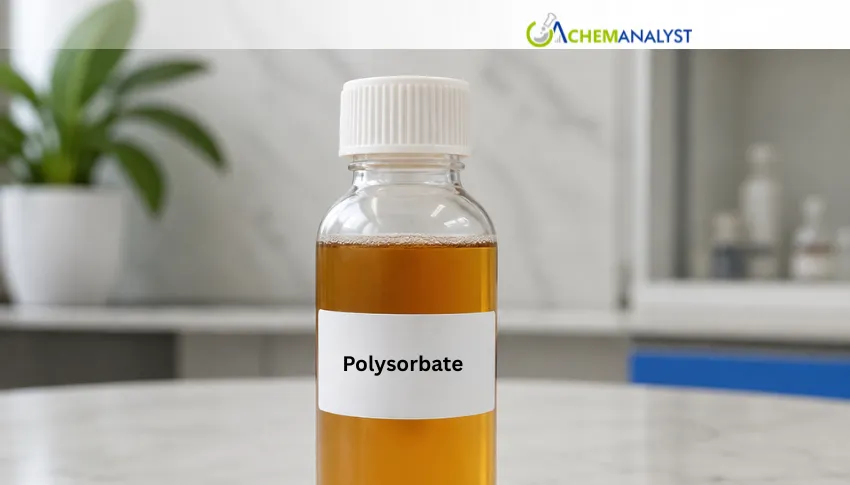
Polysorbate prices in India declined 2.2% in July 2026, as lower import costs and softer non-pharmaceutical demand outweighed resilient pharmaceutical procurement. The market began July with firmer offers but easing freight and feedstock costs encouraged exporters to reduce quotations as the month progressed. Pharmaceutical demand for Polysorbate remained supportive, particularly from manufacturers of biologics and vaccine formulations, while food, personal-care and textile applications remained comparatively subdued. The availability of material from Chinese and European suppliers also kept buyers well supplied and strengthened their negotiating position. Consequently, Polysorbate moved toward a more buyer-oriented market by late July, with procurement increasingly focused on immediate requirements rather than inventory building.
Demand for Polysorbate remained uneven across downstream industries during July. Pharmaceutical procurement provided the strongest support, with India's pharmaceutical market expanding 12.1% year-on-year, according to ChemAnalyst data. Demand from biologics and vaccine formulations helped maintain a stable consumption base. In contrast, food and beverage, cosmetics, personal-care, and textile manufacturers remained cautious as comfortable inventories reduced the need for aggressive spot purchases. This divergence prevented a stronger recovery in Polysorbate demand despite resilient pharmaceutical consumption. Buyers in non-pharmaceutical sectors increasingly adopted a wait-and-see approach, particularly as import economics improved and lower freight costs indicated the possibility of further reductions in landed offers.
Supply and cost dynamics were also bearish for Polysorbate prices. Imported Fatty Acid C8 averaged in July after declining 1.99% during the month, reducing manufacturing costs for exporters. Meanwhile, Shanghai-to-JNPT container freight declined 23.6% to USD 1,988 for a 20-foot container by mid-July, significantly reducing delivered costs and narrowing the China-India arbitrage. These savings encouraged suppliers to maintain competitive offers into India. However, firmer ethylene oxide and sorbitol benchmarks in exporting countries, together with a 0.85% depreciation of the Indian rupee, provided partial cost support and prevented a sharper decline in Polysorbate offers. Overall, lower logistics and Fatty Acid C8 costs remained the dominant downward influences during July.
Looking ahead to August 2026, Polysorbate prices are expected to remain mixed, with resilient pharmaceutical procurement potentially providing support while comfortable import availability and competitive freight costs could limit upside. Demand for biologics and vaccine formulations may continue to provide a stable consumption base, while pre-festive procurement could gradually strengthen buying from food, personal-care and other consumer-oriented sectors. However, ample exportable supply from China and Europe could keep Indian buyers in a strong negotiating position. Any renewed increase in ethylene oxide or sorbitol costs, tighter export availability or disruption to shipping routes could provide upward pressure. Conversely, further declines in feedstock or container freight costs may encourage exporters to lower Polysorbate offers.







 About ChemAnalyst
Leave a Comment
Comments (0)