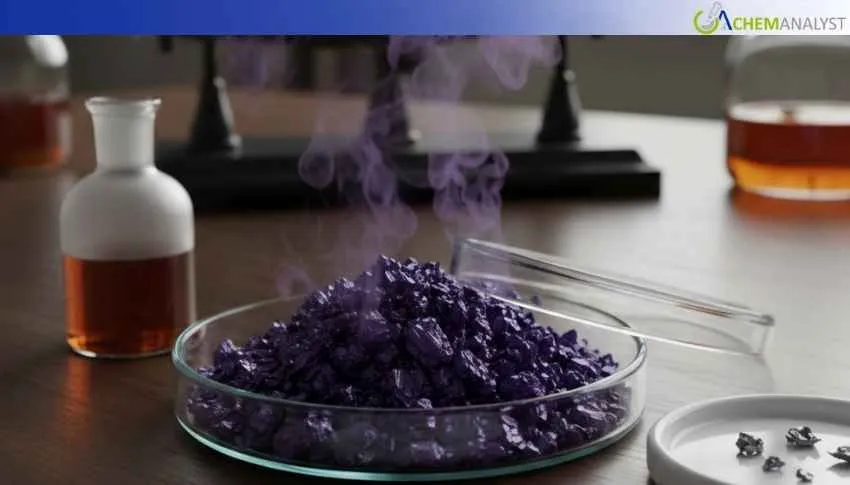
The market for export of iodine from Japan is still clearly trending downward for FOB Tokyo prices, with current market trends and outlook further supporting this perception of a downward trend in the short term with prices likely to drop by 1.6% in December 2025. It is observed that market participants now feel that the bearish market seen in recent months is increasingly underpinned by both fundamental and macro factors, rather than a correction trend.
One of the primary drivers supporting the downward trend is the imbalance between supply availability and effective demand. Japanese iodine producers have maintained stable production levels, while export flows remain consistent, resulting in ample material availability in the spot market. At the same time, iodine buyers across Asia and other key destinations are adopting a cautious procurement strategy, largely purchasing on a hand-to-mouth basis. This has reduced spot transaction volumes and limited sellers’ ability to maintain previously higher FOB Tokyo price levels.
The market trend in downstream demand also adds to an unfavorable price outlook. Though demand in the pharmaceutical industry has remained a steady base iodine demand source, demand in other significant industries like electronics, specialties, and catalysts has remained subdued. This has happened owing to decreased global production and cautious capital expenditure patterns, which have impacted iodine demand growth, particularly in export-driven sectors. This makes downstream demand sources less receptive to hard offers from Japanese firms.
In addition, the level of iodine imports is also adding to the bearish sentiment. Market feedback shows that the current level of merchandise held within the regions that are doing the majority of the imports is still sufficient, after aggressive re-stocking at the start of the year. Since no supply squeeze is seen on the horizon, iodine importer buying is being deferred in the hope that further corrections might be possible.
In terms of competition, it’s also being driven by global supply dynamics. Alternative supplies, especially from South America, have been providing levels of iodine that are more competitive in world markets, thereby specifically intensifying price competition. Japanese exporters are also being forced to realign their FOB Tokyo price levels based on global comparisons, therefore again contributing to downward pressure.
Going forward, forecast trends for the market continue to be largely bearish. Analysts forecast that prices for FOB Tokyo iodine are likely to come under continued pressure over the short to medium term, while there are no obvious upside triggers.
Unless there is a marked increase in industrial demand or disruptions in iodine supplies, fundamentals point towards a possibility of a slow softening in prices. Any improvements in seasonal demands are expected, but these are unlikely to alter the existing trend.
In addition, overall macro-economic uncertainties such as currency volatility and overall growth expectations can be expected to dampen iodine buyer sentiment. This will further slowdown speculative purchases and lead to price negotiations continuing at lower levels.







Leave a Comment
Comments (0)