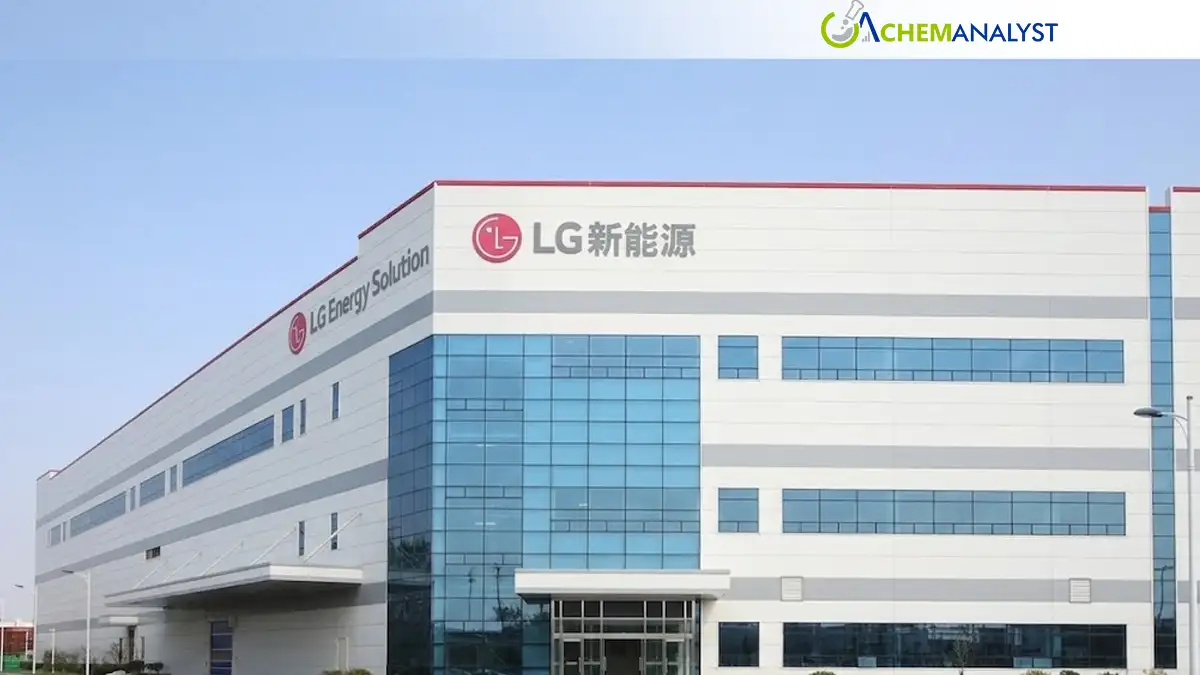
LG Energy Solution is establishing a sodium-ion battery mother line at its Ochang Energy Plant in South Korea by the end of 2026. This strategic move aims to accelerate the development and production of sodium-ion batteries. The company plans to begin proof-of-concept projects with global customers in 2027. They will also conduct grid-connected demonstrations of energy storage systems (ESS) using these new batteries.
The Ochang facility's mother line will verify mass production capabilities. Unlike typical pilot lines, which mainly produce prototypes, a mother line replicates actual mass-production processes. This allows simultaneous evaluation of productivity and product quality. LG Energy Solution will convert part of its existing lithium-ion battery production line, reducing new capital investment and shortening the commercialization timeline.
LG Energy Solution also operates a pilot production line for sodium-ion batteries at its Nanjing plant in China. This line, with a 200-megawatt-hour annual capacity, focuses on developing and verifying prismatic sodium-ion batteries. The company showcased a pouch-type sodium-ion battery cell at InterBattery 2026 in March.
This accelerated push into sodium-ion batteries is driven by several factors. North American customers seek to diversify their supply chains, which are currently heavily reliant on Chinese manufacturers for lithium iron phosphate (LFP) batteries. The nascent sodium-ion battery market offers an opportunity to establish new supply chains with reduced dependence on China.
LG Energy Solution also aims to compete with Chinese battery giant CATL. CATL is preparing for gigawatt-hour scale production of sodium-ion batteries. LG Energy Solution intends to offer products with higher energy density and longer lifespans through its proprietary manufacturing processes. Sodium-ion batteries also gained attention as a potential lower-cost alternative to lithium-ion batteries, especially when lithium prices were high.
The development of sodium-ion batteries has significant economic and geopolitical impacts. Economically, these batteries could offer cost-effective solutions for various applications. These include electric vehicles, commercial vehicles, and large-scale energy storage systems.
Geopolitically, the expansion of sodium-ion battery production by non-Chinese manufacturers like LG Energy Solution can reduce global reliance on China for battery supply. This diversification enhances supply chain resilience, particularly for Western markets. The Ochang plant is positioned to become a global hub for battery research and development, supporting LG Energy Solution's manufacturing facilities worldwide.
Impact of the News
This move accelerates commercialization of sodium-ion batteries, positioning LG Energy Solution to compete with CATL while offering North American customers a China-independent supply chain for energy storage and EV applications. Converting existing lithium-ion lines lowers capital costs and speeds market entry, strengthening LG's global R&D and manufacturing footprint.
For chemical commodities tracked by ChemAnalyst, rising sodium-ion adoption could gradually dampen demand growth for lithium carbonate, lithium hydroxide, and cobalt, as sodium-based cathodes (like Prussian blue/white analogs) reduce reliance on lithium and cobalt inputs. Conversely, demand for sodium carbonate, iron, and manganese precursors may rise, supporting their price stability amid diversifying battery chemistries.








 About ChemAnalyst
Leave a Comment
Comments (0)