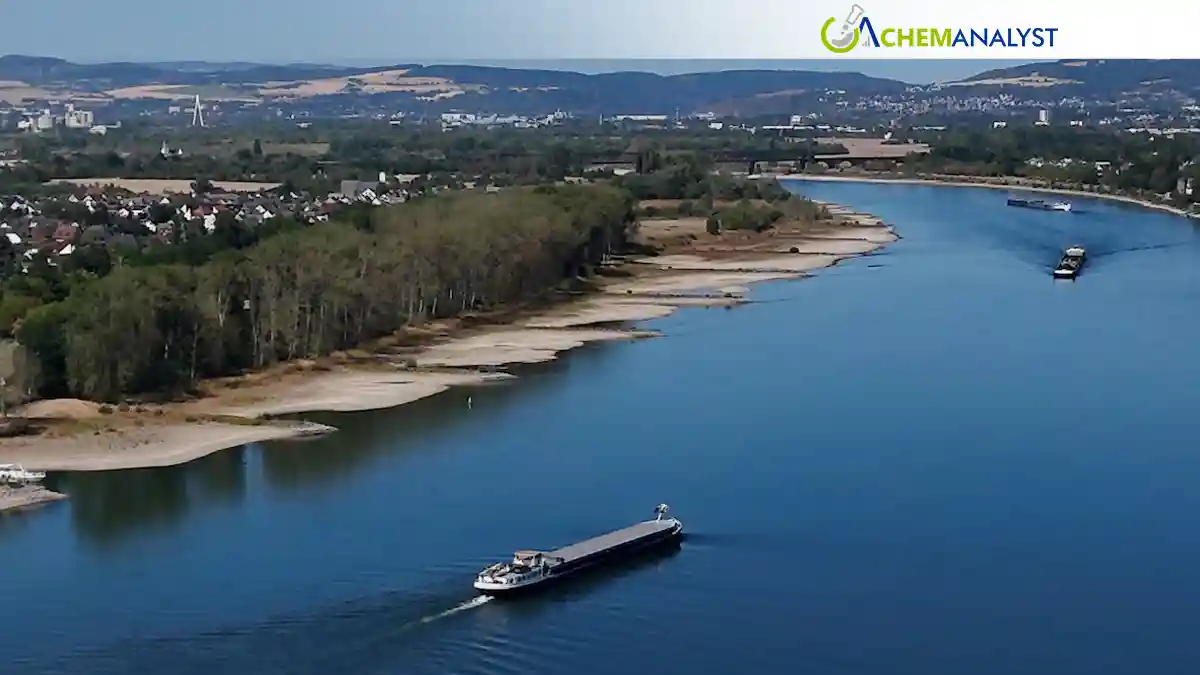
Record-low water levels on the Rhine River are creating mounting challenges for German industry, with chemical manufacturers, utilities, steelmakers and agricultural traders reporting higher logistics costs, reduced transport capacity and operational disruptions. Although Germany has not yet experienced the widespread production shutdowns seen during previous Rhine water crises, companies are increasingly warning that the situation is becoming difficult to manage.
After several weeks of drought, some cargo shipments are no longer available for booking, according to market participants. The Rhine serves as a critical transportation route for fuels, minerals, grains, chemicals and industrial products across Europe. However, falling water levels are limiting the amount of cargo vessels can carry and making river transportation increasingly expensive.
Chemical producer Covestro has been among the companies affected. The company said limited transport capacity could not be fully compensated by shifting shipments to road and rail networks. As a result, Covestro declared force majeure on certain products, including polyether polyols, which are widely used in mattress production and polyurethane-based refrigerator insulation. The disruption could tighten availability for downstream manufacturers that rely on timely deliveries.
Evonik has also reported logistical constraints at its Marl chemical park. The company said reduced cargo volumes were affecting operations, although it did not provide detailed information about the scale of the impact.
The consequences are also extending to Germany's power sector. State-owned utility Uniper highlighted lower electricity generation from its German hydropower facilities, while rival utility EnBW had reported similar challenges. Reduced river flows can directly affect hydroelectric generation and increase pressure on alternative power sources.
Steelmaker Salzgitter, Germany's second-largest steel producer, has been forced to adjust its logistics strategy. The company is transporting coal by rail from Rotterdam to its HKM division because Rhine conditions have restricted waterborne deliveries.
Agricultural traders are facing similar problems. RWZ executive Katharina Stelzer described a further decline in Rhine water levels as potentially “catastrophic.” During a normal July-August period, RWZ typically transports at least 50,000 metric tons through its terminals in Worms and Andernach. This year, shipments during the comparable period have remained below 10% of that volume, forcing the company to rely more heavily on costly truck transportation.
The outlook remains uncertain. If Rhine water levels fail to recover by October, companies could face significantly higher transportation costs, tighter raw-material availability and further production disruptions across Germany's industrial supply chain.
Product and Chemical Commodity Price Impact
The Rhine disruption is likely to exert upward pressure on prices of chemical commodities tracked by ChemAnalyst, particularly products dependent on inland waterway logistics and imported feedstocks. Polyether polyols could see the most immediate impact as Covestro’s force majeure limits supply, potentially tightening European availability and lifting spot prices. Higher road and rail freight costs may also increase delivered prices for chemicals, fuels and industrial raw materials. If low water levels persist, producers could face higher operating costs and reduced production, strengthening bullish price sentiment. However, weak downstream demand and the availability of alternative transport routes could limit the magnitude of price increases.







Leave a Comment
Comments (0)