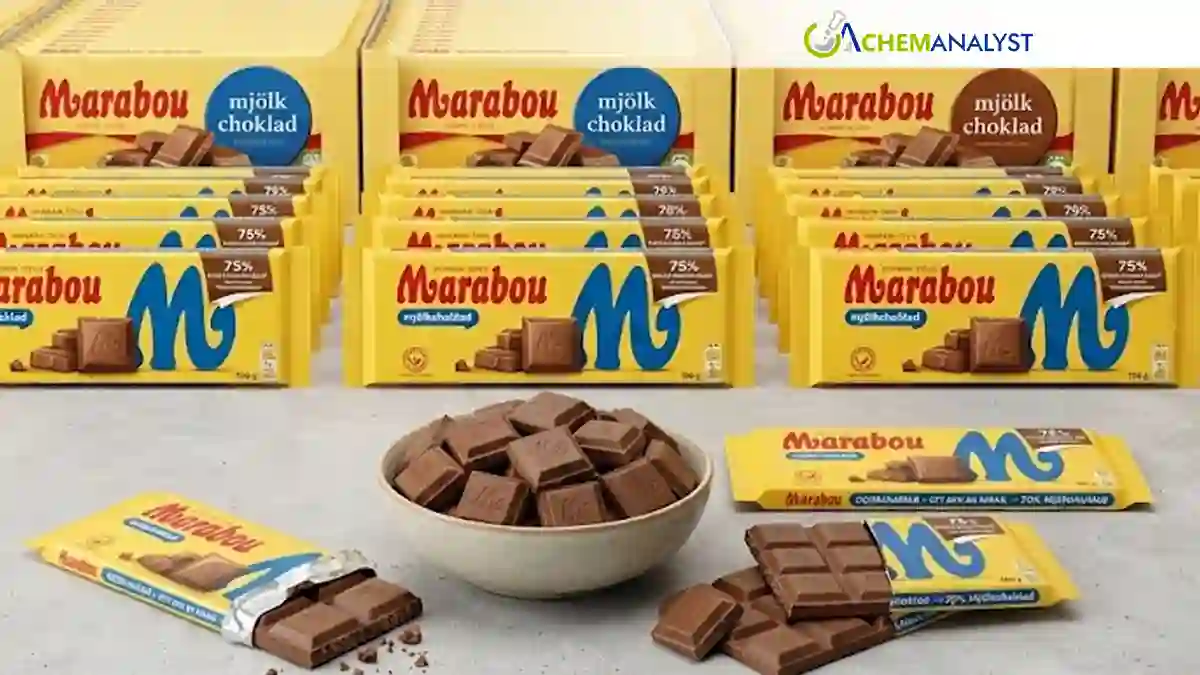
LyondellBasell (LYB), one of the world's leading chemical companies, has announced a major advancement in sustainable food packaging through a collaborative project with Mondelez International, Amcor, Taghleef Industries, and several other value chain partners. Together, the companies have introduced an innovative flexible packaging solution for Marabou chocolate bars made using recycled plastic, demonstrating how advanced recycling technologies can convert difficult-to-recycle plastic waste into high-quality food-grade packaging materials.
The newly launched packaging incorporates LYB's CirculenRevive polymers, which contain 100% attributed recycled content through an ISCC PLUS-certified mass balance approach. This enables Mondelez to manufacture chocolate bar packaging with approximately 75% recycled plastic content while maintaining the performance, safety, and quality standards required for food-contact applications. The initiative represents a significant milestone in reducing reliance on virgin fossil-based plastics and promoting circular material use within the packaging industry.
According to Yvonne van der Laan, Executive Vice President of Sustainable Solutions and Technology Business at LYB, the collaboration reflects a shared commitment among industry partners to accelerate the adoption of circular packaging solutions. She emphasized that the partnership demonstrates LYB's capability to deliver innovative, high-performance recycled polymer solutions tailored to demanding customer requirements while helping businesses transition toward lower-carbon and more sustainable products. The company believes such collaborations are essential to making circular plastics commercially viable and widely accessible.
To further strengthen its circular plastics portfolio, LYB plans to support future Marabou packaging production through its upcoming MoReTec-1 facility currently under construction in Wesseling, Germany. The commercial-scale catalytic chemical recycling plant will play a central role in LYB's integrated circular ecosystem by converting hard-to-recycle mixed plastic waste into valuable feedstocks for polymer manufacturing. Once operational, the facility is expected to process approximately 50,000 metric tons of recycled feedstock annually, supplying LYB's existing polymer production assets with sustainable raw materials.
LYB Chief Executive Officer Peter Vanacker noted that the project highlights the company's ability to integrate advanced chemical recycling technologies into its established manufacturing network. By connecting recycling infrastructure with its cracker and polymerization facilities, LYB aims to expand the availability of recycled polymers while reducing dependence on fossil-derived feedstocks. The company expects the MoReTec-1 plant to become a key contributor to future circular polymer production, supporting both commercial growth and long-term sustainability objectives.
Supporting this ecosystem is Source One Plastics, LYB's joint venture located in Eicklingen, Germany, which processes mixed post-consumer plastic waste into feedstock suitable for chemical recycling. At present, LYB sources recycled feedstocks for CirculenRevive polymers from third-party pyrolysis oil producers, but the commissioning of MoReTec-1 is expected to significantly enhance internal feedstock availability and improve supply chain integration.
The success of the Marabou packaging project underscores the importance of collaboration across the entire packaging value chain. LYB supplies the circular polymers, Taghleef Industries manufactures the specialty base film, and Amcor converts the materials into finished flexible packaging before supplying them to Mondelez. Each participant contributes specialized expertise that enables the production of high-performance packaging incorporating recycled content without compromising product quality.
Richard Akkermans, Packaging Sustainability Manager at Mondelez International, stated that the company intends to continue increasing recycled plastic content across its packaging portfolio. He highlighted that partnerships with recycling companies, material suppliers, packaging manufacturers, and converters are critical to making circular packaging commercially successful. The initiative also reinforces an important consumer message that plastic packaging can be collected, recycled, and transformed into new food packaging through advanced recycling technologies.
The collaboration also aligns with the European Union's Packaging and Packaging Waste Regulation (PPWR), which is expected to introduce stricter recycled-content requirements for packaging materials. Flexible plastic packaging has historically been one of the most difficult waste streams to recycle into food-grade applications. Chemical recycling technologies such as those used in the CirculenRevive platform provide an effective solution by converting mixed plastic waste into high-quality feedstocks capable of producing virgin-quality polymers. These drop-in materials meet regulatory standards while enabling brand owners to achieve ambitious recycled-content and sustainability targets without sacrificing packaging performance or food safety.
Impact on Product and Chemical Commodity Prices
The collaboration between LYB, Mondelez, Amcor, and Taghleef Industries is expected to strengthen the market for recycled-content flexible food packaging while increasing demand for chemically recycled polymers such as polyethylene (PE) and polypropylene (PP) produced through advanced recycling routes. As commercial-scale production expands with LYB's upcoming MoReTec-1 facility, the availability of food-grade circular polymers is likely to improve, encouraging wider adoption across the packaging industry. In the short term, prices of virgin PE and PP tracked by ChemAnalyst are expected to remain largely stable, as the recycled polymer volumes introduced through this initiative are relatively limited compared to overall market demand. However, premiums for ISCC PLUS-certified circular polymers may remain elevated due to growing brand-owner demand and constrained supply. Over the medium to long term, increased chemical recycling capacity could gradually ease dependence on virgin fossil-based feedstocks, potentially reducing price volatility in premium sustainable polymer grades while supporting a more balanced and resilient packaging raw material market.







 About ChemAnalyst
Leave a Comment
Comments (0)