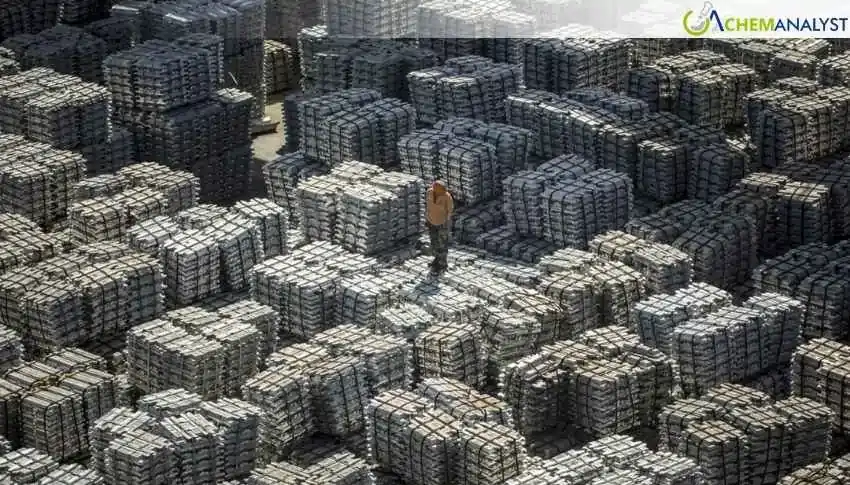
The ongoing conflict in the Middle East has significantly bolstered Chinese metals demand, leading to a surge in exports and providing a crucial lift to China's economy amidst domestic challenges. The war has disrupted traditional supply chains, particularly impacting metal production and shipments from the Persian Gulf, which accounts for approximately 9% of global output. This disruption has compelled international buyers to seek alternative sources, with China, the world's largest metals producer, emerging as a primary beneficiary.
A key event driving this trend is the sustained conflict in the Middle East, which has choked supply routes and created a vacuum in the global metals market. For instance, the Strait of Hormuz, a critical chokepoint for oil and potentially other commodities, has faced disruptions, leading to uncertainty and higher shipping costs. This geopolitical instability has directly caused a shift in demand towards Chinese suppliers.
Economically, this situation has presented a significant opportunity for Chinese steelmakers and aluminum smelters. Chinese steel exports have continued to flood global markets, defying expectations of a slowdown due to rising protectionism elsewhere. Saudi Arabia, in particular, has become a major destination, with shipments of Chinese steel to the kingdom increasing by 41% in the first nine months of the year compared to the previous year. Similarly, Chinese aluminum exports are projected to surge, potentially matching or exceeding record levels seen in 2024, as international prices for aluminum show their biggest premium to the Chinese market since 2022. This premium makes Chinese exports highly attractive.
The consequences for China are multi-faceted. The export boom is acting as a vital channel to absorb record levels of domestic output, especially at a time when China's domestic economy is experiencing a slowdown and a prolonged property sector slump is weighing on internal demand and investments. While overall export growth in March slowed compared to the robust figures of January and February, technology-related exports, including semiconductors and green technologies like solar cells and electric vehicles, continue to show strong momentum. This export-driven growth is crucial for China to meet its economic expansion targets.
Geopolitically, the shift in trade patterns highlights China's increasing role as a stable and reliable supplier in times of global uncertainty. Despite rising trade tensions with some Western nations, China is strategically leveraging demand from regions like the Middle East and Southeast Asia to sustain its export volumes. However, the sustainability of this export boom remains contingent on the duration of the Middle East conflict and the broader global demand landscape, with risks of a persistent global slowdown if the war continues. Rising shipping costs due to the conflict could also pose a challenge to the trade.







Leave a Comment
Comments (0)