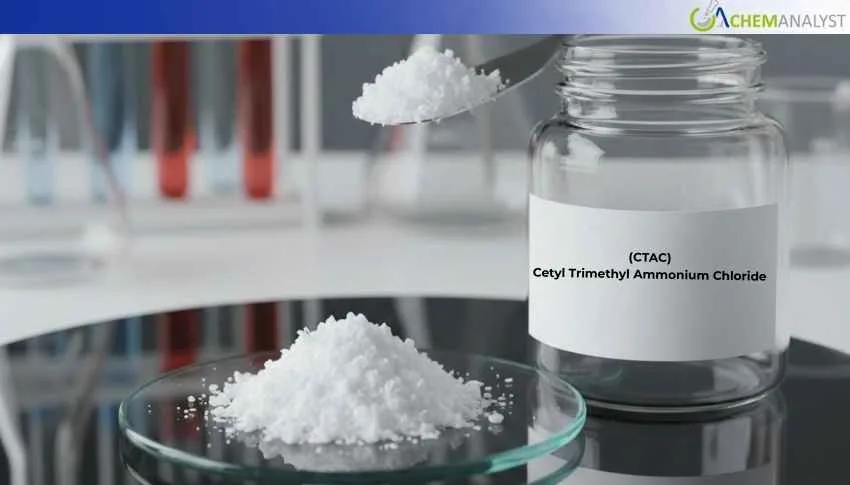
The November average price of CTAC (ex-Ahmedabad) decrease of 1.5% month-on-month. The downward trend represents increased buyer bargaining power due to increased competition from imports and decreased demand because of the recent Diwali holiday and a lack of weekly volatility due to the abundance of supply and stable pricing.
Demand for India's CTAC decreased in November, primarily due to an end to production from the personal care sector (shampoo, hair conditioner) and fabric softeners, which had finished pre-Diwali production. As a consequence, there was limited procurement and mostly hand-to-mouth purchases as manufacturers had enough CTAC inventory to meet demand through their year-end campaigns. Thus far, no large-scale alternative conditioning agent substitution has taken place, resulting in flat addressable volumes for the sector. There has also been no significant increase in routine export inquiries from either Bangladesh or Kenya.
There was an abundance of CTAC supply in India, with domestic CTAC producers operating without any significant outages or maintenance turnarounds and having enough inventory at their depots and spot inventory available. The availability of feedstock was also adequate, and congestion at Nhava Sheva has resulted in extended dwell times but without any increased demurrage or delay of inflows. Spending by environmental compliance agencies in anticipation of upcoming BIS (Bureau of Indian Standards) norms has not yet had a measurable effect on output, and the 7.5% customs duty was unchanged and there were no anti-dumping investigations in progress, meaning that the policies of both countries remain neutral. The price of Indian CTAC continues to be driven down by the competitive nature of imports from China and Southeast Asia, as evidenced by the modest discounts to Indian FOB values attributed to the stable Indian rupee and margins granted to exporters to Bangladesh/Sri Lanka.
As per ChemAnalyst, Indian CTAC market may get fragile in December 2025 with low prices likely to remain due to competitive imports, caution post-festivals and reasonable feedstock. Freight costs and overstock CTAC inventories may put downward pressure. However, personal care year-end promotional activities may provide localized price support. Careful tracking of BIS (Bureau of Indian Standards) regulations and port logistics and offers from Southeast Asia may play an important role in determining CTAC future prices.







Leave a Comment
Comments (0)