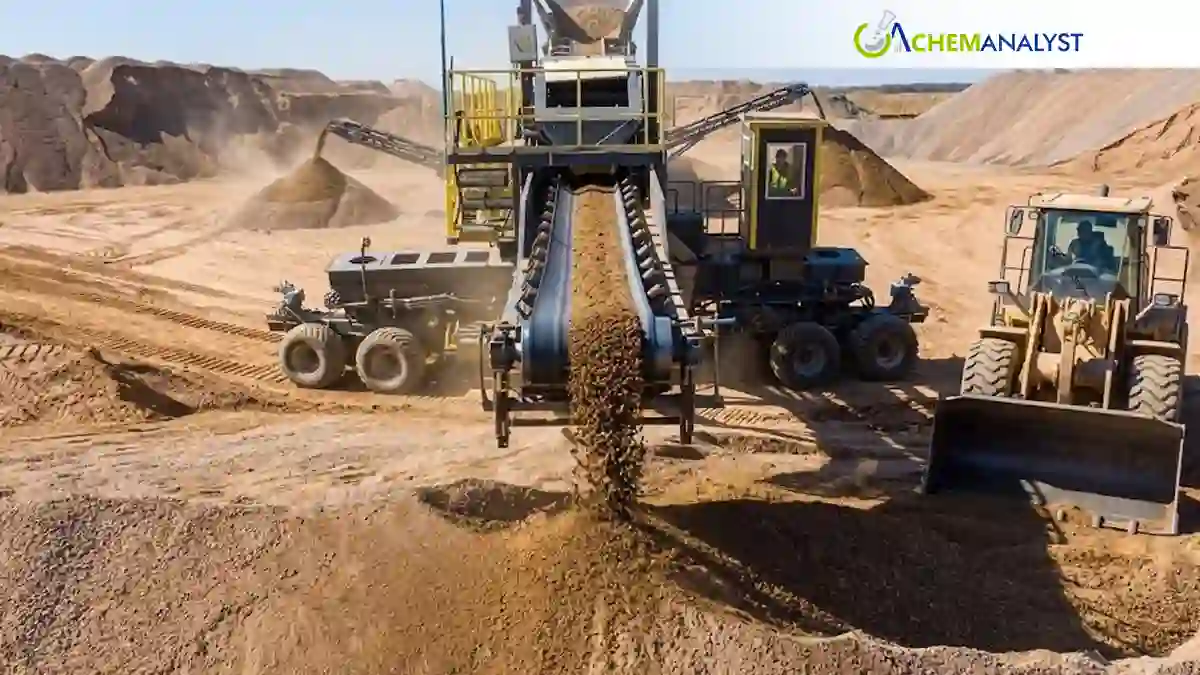
Oman is strategically expanding its mining sector, marking a significant qualitative shift in 2025, to serve as a key driver for economic diversification in line with its ambitious Vision 2040. This initiative aims to substantially increase the sector's contribution to the national Gross Domestic Product (GDP), targeting 10% by 2040, up from 1.4% in 2020. The Sultanate possesses extensive mineral wealth, including world-class deposits of copper, chromium, gold, potash, dolomite, gypsum, limestone, nickel, and cobalt, positioning it as a promising investment destination.
A series of key events and initiatives underscore this accelerated development. In 2025, several agreements and mining concession areas were signed for minerals like copper, chromium, and salt. Further demonstrating momentum, four concession areas were offered for investment in 2025, with bids currently under evaluation, and plans are in place to offer three additional concession areas and three public investment sites in 2026. A significant milestone was the completion of the digitalization of all mining operations through the "Taqa" platform, enhancing efficiency, transparency, and the overall investment environment. The Ministry of Energy and Minerals has also introduced a new concession system, offering expansive investment opportunities by allocating zones larger than 1,000 square kilometers, addressing previous limitations of smaller land allocations. These concession agreements provide investors with legal terms spanning 20 to 30 years, ensuring the stability required for substantial capital investment and long-term project development.
The push for mining sector expansion is driven by several factors, primarily the government's commitment to economic diversification away from oil dependence. Rising global demand for critical minerals, coupled with robust government-backed infrastructure support, makes Oman an attractive proposition. The Ministry's efforts to create an attractive and organized investment environment, characterized by transparency and competition, further encourages both local and international partners.
The consequences and impacts of these developments are far-reaching. Economically, the sector is poised for significant growth, with mineral ore production witnessing a 465% increase between 2018 and 2023. This expansion is expected to generate substantial future revenues and create numerous job opportunities. Furthermore, Oman is actively promoting value addition through downstream industries, exemplified by projects such as the Mazoon Copper Plant, a Titanium Dioxide Plant in Sohar, and a Salt Evaporation Project in Mahout. Industry-specific impacts include simplified procedures, such as increased minimum mining license periods and larger concession areas, alongside the establishment of a mining registry to provide essential geological data to investors. Geopolitically, Oman is leveraging its strategic location to become a regional hub for mineral production and export, with a 48-hour logistics reach to major markets across Asia, Africa, and Europe, fostering growing confidence among international investors.
Market Impact: Oman’s aggressive mining sector expansion is expected to have a bullish impact on the production and supply of key minerals such as copper, chromium, gold, potash, gypsum, limestone, nickel, cobalt, and dolomite over the long term. Increased concession allocations, favorable investment policies, and enhanced operational transparency through digital platforms will attract domestic and foreign investment, leading to new mining projects and higher extraction capacity.
A rise in future supply of copper, chromium, nickel, and cobalt could gradually exert downward pressure on global prices, particularly as these minerals are critical for electric vehicles, renewable energy systems, and industrial manufacturing. However, growing global demand for energy transition minerals may absorb additional output, keeping market sentiment supportive. Downstream projects such as copper processing and titanium dioxide production will increase demand for mineral feedstocks within Oman and strengthen regional value chains. Overall, the development strengthens Oman’s position as a competitive mineral supplier, improving supply security for Asia, Europe, and Africa while increasing competition among global mining producers.






Leave a Comment
Comments (0)