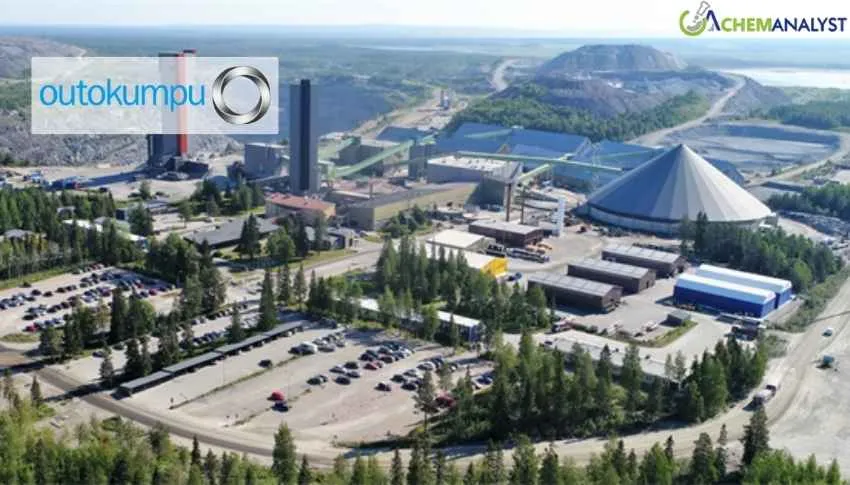
Outokumpu has unveiled a comprehensive plan to develop a data-driven circular economy framework focused on repurposing mining side streams into valuable resources. At the center of this initiative is the company’s Kemi mine in Finland, which is collaborating with the EU-supported Lapland Mining Hub project and Digipolis in Kemi. Together, these stakeholders aim to establish a scalable ecosystem that minimizes waste while reducing dependence on virgin raw materials. The broader vision is to create a sustainable, long-term industrial model capable of transforming by-products of mining into commercially viable materials, thereby unlocking new economic opportunities both within the Lapland region and globally.
The initiative is being coordinated by the Regional Council of Lapland and is intended to reinforce the region’s leadership in responsible and innovative mining practices. By leveraging data and collaboration, the project seeks to enable a future in which a substantial portion of mining side streams is systematically reused as inputs for new products and industrial solutions. This shift is not only environmentally driven but also increasingly tied to competitiveness and supply chain resilience, particularly in light of growing global demand for critical raw materials.
According to Martti Sassi, President of Business Area Ferrochrome at Outokumpu, the transition to greener industrial practices across the European Union is accelerating the need for efficient material use and alternative resource strategies. He emphasized that utilizing mining side streams is no longer merely a sustainability initiative but a strategic necessity. The Kemi mine, which is the European Union’s only chromium mine, plays a crucial role in ensuring regional self-sufficiency in critical minerals and maintaining a stable, low-emission supply chain. This new project is part of a larger industrial ecosystem in the Kemi-Tornio area, where Outokumpu already operates with a strong emphasis on circularity, as over 95% of its raw materials are derived from recycled sources.
The scale of the opportunity is significant. The Kemi mine generates approximately three million tonnes of waste rock and tailings annually. While some waste rock is already reused within and beyond the mining site, there remains substantial untapped potential for innovative applications. These include use in soil enhancement products, low-carbon alternatives to cement, carbon capture and storage solutions, thermal energy storage systems such as sand batteries, and further mineral recovery processes.
A key component of the project is the development of a transparent data platform that will provide detailed insights into the volume, composition, and usability of various side streams. This data-driven approach is expected to attract new partners by enabling informed decision-making and facilitating industrial collaboration. The initiative is supported by strategic partnerships with the Geological Survey of Finland (GTK) and VTT Technical Research Centre of Finland, which contribute scientific expertise, technological innovation, and international connectivity.
Initially, the model will be piloted and validated at the Kemi mine. Once proven effective, the framework is intended to be expanded to other mining operations across Lapland and eventually replicated throughout Europe. The project promotes a collaborative structure involving mining companies, small and medium-sized enterprises, research institutions, and public sector organizations, aiming to establish a durable and integrated ecosystem.
Ida Paaso of the Lapland Mining Hub highlighted the ambition to position the region as a global leader in sustainable mining and circular economy practices. Funded by the European Regional Development Fund, the project is designed with scalability in mind, ensuring that its solutions can be adapted to other regions. While local economic growth and job creation remain priorities, the initiative also seeks international expertise, particularly from Nordic countries, to accelerate development and maximize impact.







 About ChemAnalyst
Leave a Comment
Comments (0)