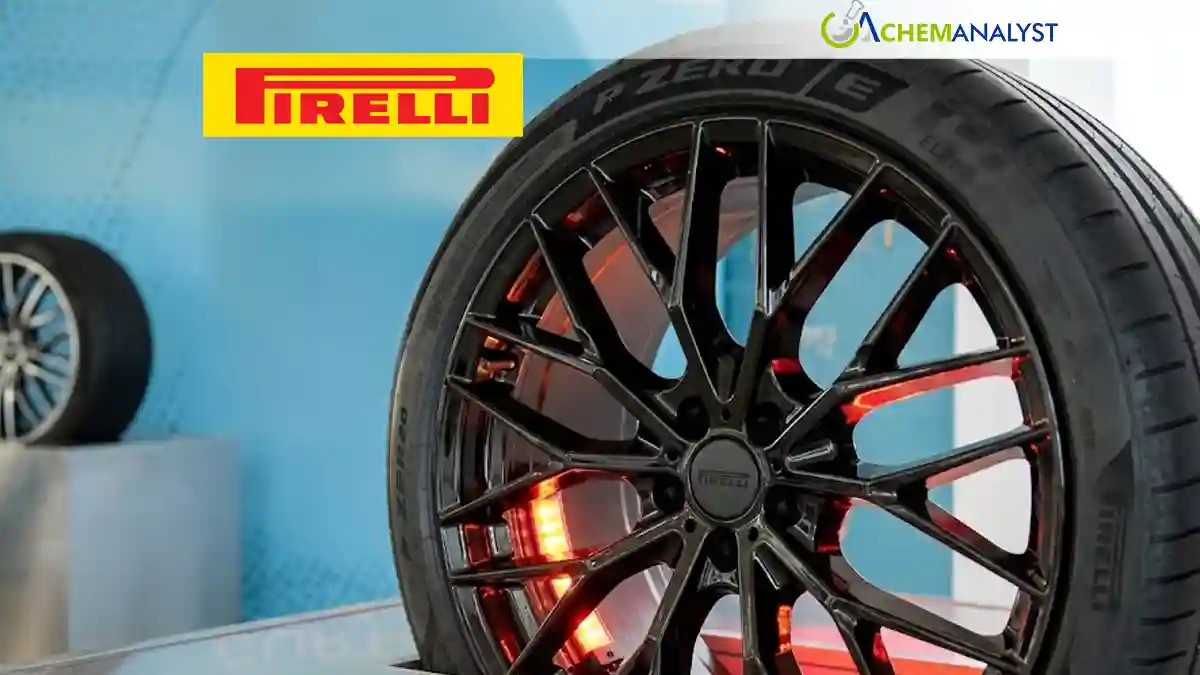
Pirelli has taken a significant step toward advancing sustainability in the European tyre industry by spearheading a comprehensive "tyre-to-tyre" recycling initiative in collaboration with Pyrum, Synthos, and BASF. The partnership aims to establish a fully integrated and traceable circular economy model that converts end-of-life and production scrap tyres into high-quality raw materials, which are then reused in the manufacturing of new tyres. The project represents one of the most advanced industrial efforts to close the material loop within the tyre value chain while reducing reliance on virgin resources.
The initiative, coordinated by Pirelli, combines the expertise of four leading industrial companies to create a scalable recycling ecosystem that ensures discarded tyres are transformed into valuable secondary raw materials. The project utilizes end-of-life tyres collected throughout Germany, including tyres recovered from selected Driver retail outlets, motorsport operations, and manufacturing scrap generated at Pirelli’s Breuberg production facility. Instead of being disposed of or used only for low-value applications, these tyres are processed through an advanced recycling chain that enables their valuable components to be recovered and reintroduced into tyre manufacturing.
A key objective of the project is to establish complete transparency and traceability across the recycling process. All recycled materials generated through the initiative are certified under the ISCC PLUS certification scheme, ensuring that the origin and movement of recycled content can be tracked throughout the supply chain. This certification supports confidence among manufacturers and customers by verifying that sustainable raw materials are incorporated into finished products through internationally recognized standards.
The technological foundation of the recycling process is Pyrum’s proprietary pyrolysis technology. Using high-temperature thermal decomposition in an oxygen-free environment, the company converts waste tyres into valuable recyclable materials without conventional combustion. This advanced process produces two essential outputs: recovered carbon black (rCB) and tyre pyrolysis oil (TPO), both of which can serve as sustainable alternatives to conventional fossil-based raw materials.
Recovered carbon black generated through the pyrolysis process is refined and supplied back to Pirelli’s European manufacturing facilities, where it replaces a portion of virgin carbon black traditionally used in tyre production. Carbon black is a critical reinforcing filler that contributes to tyre durability, strength, and performance, making its recovery an important milestone in improving material circularity while maintaining product quality.
Simultaneously, BASF utilizes tyre pyrolysis oil as an alternative feedstock in its chemical manufacturing operations. By combining TPO with conventional fossil-derived feedstocks through a certified mass balance approach, BASF produces essential chemical intermediates such as butadiene and styrene. These materials are marketed under BASF’s ISCC PLUS-certified Ccycled portfolio, allowing recycled content to be allocated to downstream products while preserving full traceability.
Synthos subsequently uses these certified circular feedstocks to manufacture ISCC PLUS-certified synthetic rubber designed for demanding, high-performance tyre applications. The synthetic rubber produced through this circular pathway is then supplied back to Pirelli, where it becomes an integral component in the production of new tyres. This completes a fully circular "tyre-to-tyre" production loop, demonstrating that waste tyres can successfully serve as feedstock for manufacturing equivalent high-quality products.
The participating companies emphasized that achieving true circularity requires close cooperation among multiple industries, including tyre manufacturers, recycling technology providers, chemical producers, and material suppliers. By integrating collection systems, advanced recycling technologies, certified chemical processing, and manufacturing expertise into a unified value chain, the project illustrates how industrial collaboration can significantly improve resource efficiency and reduce waste generation.
Beyond supporting sustainability goals, the initiative provides a practical model for the future of tyre manufacturing in Europe. It demonstrates that certified recycled materials can meet stringent performance, quality, and safety requirements while helping reduce dependence on finite natural resources and lowering the environmental footprint of tyre production. As circular economy principles continue to gain momentum across the manufacturing sector, the Pirelli-led partnership showcases how innovation, certification, and cross-industry collaboration can transform waste into valuable industrial resources and accelerate the transition toward a more sustainable and resilient tyre industry.
Product and Chemical Commodity Price Impact
The tyre-to-tyre recycling initiative is expected to strengthen the supply of sustainable raw materials, including recovered carbon black (rCB), tyre pyrolysis oil (TPO), synthetic rubber, butadiene, and styrene, reducing dependence on virgin fossil-based feedstocks over the long term. As adoption expands, demand for certified recycled materials is likely to increase, supporting investment in advanced recycling technologies. For chemical commodities tracked by ChemAnalyst, the immediate price impact is expected to remain limited due to the project's current scale. However, in the medium to long term, greater availability of recycled feedstocks could moderately ease pricing pressure on virgin carbon black, butadiene, styrene, and synthetic rubber while improving supply resilience.








 About ChemAnalyst
Leave a Comment
Comments (0)