Polyethersulfone Prices Rise 4.5% in China Amid Tight Supply and Strong Demand

Polyethersulfone Prices Rise 4.5% in China Amid Tight Supply and Strong Demand

Thomas Hardy 23-Apr-2026

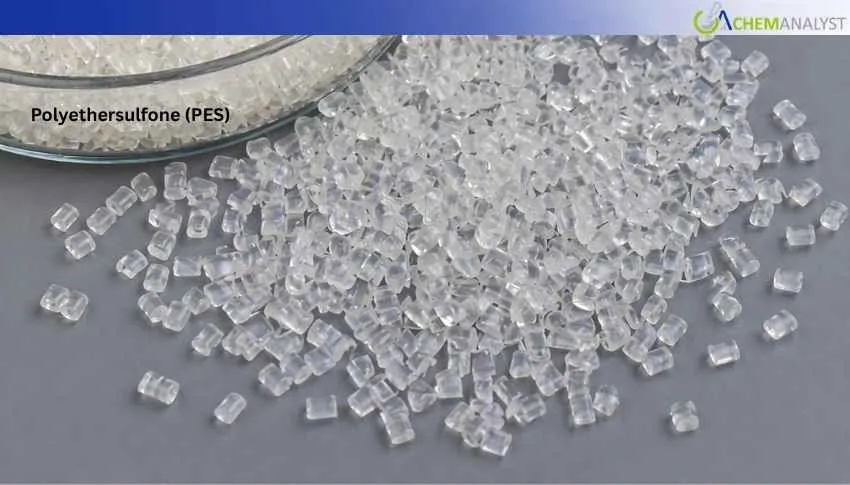
Polyethersulfone CFR Shanghai moved higher through March 2026 as tight export availability and stronger downstream procurement supported a firmer market tone. Early March offered cautious spot offers, but mid-month maintenance turnarounds and Chinaplas-driven buying intensified competition for available cargoes. Logistics bottlenecks along the Yangtze River and slower customs clearance late March reduced effective availability, compounded by rising energy and freight costs. Market participants reported a shift from defensive stocking to active buying as buyers sought allocations ahead of expected cost pressures in coming months. Demand across end-use sectors underpinned the March upturn: water treatment and membrane filtration remained robust, driven by municipal ultrafiltration projects and environmental initiatives; healthcare procurement for hemodialysis and medical filtration devices stayed steady; electronics demand stayed at a baseline level. European maintenance and trimmed Japanese exports tightened spot availability, while feedstock and energy costs continued to press upstream production. Outlook points to further gains into summer, supported by membrane and medical device demand and logistics challenges.

Polyethersulfone (PES) CFR Shanghai prices moved higher through March xxxx as a convergence of tight export availability, rising feedstock costs, and strengthening downstream demand tightened overall market balances. Early March saw the Polyethersulfone (PES) market maintain cautious spot offers, but momentum accelerated through mid- to late March amid overseas plant maintenance and event-driven buying during Chinaplas, which intensified competition for available cargoes. The escalation of the Israel–Iran war further amplified market tightness by disrupting global crude flows, tightening naphtha-linked feedstock chains, and elevating freight rates, marine insurance premiums, and energy costs. By late March, logistics bottlenecks along the Yangtze River corridor and slower customs clearance further reduced effective availability of Polyethersulfone (PES), prompting buyers to shift from defensive stocking to active procurement.

Demand across water treatment, healthcare, and specialty engineering applications remained the primary driver of the Polyethersulfone (PES) price increase. Strong offtake was...

24X7

clock image

Track Real Time Prices

Subscribe Today

Track Prices of 600+ Chemicals

Subscribe to our newsletter

Download the app

ChemAnalyst professional app QR code

We use cookies to deliver the best possible experience on our website. To learn more, visit our Privacy Policy. By continuing to use this site or by closing this box, you consent to our use of cookies. More info.