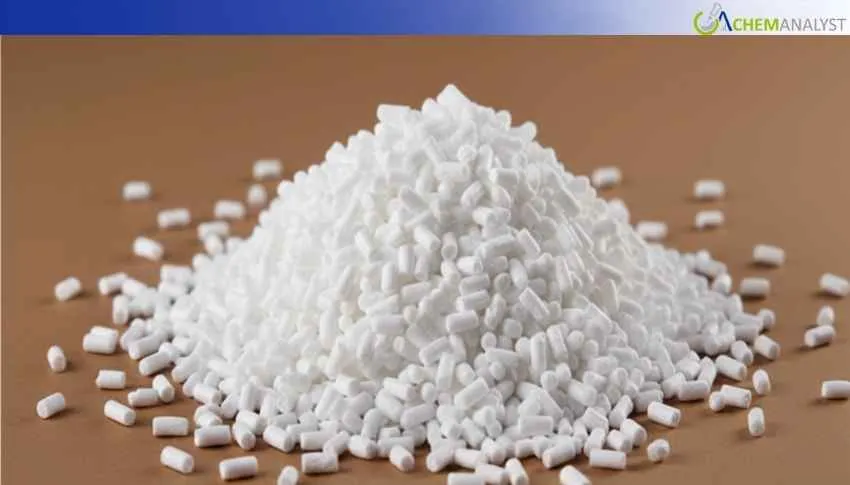
The global prices for potassium sorbate are likely to continue on a higher side in the coming months, which has been a consistent trend witnessed over the past few months, including November. The food preservatives, pharmaceuticals, and personal care markets continue to experience a heightened cost of procurement, and a number of supply and demand-side fundamentals continue to impede potassium sorbate price correction. Potassium sorbate prices thus increased close to 0.5% during December 2025.
One of the key factors that has resulted in an increase in the pricing trends of potassium sorbate has been the cost pressures exerted by its upstream feedstock. Sorbic acid, which is one of the primary feedstocks for the production of potassium sorbate, has been exhibiting resilience in its pricing trends, which has been due to limited market availability and high manufacturing costs. Rising energy costs at key manufacturing locations, also add to manufacturing costs, which continue to be transmitted downstream.
In addition, the global potassium sorbate producers and suppliers have been working under optimistic production policies because of economic uncertainty. Many of the manufacturers have intentionally maintained their potassium sorbate productions at a controlled level to eliminate the risk of inventory accumulation, hence affecting the available spot volumes. It is evident that the manufacturers maintained balanced to tight inventory positions throughout November, hence the inability to influence price drops.
Logistical difficulties too have been an important factor in keeping potassium sorbate prices high. Freight costs, although holding steady in comparison to the past, are still higher than the historic averages in some routes. The higher transportation costs, along with some areas’ shortage of containers, as well as some shipment delays in ports, are some of the elements that have increased the overall landed cost of potassium sorbate.
On the demand side, the continuous demand generated by the food and beverage industry has been providing robust support to the market. Potassium sorbate has been used extensively as a preservative in bakery products, dairy products, beverages, and processed foods, as it has been approved by regulations and has proven effectiveness. The seasonal demand related to the manufacturing of packaged foods, as well as export-oriented food processing, has ensured that procurement activity has not been impacted by the slowdown due to increased pricing.
The pharmaceutical and personal care industry has also aided in making the demand more robust. The pharmaceutical industry has been utilizing the potency of potassium sorbate as a stabilizer and preservative in its liquid products, and the personal care industry has been utilizing the ingredient in its clean-label and paraben-free product lines. The growing demand for safer and longer-lasting product formulations has also helped sustain the higher market pricing.
However, looking ahead, it appears that there will be limited downside risk in the short term, as far as market sentiment for potassium sorbate. Though some buyers expect a slight respite if raw material prices relax, all signs currently point to prices holding steady. Whatever loosening prices might happen could be negated due to compliance costs, environment regulations, and shutdowns scheduled at certain manufacturing units of potassium sorbate.
Additionally, currency fluctuations and trade policies in major export markets might also impact pricing trends. Potassium sorbate exporters will most likely become more prudent about providing any concessions on prices, giving importance to stability over growth.







Leave a Comment
Comments (0)