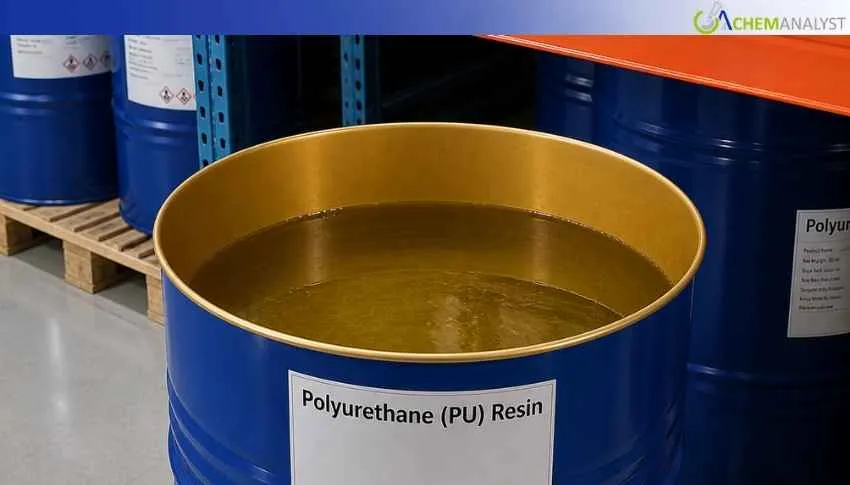
Polyurethane (PU) resin prices in the United States declined 2.02% on a week-on-week basis during the week ending 1 May 2026, marking the first meaningful downward correction in the domestic market since the onset of the U.S.-Israel-Iran conflict in late February. The PU resin price retreat was driven by a notable softening in both principal isocyanate feedstocks — MDI falling 7% and TDI easing 1% — as the April ceasefire and receding direct-fire hostilities progressively unwound the geopolitical risk premiums embedded in upstream aromatic and crude-linked feedstock chains.
The supply-side narrative for U.S. PU resin during the reference week was defined by a meaningful easing of isocyanate feedstock production costs, reflecting the partial deflation of geopolitical risk premiums that had sustained elevated MDI and TDI pricing through March and April. MDI values declined 7% week-on-week, as benzene and toluene feedstock costs moderated in response to the stabilisation of the conflict following the conditional ceasefire between the U.S. and Iran. TDI values, similarly, eased a more modest 1%, reflecting tighter underlying toluene supply relative to benzene. The combined feedstock cost relief transmitted directly into reduced PU resin production economics, with domestic producers adjusting offered price levels accordingly. Notably, the dual blockade — the U.S. naval blockade of Iranian ports and Iran's continued restriction of Strait of Hormuz commercial transit — remained operative through the reference week, limiting the extent of cost relief and ensuring that PU resin's price correction remained measured rather than precipitous.
Demand conditions for PU resin during the reference week shifted to a more restrained posture as buyers recalibrated procurement strategies in light of falling prices and evolving geopolitical signals. The construction sector — a primary consumer of rigid PU foam insulation systems — maintained underlying offtake volumes consistent with the active spring building season, though procurement managers moderated forward-buying urgency given the easing price environment, preferring to purchase closer to requirement rather than build precautionary buffer stock at prevailing levels. The furniture, bedding, and automotive seating segments likewise sustained baseline consumption, with no material deterioration in production schedules evident. Aggregate transacted volumes of PU resin remained adequate but below the elevated levels observed during the peak precautionary stocking phase of March and early April.
The near-term outlook for U.S. PU resin remains cautiously bearish, driven by easing geopolitical risk premiums amid reduced direct U.S.-Iran tensions since early April. The fragile ceasefire, despite continued regional skirmishes, has supported a gradual decline in crude and aromatic feedstock costs, particularly impacting MDI and TDI. If U.S.-Iran negotiations resume, further softening in feedstock prices is likely, extending PU resin price corrections into May. However, downside potential remains limited due to Iran’s proposed restrictions on Strait of Hormuz transit, which could quickly reintroduce supply risks. Market participants should closely track geopolitical developments and shipping conditions as key indicators shaping PU resin pricing trends through Q2 2026.






Leave a Comment
Comments (0)