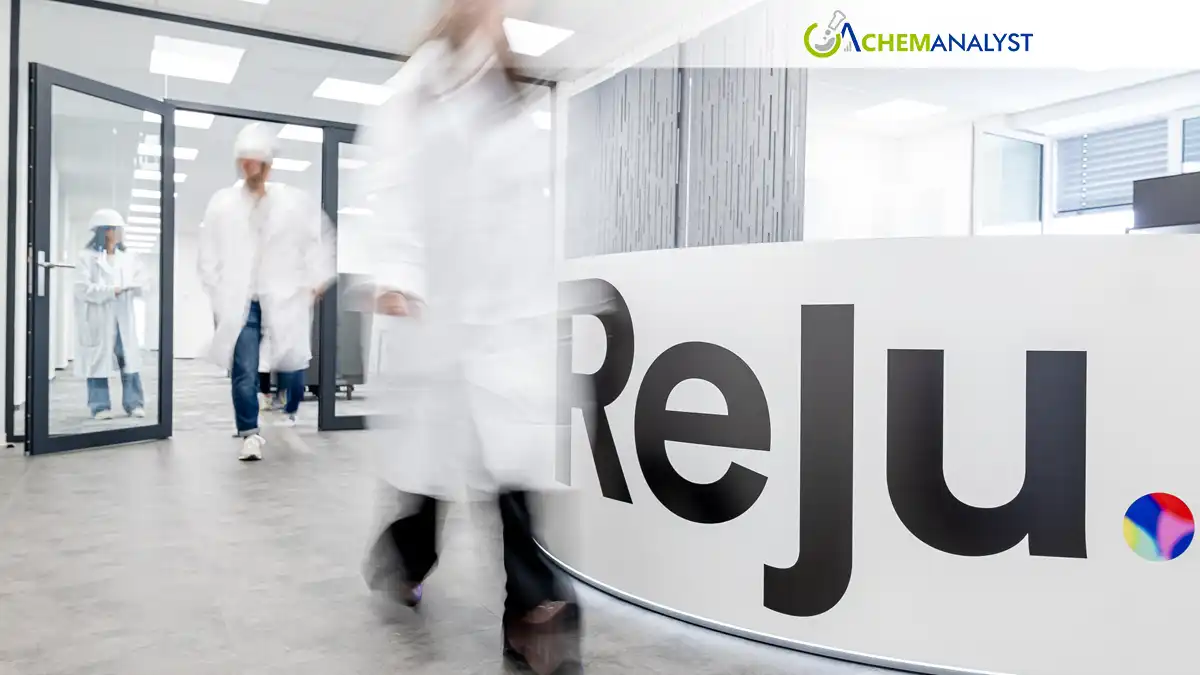
Reju, a company specializing in textile-to-textile material regeneration, has officially launched its first dedicated Research & Development (R&D) Center in the United States. The new facility is located in Conshohocken, Pennsylvania, representing a significant step in the company's North American expansion and reinforcing its commitment to advancing sustainable textile recycling technologies. By establishing this center, Reju aims to accelerate innovation in circular textile solutions while supporting the commercialization of advanced recycling technologies capable of transforming textile waste into valuable raw materials.
The newly established R&D Center operates within the existing Advanced Materials and Catalysts research campus of Technip Energies. This strategic location enables Reju to leverage Technip Energies' well-established infrastructure, technical resources, and decades of experience in catalysis, process engineering, industrial technology development, and large-scale commercialization. The collaboration is expected to streamline research activities, improve technology validation, and shorten the pathway from laboratory innovation to commercial deployment.
The opening of the Pennsylvania facility also marks the relocation of Reju's principal research team from IBM's Almaden Research Center in San Jose, California. It was at IBM's research facility where Reju's proprietary VolCat depolymerization technology was originally developed. This catalytic chemical recycling process is specifically designed to break down polyester waste into its fundamental molecular building blocks, allowing the material to be regenerated into high-quality raw materials suitable for producing new polyester products. The technology is considered a major advancement in achieving true textile-to-textile recycling, helping reduce dependence on virgin petrochemical feedstocks while minimizing textile waste.
Gregory Breyta, Reju's Director of Research & Development, expressed enthusiasm about joining the company during this important phase of growth. He noted that the company is focused on advancing its innovative recycling technologies toward full industrial-scale implementation while building the technical foundation required to establish a truly circular textile recycling ecosystem capable of processing post-consumer textile waste at commercial volumes. According to Breyta, the new research facility will play a central role in transforming promising scientific concepts into scalable industrial solutions.
The R&D Center has been designed to support every stage of technology development, beginning with early research and proof-of-concept studies before progressing through pilot-scale testing and kilo-scale production. Researchers at the facility will focus on multiple areas, including polyester recycling technologies, solutions for processing blended or mixed-fabric textiles, and the development of new circular chemistry pathways. This broad research scope will enable Reju to continuously refine its recycling processes, rapidly test new concepts, and accelerate the commercialization of next-generation textile recycling technologies.
A primary objective of the center is to validate technologies intended for implementation across Reju's expanding network of Regeneration Hubs. These industrial facilities are envisioned as the backbone of the company's global closed-loop recycling system, converting discarded garments and textile waste into reusable raw materials that can be incorporated directly into new textile manufacturing. By integrating research, pilot-scale testing, and industrial deployment, Reju aims to create an efficient and scalable circular economy model for the textile industry.
The Pennsylvania R&D Center forms an important part of Reju's broader global strategy to establish a comprehensive textile recycling infrastructure. In addition to its new North American research facility, the company has already launched Regeneration Hub Zero in Frankfurt, Germany, its first textile-to-textile recycling facility. Furthermore, Reju has announced plans to develop additional Regeneration Hubs in Sittard, the Netherlands; Lacq, France; and Rochester, New York. Together, these facilities are intended to create a globally replicable network capable of recovering textile waste and converting it into high-quality recycled feedstocks for future manufacturing.
According to Breyta, each of these research and production facilities contributes to Reju's long-term vision of building a worldwide circular infrastructure that transforms today's discarded textiles into tomorrow's sustainable raw materials. By combining advanced chemical recycling technologies with strategically located industrial facilities, the company seeks to reduce textile waste, lower carbon emissions, conserve natural resources, and support the transition toward a more sustainable and circular global textile industry.
Impact on Product and Chemical Commodity Prices
The establishment of Reju's first U.S. Research & Development Center is expected to strengthen innovation in advanced polyester recycling and accelerate the commercialization of textile-to-textile regeneration technologies. In the near term, the move is unlikely to significantly affect the availability or pricing of recycled polyester or virgin polyester products, as the facility is focused on research, process optimization, and pilot-scale validation rather than commercial production. However, over the medium to long term, successful scale-up of Reju's VolCat depolymerization technology could increase the supply of high-quality recycled polyester feedstocks, reducing reliance on virgin petrochemical-based raw materials. For chemical commodities tracked by ChemAnalyst, the immediate price impact is expected to remain neutral. As commercialization progresses, demand growth for virgin Purified Terephthalic Acid (PTA) and Monoethylene Glycol (MEG) could gradually moderate, while demand for recycled polyester intermediates may strengthen. Overall, the development supports long-term circularity but does not materially influence current market prices or supply-demand dynamics.







 About ChemAnalyst
Leave a Comment
Comments (0)